
The Pentagon is now treating a wave of mysterious freezer failures that ruined food at US military bases in August as a likely cyberattack, according to four officials familiar with the probe.
According to the New York Post, one official said US military investigators have already opened lines of communication with their French counterparts, who are dealing with a similar attack on commercial refrigeration systems that recently disrupted supermarkets across France. Reuters has not been able to determine how advanced the Pentagons inquiry is, nor whether investigators have identified a culprit or a clear method of attack. The Pentagon, when pressed for details, would say only that a unit of US Cyber Command is working in close coordination with interagency and law enforcement partners, declining to elaborate on the scope or direction of the effort.
The US Army Criminal Investigation Division confirmed that its Cyber Field Office is involved and coordinating with French law enforcement to better understand the refrigeration outages in Europe. That cross-Atlantic cooperation underscores growing concern that what might once have been dismissed as a technical glitch could instead represent a coordinated test of Western vulnerabilities.
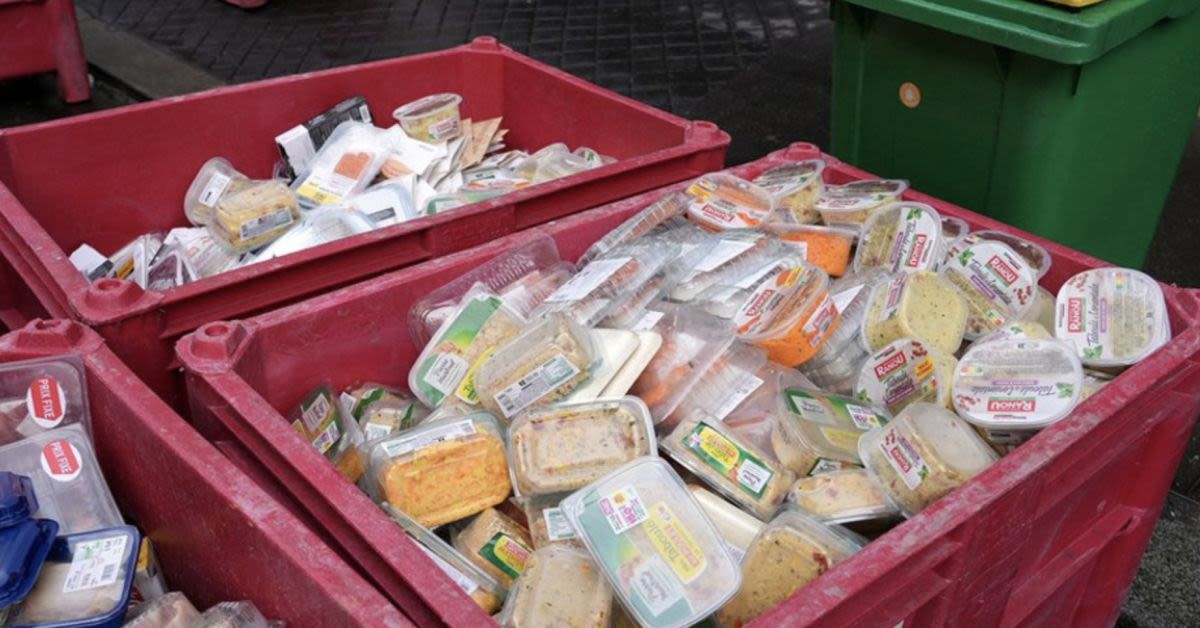
The late-August breakdowns in the United States hit at least six commissaries on-base grocery stores where service members and their families buy food based on a Reuters review of Facebook posts and website updates from affected installations. In at least one case, the freezers did not simply fail; their temperature settings were apparently raised overnight, leaving commissary workers to discover piles of thawed and spoiled food the next morning.
At Fort Huachuca in Arizona, base officials told families on August 26 that the commissarys freezer went into defrost mode where it heated up all the food. Trust us when we say it was spoiled. That description closely mirrors what French retailers experienced, raising the possibility that the same or similar techniques were used on both sides of the Atlantic.
The string of rogue freezer incidents and the emerging suspicion of cybersabotage were first flagged on August 28 by a new blog called Signal and Silence. Subsequent reporting revealed the involvement of military investigators and their outreach to French authorities, as noted by Stars and Stripes and Britains Daily Telegraph, but the fact that the Pentagon is now treating the case as a suspected hack is being reported here for the first time.
The French Embassy in Washington declined to engage, failing to return a message seeking comment on the joint investigative effort. If the outages are ultimately confirmed as a cyberattack, they would offer another stark reminder of how exposed critical infrastructure including something as mundane but essential as cold storage has become in an era of networked control systems.
In France, the freezer hack overrode temperature controls on commercial cooling units in more than 350 locations, forcing supermarkets to clear out entire frozen food aisles as merchandise spoiled. The French hack involved cranking the temperature inside the units up rather than merely knocking them offline, similar to what happened in Fort Huachuca in Arizona, and in some cases the heat was turned up so high that refrigeration units actually caught fire.
One French supermarket owner has warned that the total cost of the attack could reach into the tens of millions of euros nationwide. Cybersecurity experts told Reuters the operation appeared disturbingly easy to execute, suggesting that basic negligence and outdated technology, not sophisticated statecraft, may have opened the door.
The Danish manufacturer Danfoss, whose controllers ran many of the compromised French units, acknowledged that a number of those devices were obsolete or running outdated firmware, a combination that could have made it simple for hackers to gain access. Reuters could not determine whether Danfoss or any other particular brand of controller was in use at the affected US bases, and Danfoss did not respond to messages seeking comment on the American incidents.
Refrigeration is a linchpin of the modern food supply chain, and the remote sabotage of cold storage facilities has long been viewed as a nightmare scenario on par with attacks on power grids or water systems. Earlier this year, the Global Food Safety Initiative urged food safety professionals and IT leaders to collaborate to ensure robust cybersecurity for refrigeration technology, warning that a hacked cooling system is just as dangerous as a broken one.
Hackers have already demonstrated their willingness to target such systems in the United States and abroad, often exploiting the same pattern of poor cyber hygiene and overconnected industrial controls. Danfoss has said that, in 2022, hackers either targeted or broke into supermarkets in Russia and Israel that were using obsolete versions of its cold storage controllers, again highlighting the risks of leaving critical hardware unpatched and online.
In December of last year, federal prosecutors in Los Angeles charged a Ukrainian woman with participating in a hacker group that disabled refrigeration at a meatpacking facility in 2024, destroying more than 2,000 pounds of meat. That case, like the current Pentagon probe, illustrates how relatively small, targeted disruptions can inflict real economic damage and threaten food security without ever touching a power plant or pipeline.
The underlying problem, experts say, is that controllers originally designed as stand-alone devices to be serviced by on-site technicians are now routinely connected to the internet for convenience and remote management. Bill Moore, chief executive of industrial cybersecurity firm Xona Systems, noted that concerns about online exposure are not unique to cooling systems, but the stakes are particularly high when food supplies are at risk.
It can definitely disrupt the supply chain for food, he said, a warning that should resonate with policymakers who have often prioritized flashy green subsidies and regulatory schemes over hardening the basic infrastructure that keeps shelves stocked. For a Pentagon now grappling with hacked freezers on its own bases, the episode is a pointed reminder that national security is not just about weapons systems and troop deployments, but about safeguarding the everyday systems that feed the force and, by extension, the country.
Login