
Portable food carts have become a familiar feature of urban life across America, but the contrast between lawful, regulated operations and the growing underground trade in unlicensed street food is now on stark display in Denvers once-prized entertainment district.
Years ago, in the small Alaska town of Talkeetna, a popular halibut taco cart was a staple of the tourist strip, operating openly and legally with propane-fueled cooking equipment. That ended abruptly when the propane tank exploded, shattering windows and damaging storefronts along the main street; while no one was seriously injured, the incident was serious enough that, for anyone craving a halibut taco in Talkeetna today, youre out of luck, as the cart is gone.
According to RedState, that Alaskan episode underscores a critical point: even properly permitted food vendors carry inherent risks, which are at least mitigated by regulation, inspection, and enforcement. Denver, by contrast, is now grappling with a proliferation of unlicensed, uninspected food carts in its Lower Downtown (LoDo) district, a problem layered atop the citys broader struggles under long-term Democrat governance and its self-declared status as a sanctuary jurisdiction for illegal immigrants.
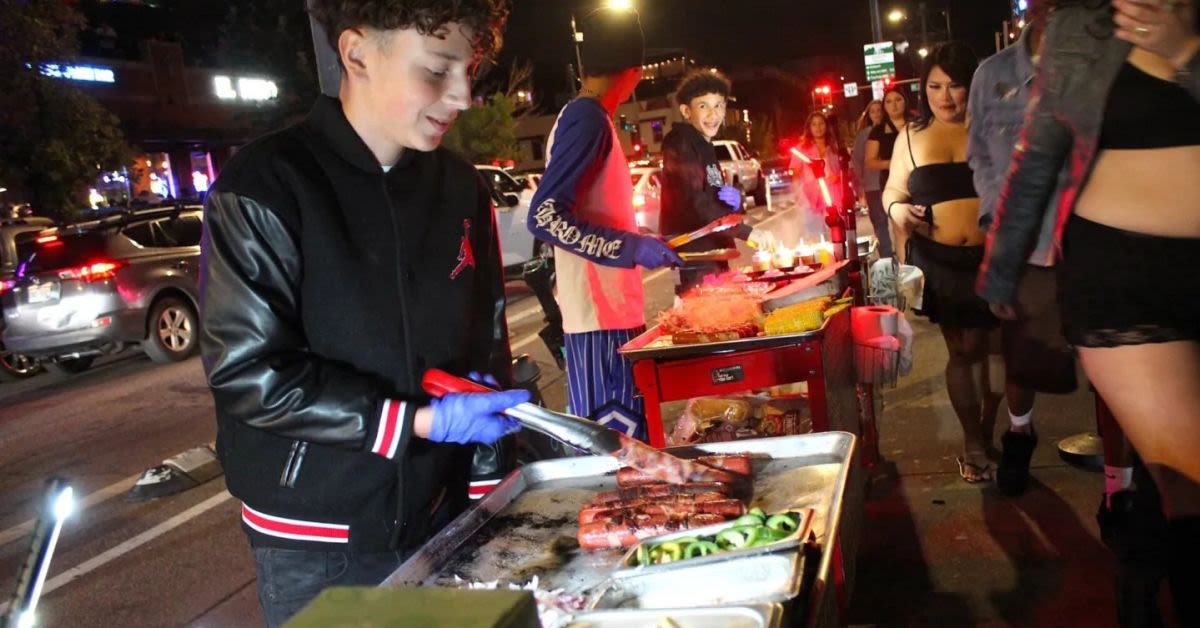
Denvers LoDo area, with its bars, restaurants, and shops near Coors Field, has become a magnet for both nightlife and informal street commerce. On a recent Saturday at 9:30 p.m., sidewalks were still relatively clear as crowds began to gather, but that changed quickly when two battered minivans pulled up on Market Street, packed with rolling carts, cases of bottled water, and bins of unrefrigerated hot dogs.
A group of Hispanic women and children, along with several men who appeared to be directing the operation, unloaded the equipment and scrubbed down the carts before fanning out across a roughly tenth-of-a-mile radius. By 11 p.m., there were upwards of 30 carts along Blake, Market and Larimer streets, most cooking peppers, onions and bacon-wrapped hot dogs on butane-heated trays, turning the sidewalks into an unregulated food corridor.
As reported by BusinessDen and highlighted by RedState, the problem extends far beyond the mere presence of vendors. The food is often stored unrefrigerated before cooking, operators frequently ignore basic sanitary practices such as glove use, and the carts clog already crowded streets, forcing pedestrians into the roadway and creating safety hazards.
The carts first began appearing outside LoDo clubs like El Patio and Dierks Bentleys Whiskey Row several years ago, and their numbers have since multiplied. Carts are sometimes manned by children who solicit people to pay $10 a dog when clubs close at 2 a.m. After the carts pack up, operators usually dont clean up, leaving grease stains and other trash floating around downtown, BusinessDen reported, describing a nightly cycle of litter and filth.
Public health concerns are obvious: unrefrigerated meat, questionable fuel setups, and untrained handlers working late into the night in crowded conditions. Yet the situation has escalated beyond sanitation and congestion into something more alarming, as officials now acknowledge that those carts are exploding. Literally. As in, they go BOOM.
Eric Escudero, spokesman for Denvers Department of Licensing and Consumer Protection, said the citys primary concerns are food safety and sidewalk safety, noting that pedestrians often step into traffic to avoid the carts, leading to near-misses with vehicles. Escudero further stated that the city is aware of five carts exploding whether it be from a grease fire or issues with the fuel cylinders that they use to heat up the pseudo-grills.
One such explosion occurred in July in the 1900 block of Market Street in front of El Patio, an incident BusinessDen verified through video and interviews. That blast, neighbors said, was from a grease fire, and nobody was hurt, but the potential for serious injury or worse is evident, especially in dense late-night crowds.
The legal framework is not ambiguous: selling prepared foods in Denver requires compliance with the Denver Revised Municipal Code, including licensing, health inspections, and adherence to food-safety regulations. There is a Colorado Cottage Foods Act that allows certain non-potentially hazardous homemade itemssuch as baked goodsto be sold without a license, but it does not cover non-refrigerated hot dogs handled by untrained, unlicensed people with their bare hands, nor does it sanction makeshift grills powered by questionable fuel setups.
It certainly doesnt allow exploding fuel tanks and grease fires, critics note, pointing out that the law is being openly flouted while city officials appear reluctant to act decisively. LoDo businesses, which pay taxes, comply with regulations, and employ local workers, are increasingly frustrated by what they see as a double standard that favors illegal operators over legitimate enterprises.
From a conservative perspective, the situation in Denver illustrates the predictable consequences of lax enforcement, sanctuary policies, and a political culture that prioritizes ideological posturing over basic public order. Many of these vendors are almost certainly in violation of immigration law as well as municipal codes, yet the citys leadership has shown little appetite for robust enforcement, even as explosions, health risks, and sidewalk chaos mount.
If Denvers municipal government were serious about protecting public safety, supporting lawful businesses, and upholding the rule of law, it would be sweeping these people up, confiscating their carts, and, where operators are found to be illegal aliens, turning them over to Immigration and Customs Enforcement for repatriation. Instead, the citys sanctuary stance and progressive governance have fostered an environment in which unlicensed, unsafe operations flourish while law-abiding restaurateurs and bar owners shoulder the regulatory burden alone.
The contrast with that long-gone, fully legal halibut taco cart in Talkeetna is telling: even a compliant vendor with proper equipment can pose risks, as that propane explosion demonstrated, yet those risks are at least monitored and managed under a functioning regulatory regime. In Denvers LoDo, by contrast, the combination of unregulated food handling, hazardous fuel use, and a permissive political climate has created a nightly spectacle that endangers public health, undermines legitimate commerce, and reflects a broader breakdown of common sense in Americas Democrat-run cities.
Login