
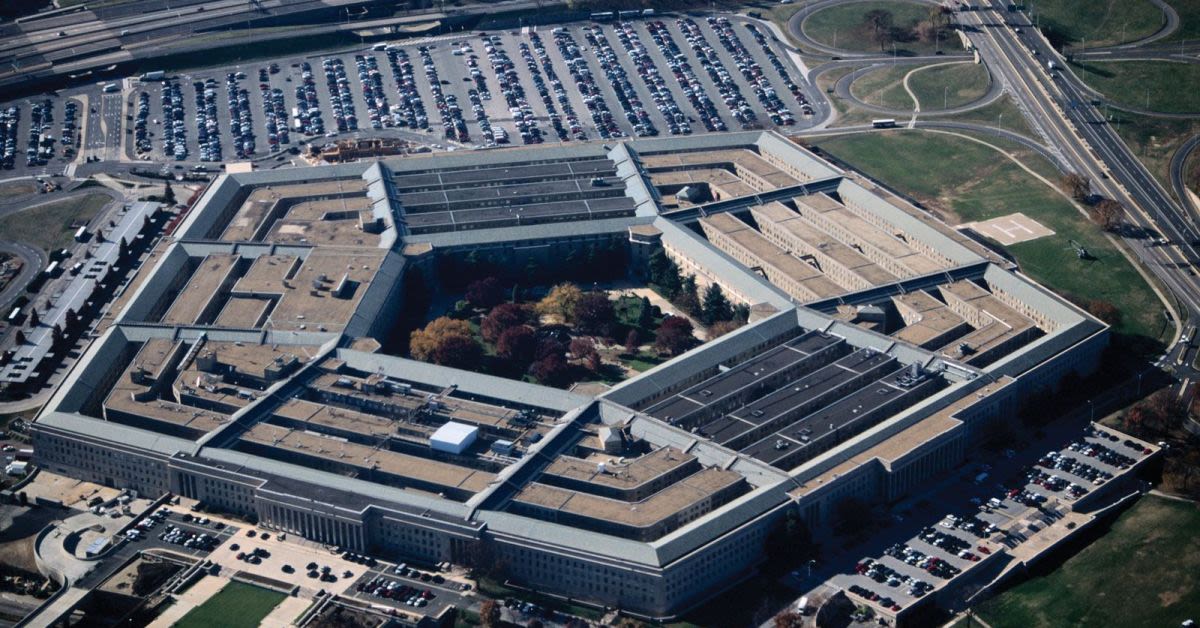
The Trump administration is elevating testosterone deficiency from a private medical concern to a matter of national security, moving to systematically screen male service members as part of a broader effort to restore military readiness and confront the declining health of American men.
According to The New York Post, senior officials see the trend as directly tied to the shrinking pool of young Americans fit to serve, a problem that has long worried defense planners but has often been overshadowed by ideological experiments in the ranks.
There is absolutely national defense readiness ramifications for [low testosterone], Adm. Brian Christine, a senior Department of Health and Human Services official, told Fox News Digital in an interview.
Christine warned that the military is drawing from an increasingly unhealthy and disinterested population, noting that 77% of Americans ages 17 to 24 do not qualify for service without a waiver, with obesity, chronic disease and other barriers driving the shortfall.
Among young men, he said, more than 70% are ineligible, while only about 3% of young Americans express interest in serving.
The new focus on hormonal health comes as the Trump administration reorients the Pentagon away from social engineering and back toward combat effectiveness, with Christine helping craft an initiative that led the Defense Department in September to issue testosterone deficiency screening guidelines for male service members ages 30 and older.
Trump entered his second term with an aggressive approach to rebuilding the American military, tightening fitness requirements, axing DEI policies, overhauling weapons acquisition, building up recruitment and refocusing the force on combat readiness and lethality.
Christine, a urologist with more than 35 years of experience in mens health, said testosterone levels have been falling for decades, raising alarms about the long-term well-being of American men and the physical strain placed on those in uniform.
I think its incredibly important, incredibly timely, Christine said of the screening guidance.
Under the Pentagons new protocol, male service members 30 and older must undergo mandatory screening for testosterone deficiency, beginning with a review of symptoms and risk factors.
Those who show signs of a problem can receive further testing and, when medically appropriate, treatment aimed at restoring their health and performance.
Were not forcing testosterone on anybody, Christine said.
But what we are doing is screening, taking those men who are symptomatic and have low numbers and offering them a pathway forward.
The HHS official cited obesity and chronic disease as well-established contributors to low testosterone, while also voicing concern that environmental exposures such as microplastics and other toxins may be playing a role, a possibility scientists are still probing.
In the mid-1970s, the average testosterone level for men in this country was well over 650. Now its approaching 350, Christine said.
National Institutes of Health Director Jay Bhattacharya echoed those worries in a separate interview with Fox News Digital, cautioning that some testosterone deficiency is likely going undiagnosed even as medical standards insist that a proper diagnosis requires both symptoms and consistently low hormone levels.
Its interesting because if you look at the epidemiological trends, testosterone levels in the American male population have been declining over the last decades. And, again, we dont know why. We dont have an answer, Bhattacharya said.
Bhattacharya stressed that researchers must determine not only the causes of the decline, but also the appropriate medical guidance for men found to have a deficiency.
There are under-diagnosed testosterone deficiencies, he said.
He added that the policy debate cannot stop at identifying the problem, but must grapple with prevention and treatment strategies that protect both individual health and national strength.
The question of what to do about it, how to prevent it, thats at the top of my mind.
The NIH director also highlighted falling sperm counts as another troubling trend that demands serious scientific scrutiny, again pointing to environmental exposures as a likely factor in broader reproductive health concerns.
But even more importantly, what are the factors, probably environmental factors, that have led to the decline in sperm counts, for instance? We need an answer to those questions, Bhattacharya said.
Bhattacharya said the NIH is investing in research to better understand the potential drivers of these patterns and to clarify how physicians should counsel American men.
Christine, for his part, emphasized that testosterone is not merely about muscle mass or outward appearance, but is central to mens overall health profile.
Testosterone levels in men are absolutely related to their overall well-being, to their lifespan, to their health span and to their wellness, Christine said.
He noted that men with low testosterone frequently experience higher rates of anxiety and depression, underscoring the mental health dimension of what is often dismissed as a purely physical issue.
The administration is also preparing separate hormonal health guidance for female service members, with the Defense Health Agency indicating that those recommendations will follow the September guidelines for male troops and will be shaped by womens health specialists, Christine said.
He described the broader effort as a bid to ensure that all service members are physically and mentally equipped to perform their duties, even as the country confronts a wider crisis in male health and fitness.
If we truly want our men who are in uniform to be at their best, Christine said, the focus must be on their ability to function and perform their jobs.
For an administration intent on reversing years of declining standards and politicized priorities, the push to address testosterone deficiency signals a return to fundamentals: a fighting force built on strength, resilience and biological reality rather than ideology.
Login