
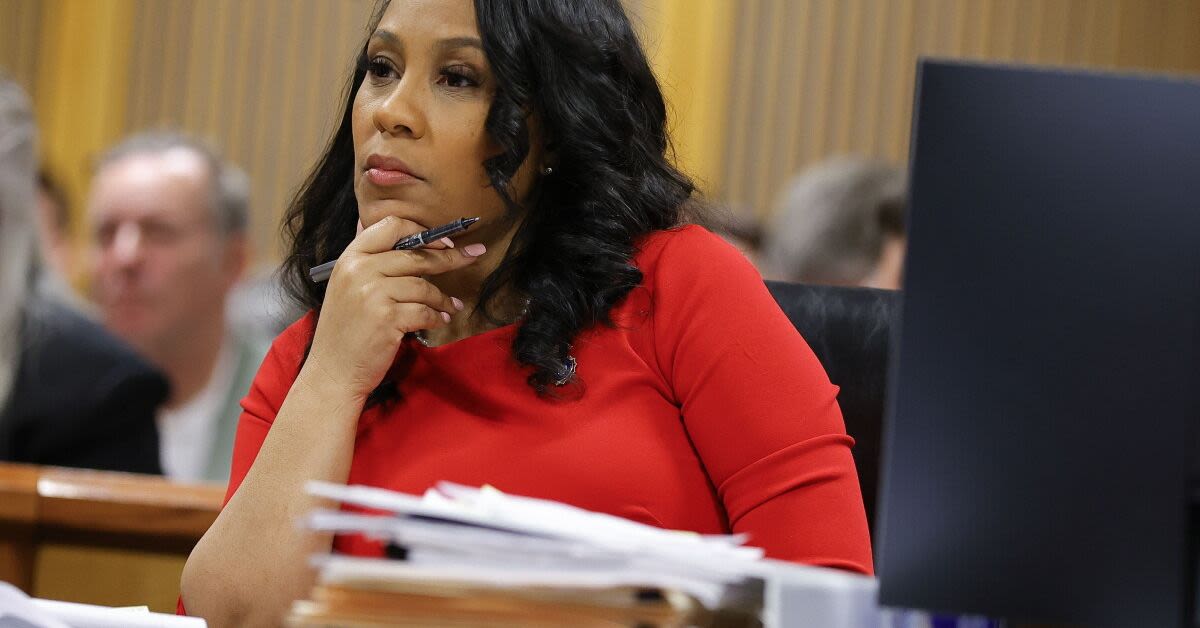
Fulton County District Attorney Fani Willis, who has spent years pursuing President Donald Trump over the 2020 election, is now claiming she herself has been targeted by voter fraud in a case that unintentionally underscores conservative warnings about the vulnerabilities in Americas election systems.
According to RedState, Willis recently disclosed that she was notified by the New York City Board of Elections that a voter registration filed in her name in New York was being canceled because officials suspected it was fraudulent, despite the fact that she resides and serves in Georgia, not New York. The episode comes after months of controversy surrounding her failed effort to prosecute President Trump in Georgia, a case from which she was disqualified but which left her still in office as Fulton Countys top prosecutor.
Willis told Channel 2 investigative reporter Mark Winne that the first indication of a problem came when she received the cancellation notice from New York authorities, alerting her that someone had attempted to register her as a voter in their jurisdiction. She insisted she had nothing to do with the filing, saying the registration application was not filled out or signed by her.
Detailing the bizarre twist, Willis explained, It came to my attention that someone registered to vote as me in New York. Interestingly enough, they registered me as a Republican that lived in Trump Tower, of all places, Willis said. She further stated that the form was riddled with inaccuracies, including a falsified date of birth, an incorrect party affiliation, and a forged signature.
The application, she noted, listed her as a Republican, even though she maintains she has been a lifelong Democrat, and she described the entire situation as quite upsetting. For a prosecutor who aggressively targeted President Trump and his allies over alleged election interference, the irony of being used as a prop in a fraudulent registration tied to Trump Tower is hard to miss.
Election officials in New York told Willis that if anyone had tried to cast a ballot using the bogus registration, they would have been required to provide identification or other proof of residence. That assurance, however, does little to address the deeper concern: why such a registration could be initiated in the first place without robust identity verification, and how many similar cases might never be detected.
The Board of Elections has said there is no evidence that any votes were cast under the fraudulent registration before it was canceled, and Willis is reportedly in contact with a New York prosecutor to determine whether criminal charges will be pursued. Yet the broader issue is not whether this particular scheme succeeded, but how easily it was attempted in a major liberal jurisdiction that routinely dismisses conservative concerns about election integrity.
For years, Democrats have derided voter fraud as a myth and attacked voter ID laws as voter suppression, even as conservatives have argued that basic safeguards are essential to protect the legitimacy of elections. Now, as one of their own high-profile prosecutors complains of being impersonated on a voter roll and acknowledges how quite upsetting the experience is, the case inadvertently bolsters the argument for nationwide voter ID and stronger verification measures such as those proposed in the SAVE America Act.
Login