
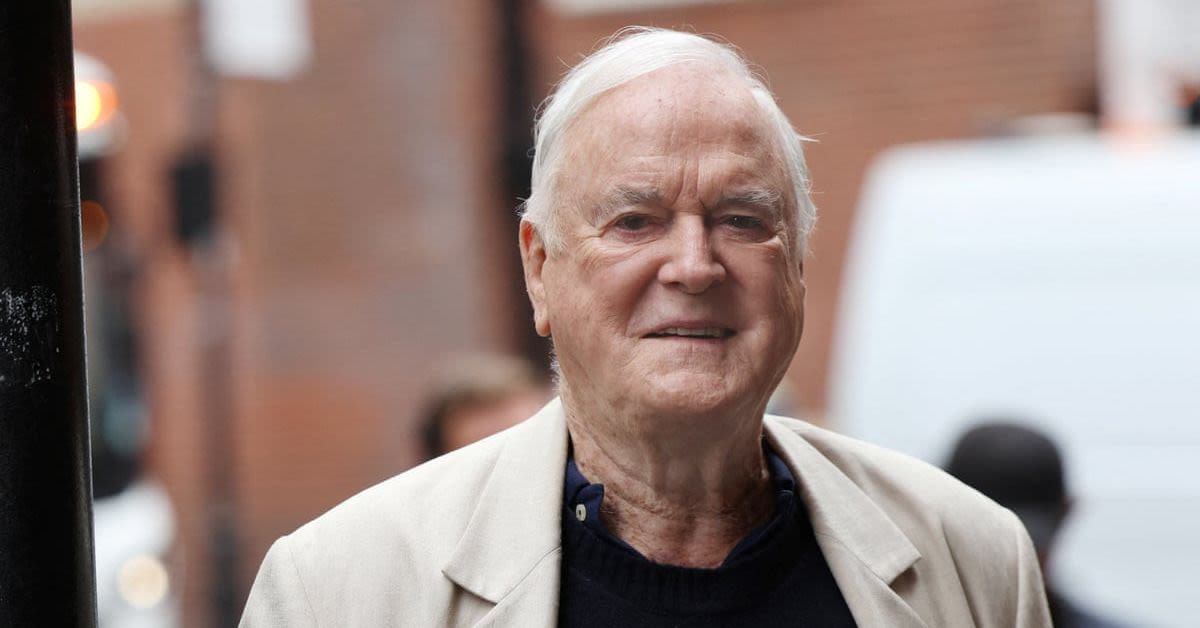
John Cleese, the legendary British comedian who once scandalized prim churchgoers with Monty Pythons Flying Circus, now finds himself in the crosshairs of a far more intolerant establishment: the alliance of the British left and radical Islamists.
According to Western Journal, an Islamist activist outlet in the United Kingdom has gone so far as to trigger a government counter-extremism mechanism over Cleeses jokes about Islam and certain Muslim practices. The group, 5 Pillars, reported that there was a referral to the governments counter-extremism scheme Prevent concerning comedian John Cleese because he made fun of Muslims. In a country that once prided itself on irreverent humor and robust debate, the idea that a comedian could be flagged to anti-terror authorities for satire would have sounded like a bad sketch; now it is official paperwork.
The Prevent referral, dated Sept. 22 and filed by a member of the public, claims Cleeses online commentary crosses a red line. The referral, dated September 22 and submitted by a member of the public, cites a series of posts and reposts by the 86-year-old comedian which it argues go beyond legitimate criticism of Islam and instead portray Muslims collectively as violent, criminal and morally depraved. The same document insists that Cleeses social media activity meets several indicators used in PREVENT risk assessments for anti-Muslim hate and counter-extremism concerns, and warns that it risks contributing to radicalisation, communal tension, and hate incidents.
Cleese, who has spent a lifetime skewering sacred cows of every variety, has flatly rejected the charge that he is driven by bigotry. Cleese has consistently rejected accusations of Islamophobia, describing himself instead as Islamosceptic. He maintains that his remarks fall squarely within the bounds of legitimate scrutiny of ideas and practices, noting that he has long mocked Christianity with equal vigor, particularly in Monty Pythons Life of Brian, without demanding that anyone be silenced or prosecuted.
The complainant, however, portrays Cleese as a serious threat, rating his supposed risk as moderate to high. One is left to wonder what, precisely, this risk entails in the mind of the accuser beyond the risk that brittle ideologues might be laughed at in public. The specific statement that appears to have especially inflamed his critics is disarmingly straightforward: Yes, you read that correctly: They want him in trouble for saying, I personally prefer a culture that does not approve of FGM, Child Marriage and Killing Infidels.
That line, which any morally sane person should be able to endorse without hesitation, is now treated as a potential marker of extremism. The irony is that Cleese is being targeted not for endorsing violence, but for criticizing it when practiced under the banner of religion or culture. His broader point is that the British establishment has become so cowed by accusations of Islamophobia that it pretends there is no organized, coercive pressure in public life even as activists try to drag an octogenarian comedian into a counter-terror framework for making jokes.
Cleeses stature in British culture makes this episode all the more revealing. To describe him merely as a successful comic is to miss the scale of his influence: he helped redefine television comedy with Monty Pythons Flying Circus, co-created and starred in the iconic series Fawlty Towers, and appeared in films such as A Fish Called Wanda and multiple James Bond installments as Q. He has even lent his voice to animated projects like Arctic Dogs, proving that not every role in a long career can be a classic, but his place in the comedic canon is secure.
Yet it is precisely this towering figure whom Islamist activists now seek to muzzle through the machinery of the state. Cleeses response has been characteristically sharp and unbowed: The Islamic male ego becomes so bloated by its lack of restraint that it believes any criticism is blasphemy, he wrote. I look forward to being arrested. Far from expressing fear, he went further, saying that the attempt to drag him into Prevent was one of the proudest moments of my life.
To be clear, a Prevent referral does not automatically mean criminal charges or prison. Prevents own website stresses that it operates in the non-criminal space and is designed to support people away from radicalization before they commit an offense. On paper, it is supposed to be a pre-emptive, voluntary intervention, not a prosecutorial tool but the mere fact that satire can be fed into this pipeline should alarm anyone who values free expression.
The deeper concern is what happens when such referrals become normalized against those who refuse to conform to progressive taboos around Islam. If Cleese predictably refuses to apologize or self-censor, the activists who already view criticism as hate may press for harsher measures, pushing to redefine speech they dislike as a form of extremism in itself. In that climate, the line between non-criminal space and criminalization can erode quickly, especially when political leaders are more afraid of being called bigots than of undermining civil liberties.
There is a stark contrast here with the reaction Cleese and his colleagues once faced from Christian audiences. Many believers were offended by The Life of Brian and said so loudly, but they did not demand that the Monty Python team be jailed, banned, or physically harmed. Today, by contrast, elements of the left insist that merely causing offense to Muslims is tantamount to a grave moral, and potentially legal, transgression, and they treat the hurt feelings of a protected group as grounds for state intervention.
The specter of what happened to Salman Rushdie hangs over this debate, even if polite society refuses to say so openly. When a culture begins to accept that writers and comedians had it coming for challenging religious sensibilities, it creates a moral permission structure for extremists who are willing to go further than legal harassment. If someone tries to make a Salman Rushdie out of Cleese, many on the left may not cheer, but they will quietly rationalize that he went too far and brought it on himself.
Americans who assume the First Amendment shields them from such trends should not be complacent. The same ideological currents that treat satire as hate in Britain are active in the United States, pushing for speech codes, hate speech laws, and corporate censorship that punish dissent from progressive orthodoxy. When the price of criticizing barbaric practices like FGM, Child Marriage and Killing Infidels is to be branded an extremist, the culture has already surrendered a crucial part of its moral clarity.
John Cleese, at 86, has become an unlikely symbol of resistance to this surrender, a profile in courage in a time of cowardice. Rather than capitulate, he has chosen to stand his ground and expose the absurdity of a system that treats jokes as potential terrorism while ignoring the real threats that inspired Prevent in the first place, from the 7/7 bombings to 9/11. If the West still believes in free speech, it should not merely tolerate Cleeses irreverence; it should insist that the British government protect his right to speak, instead of flirting with the demands of his fatuous yet dangerous persecutors.
Login