
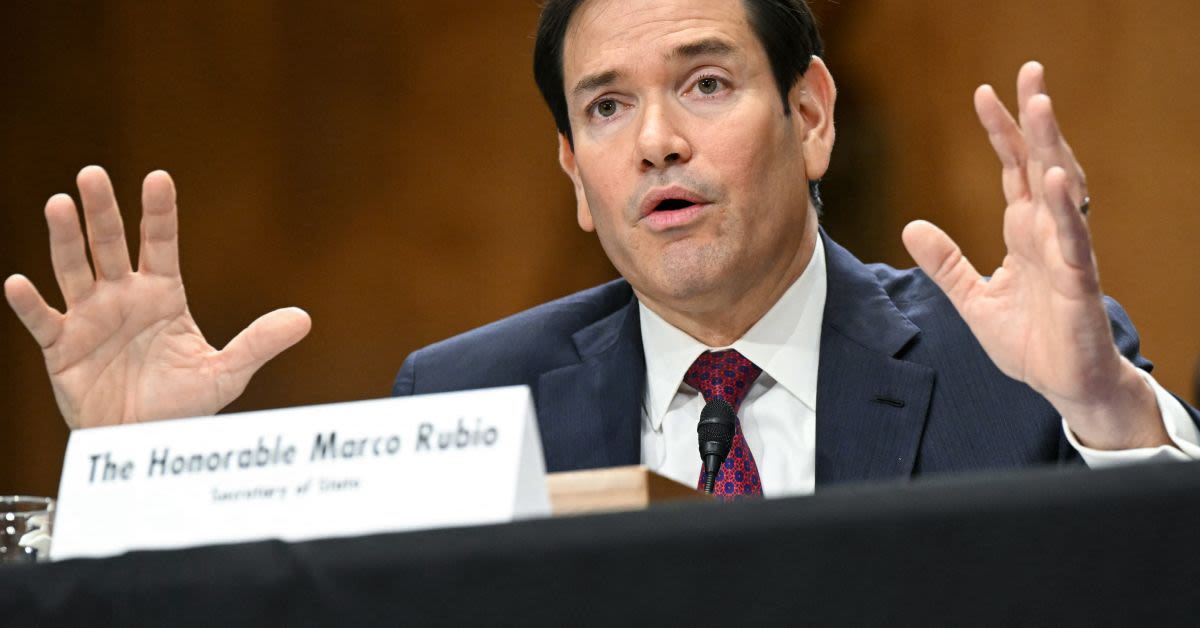
Secretary of State Marco Rubio abruptly ordered Irans diplomatic delegation out of New York City, cutting short its stay just days before the group had planned to depart.
Irans foreign minister and his aides had traveled to Manhattan for the U.N. General Assembly, where President Masoud Pezeshkian addressed world leaders last week, according to the Associated Press. Pezeshkian returned to Tehran after his speech, but Foreign Minister Abbas Araghchi remained in the United States, ostensibly to pursue talks aimed at ending hostilities between Washington and Tehran.
That diplomatic rationale quickly rang hollow as no meaningful progress materialized, prompting Rubio to conclude that the visitors had overstayed their welcome. Even though the Iranian delegation had intended to remain in New York until Wednesday, the secretary of state terminated their stay on Monday, effectively shutting down what critics saw as little more than a propaganda tour on American soil.
The group ultimately departed on Tuesday, a day earlier than planned, underscoring Washingtons willingness under Rubio to enforce a tougher line against the Islamic Republic. Iranian diplomats, however, publicly rejected the notion that they had been pushed out, attempting to portray their exit as orderly and prearranged.
The Iranian delegation left New York on Monday evening, in accordance with the schedule that had also been communicated to the U.S. Department of State in advance on September 17, the delegation wrote on social media. Having achieved nothing, the State Department has resorted to propagating baseless and worthless news.
Their protestations did little to blunt Rubios broader critique of the regimes behavior and intentions, which he laid out in an interview posted on the State Departments website. He argued that Irans leadership has spent decades channeling national wealth into violence and subversion rather than improving life for ordinary Iranians.
Every dollar that Iran has, what they have done over the last 30 years is anytime they get money be it under Obamas sanction relief, be it under economic selling of oil and gas or whatever they dont use that money to build hospitals; they dont use that money to build roads. They dont use that money to improve the life of the Iranian people, he said. They use that money to do two things: build weapons for themselves and export the revolution. They use the money to fund Hezbollah; they use the money to fund Hamas; they use the money to fund Shia militias in Iraq. Thats what they use they use the money to sponsor terrorism and assassination plots all over the world, Rubio continued.
And so every penny that they get into their hands is money that they use for purposes of these malign activities. And so when youre denying them money through oil sales and sanctions, youre not just punishing them, he added. You are preventing them from getting access to money that they will use to try and kill Americans and others around the world and their own people, and build weapons and threaten the world and ultimately break out to a nuclear weapon program.
Rubios comments reflect a hawkish, Reagan-style approach that views the Iranian regime not as a misunderstood regional actor but as a revolutionary project fundamentally hostile to the West. He stressed that the core problem is ideological, rooted in a radical theocratic movement that has captured the state and weaponized it against its own citizens and neighboring countries.
Oftentimes people make the mistake of equating Iran to a country. It is a country, but the problem with Iran is not the country. The problem with Iran is the revolution, and thats what governs in that country, he said. Its not the government officials you see with the suits on that go on Meet the Press and get this free pass on American media. Thats not who were talking about here. Who calls the shots in Iran are radical Shia clerics with an apocalyptic vision of the future. They believe that it is their religious calling to trigger about the last days of the world and the apocalypse.
For conservatives who have long warned against appeasing Tehran, Rubios decision to curtail the delegations stay will be seen as a welcome departure from the leniency of prior Democratic administrations. By emphasizing sanctions, financial pressure and a refusal to indulge Irans diplomatic theater in New York, the secretary of state is signaling that American hospitality is no longer guaranteed to a regime that funds terrorism, threatens U.S. allies and dreams openly of an apocalyptic confrontation with the West.
Login