
Socialism, having already taken up the cause of animal welfare in earlier debates, has now turned its attention to the far less cuddly realm of municipal finance and taxpayers would be wise to pay attention.
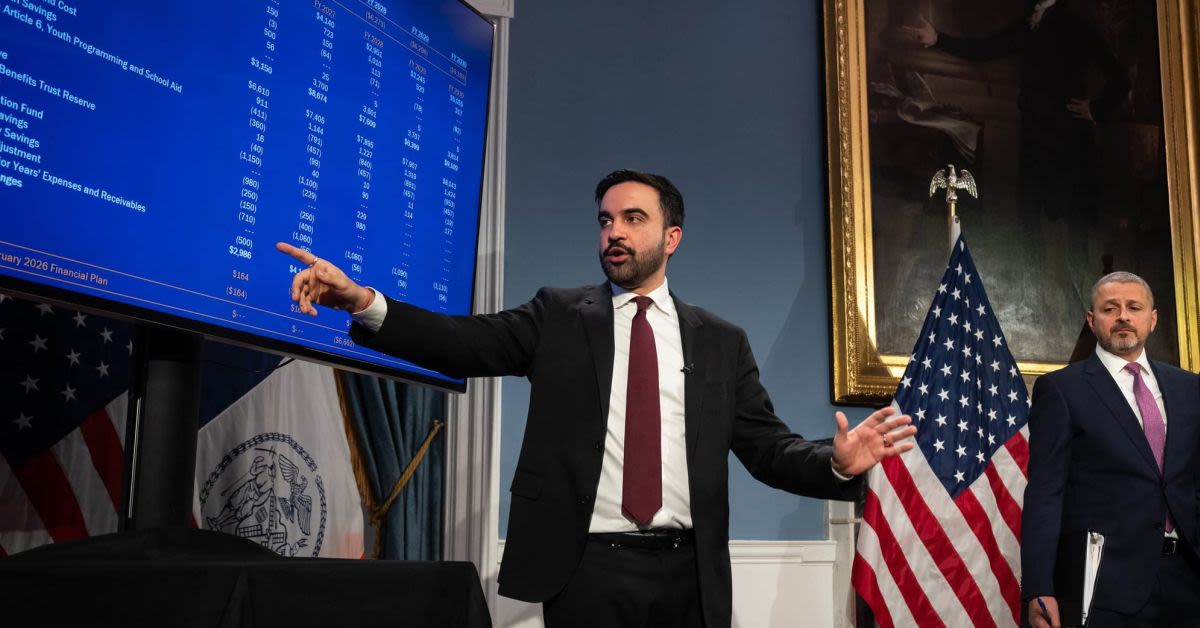
According to Western Journal, New York City is once again illustrating the yawning gap between soaring political promises and the far less glamorous bill that eventually lands in the publics mailbox. Mayor Zohran Mamdani recently celebrated closing what his administration described as an inherited $12 billion budget gap, a feat made possible only because Albany stepped in with roughly $8 billion in assistance, expanded taxing authority, and added financial flexibility. This was not some hidden cache of wealth miraculously unearthed beneath the cushions of capitalist oppression; it was money transferred from the state, meaning from other taxpayers, present and future.
Somehow, the revolution will be refinanced. That wry observation captures the essence of the citys strategy: not to shrink governments ambitions, but to stretch out the costs and push them further into the future. Part of the supposed solution involved restructuring pension obligations and extending repayment from 2032 to 2037, a move that Bloomberg reported would generate an actuarial estimate of approximately $5 billion in additional payments over time.
The city comptroller has tried to reassure the public by describing the arrangement as neutral in present-value terms, arguing that New York will simply pay less now and more later. Yet the obligation has not vanished; it has merely been shifted into a more politically convenient decade, where todays officeholders hope someone else will be left holding the bag. Accounting, in this context, becomes a kind of political alchemy: with enough confidence and spin, we still owe the money is magically rebranded as problem solved.
Apparently, the road to affordability is paved with longer repayment schedules. That road, however, is not one that every stakeholder is willing to travel. The Police Pension Fund declined to approve the restructuring, even as four other pension boards including the Fire Pension Fund agreed to the deal.
Consider the firefighter who could earn more in the private sector but chooses public service in part because of the promise of retirement security. That pension is not a complimentary mint left on the pillow by whichever politician happens to occupy City Hall; it is a core component of the employment bargain, a contractual assurance that the city will honor its commitments after years of dangerous work.
Imagine the recruitment pitch under this new fiscal philosophy: You run toward burning buildings. We run from the payment schedule. Can the firefighter reschedule the fire until 2037? The absurdity of that question underscores the moral hazard of treating long-term pension obligations as a convenient source of short-term budget relief.
Who knowingly trades a safer, better-paying opportunity for a retirement promise whose financial backing politicians treat as an emergency source of budget flexibility? That is not a rhetorical flourish; it is a real question for anyone considering a career in public safety under a city government that views pensions as negotiable. An IOU is an excellent retirement plan, provided the grocery store accepts one.
City Hall found additional breathing room by postponing a $3.7 billion contribution to the Retiree Health Benefits Trust until December 2026, according to NBC New York. Unexpectedly strong tax collections driven in no small part by robust Wall Street profits also helped ease the immediate cash crunch.
The administration has insisted that retirees benefits will not be affected by these maneuvers. Wonderful. Nothing says permanent financial stability quite like postponing a multibillion-dollar contribution and thanking the investment bankers. Capitalism: morally intolerable until its tax payment clears.
Meanwhile, ordinary families do not enjoy the luxury of pushing todays bills into the next decade. New York-area consumer prices were 4.3 percent higher in August 2026 than one year earlier, with food prices up 3.3 percent and energy costs surging 15.4 percent.
The retiree needs groceries. The firefighter needs housing. The working parent needs electricity. None of them can settle their accounts with a denunciation of billionaires, and when inflation slows, the earlier price hikes do not reverse themselves and hand back the money that has already been spent.
Your bills are increasing less rapidly is not the same sentence as your life has become affordable. Perhaps City Hall could attempt to explain that distinction at a supermarket checkout line. Bring a campaign sign and see whether the cashier accepts it. Or better yet, open a government grocery store.
Mamdanis administration has, in fact, committed $70 million in capital funding for five city-owned grocery stores one in each borough even as it stretches out payment schedules on existing obligations. The same government that cannot fully fund its retiree health trust on time now proposes to add bananas, bread, and milk to its balance sheet.
Supporters of the plan insist that public ownership can lower prices and improve access in underserved neighborhoods. Fine. Publish the complete cost per customer, the continuing subsidy, and the measurable results.
A lower price at the register does not mean the underlying cost has disappeared; it may simply mean that another taxpayer has picked up the rest of the grocery bag. The receipt gets shorter. The governments involvement gets longer. Naturally, only one of those documents appears in the campaign advertisement.
While New York experiments with state-backed bailouts, extended obligations, and municipally owned grocery stores, Florida has spent nearly three decades moving in the opposite direction. Florida imposes no state personal income tax, and its 202627 budget announcement touts nearly $18 billion in reserves, AAA credit ratings from the major rating agencies, and substantial debt reduction.
The state has also eliminated its commercial rent tax, a direct nod to the importance of private enterprise and a competitive business climate. Lower taxes. Financial reserves. Paying down obligations. It is an outrageously unfashionable idea: Make the governments promises fit the resources available to honor them. There are no chants. No dramatic graphics. No Department of Revolutionary Produce. Just arithmetic.
Florida is hardly flawless, and a Republican supermajority does not exempt state government from scrutiny or accountability. Yet on taxation and fiscal management, its approach diverges sharply from New Yorks reliance on state assistance, expanded revenue authority, and postponed obligations.
Which approach will prove more attractive to the people expected to finance government? The southbound traffic report offers a telling hint. Census-based figures indicate that approximately 50,700 people moved from New York state to Florida in 2024 alone.
People expected to finance New Yorks promises apparently understand that they have options. A separate MovingPlace study identified Florida as the leading destination for people leaving New York City, capturing nearly 17 percent of the departures it tracked. The MiamiFort LauderdaleWest Palm Beach metropolitan area ranked second among destination metropolitan areas, with Orlando and Tampa also featuring prominently.
Political speeches can be interpreted several ways. Moving vans are generally less ambiguous. Palm Beach Countys growing financial sector has even earned an official economic-development label: Wall Street South.
Apparently, financial firms can distinguish between being welcomed as employers and being appreciated primarily as taxable wildlife. Families do not need a graduate seminar in political economy to compare housing costs, taxes, job opportunities, and the likelihood of having money left after paying the bills.
The forwarding address is a perfectly serviceable form of public comment. Yet Floridians should recognize that this debate does not stop at the state line.
DSA-affiliated Democratic candidates are already participating in Floridas 2026 elections. Apparently, receiving New Yorks residents is insufficient. Florida must also consider importing the governing philosophy they are being asked to finance. What could possibly go wrong?
Florida is home to many who fled communist Cuba and the former Eastern Bloc, people whose memories of shortages and rationing remain vivid. For those who personally experienced shortages and rationing, promises of government-managed abundance are not exciting new discoveries.
They have heard the sales presentation. Polands Institute of National Remembrance has documented how communist control over trade and economic priorities devastated ordinary living standards, left basic goods unavailable, and produced enormous lines whenever deliveries arrived.
The government claimed to represent workers while requiring those workers to reorganize their daily lives around finding food. People stood in line for hours, hoping bread, beans, or whatever had arrived would remain available when their turn finally came.
These were not queues for limited-edition pastries. They were trying to feed their children. No, five municipally owned grocery stores will not transform Manhattan into Havana. Not every government expenditure constitutes communism, and not every public program produces a bread line.
But that obvious distinction does not make historical experience irrelevant. Nor does it require people who lived through government-managed scarcity to applaud every proposal expanding the governments role in feeding them.
The promise was abundance. The experience involved empty shelves. The promise was dignity for workers. Workers were told to wait in line.
The branding may improve. The obligation to produce something people can actually eat remains stubbornly unchanged. That same principle applies to public finance: slogans do not pay debts, and ideological fervor does not balance budgets.
Which state will be better positioned over the long term: the one preserving reserves, reducing taxes, and attracting private investment or the one celebrating financial relief that includes postponing existing obligations while launching new taxpayer-supported ventures? The suspense is unbearable.
Knowing all of this, why would Floridians import these policies without first demanding a convincing explanation of why the results would be different here? We have the migration figures. We have the payment schedules. We have neighbors who remember the bread lines.
We do not need another magnificent slogan. Florida can welcome the people. The policy manual can remain at the forwarding address.
Login