
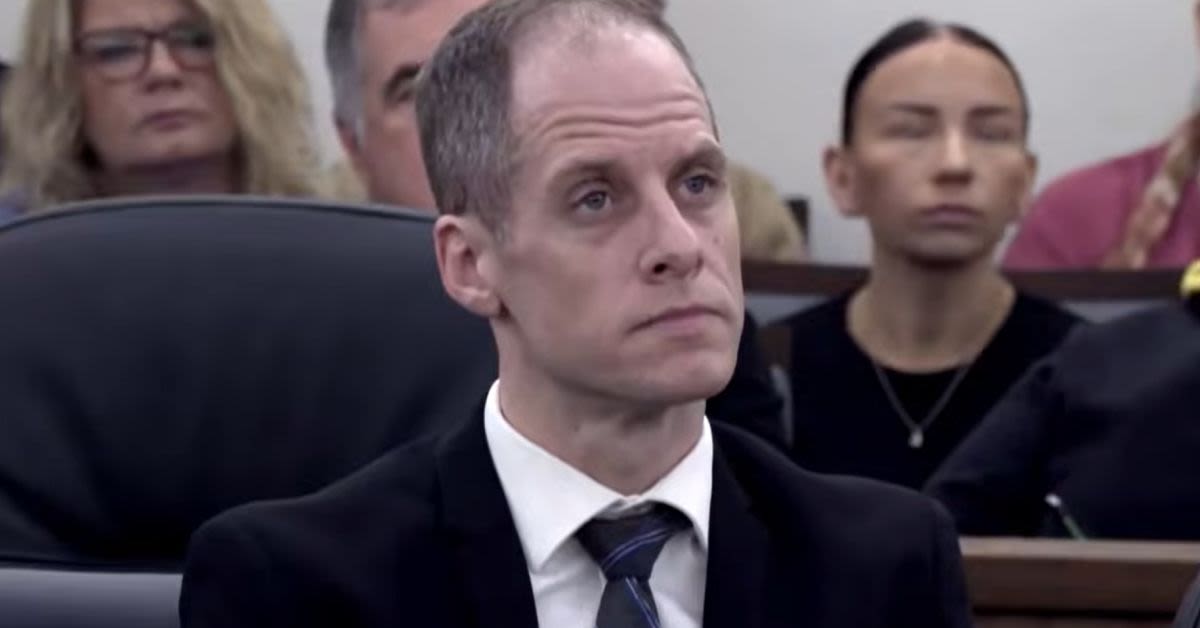
Before the stifled laughter that rippled through a Miami County, Ohio, courtroom, there was a marriage, a ministry, a brief brush with reality television, and a wife who is now dead.
Caleb Flynn, 40, once appeared before a national audience as an American Idol contestant and stood weekly before a congregation as a church music pastor in Ohio, telling cameras and parishioners alike that he loved the Lord and loved his wife, Ashley, more than anything. According to Western Journal, that carefully crafted image now stands in stark contrast to the allegations that on Feb. 16, in the Tipp City home he shared with Ashley and their two young daughters, Flynn shot his 37-year-old wife and then staged the scene to resemble a break-in before dialing 911.
Flynn has pleaded not guilty to murder and related charges, and as of Sept. 25, a jury is weighing the evidence that will determine whether the former worship leader is also a convicted killer. Prosecutors have rejected any notion of a crime of passion, arguing instead that the events of that February night were the culmination of a long, calculated betrayal.
The states theory centers on an alleged affair that prosecutors say stretched on for more than a year with Alleigha Botner, who first encountered Flynn as a 21-year-old intern at his church and is now 24. Far from a fleeting indiscretion, investigators say the relationship was documented in excruciating detail, with more than 100,000 text messages pulled from their devices.
Botner took the stand for two days, describing secret mornings when Flynn was supposedly at the gym but was instead with her, late nights at her home, and an ultimatum she delivered about divorce that hung over their relationship. The messages, she testified, were not the language of a man wrestling with his conscience, but of someone spiraling deeper into resentment and fantasy, with words far uglier than a love song.
On the stand, Botner recounted that Flynn told her, if I could kill her and not go to jail, I would, and that he stayed up thinking about ways to kill her. She said these were not isolated outbursts but part of a pattern, claiming he spoke more than once in the months before February about wanting Ashley dead, statements prosecutors now frame as motive written in his own digital hand.
Botner also walked jurors through what she says the pair viewed and discussed in the hours leading up to Ashleys death, underscoring that she is a witness in the case, not a co-defendant. Her testimony placed Flynns alleged obsession with escape and freedom in the immediate context of the killing, painting a picture of a man who wanted out of his marriage at any cost.
In the gallery, Ashleys parents, Todd and Jill Smith, and her sister, Kayla Keyt, listened as the state outlined how Flynn allegedly spoke of being free, of choosing Botner, and of despising the marriage he still publicly inhabited. They heard Botner describe lyrics he wrote for his mistress, and then, in a surreal turn, the court heard those lyrics set to music.
Prosecutors played Flynns AI-assisted love songs over the courtroom speakers, using files recovered from his devices, with the lyrics drawn from notes on his phone. One track, You Gave It All, opens with images of friends, late nights, and a room that seemed to vanish, while another marks the third of every month as a private anniversary, and yet another leans into the age gap with whispers about the years in between, love that was not that clean.
As the songs played, Keyt visibly struggled not to laugh, her reaction mirrored by Jill Smith and, it appeared, by Todd Smith as well. A woman seated between and behind Jill and Kayla was also plainly fighting to keep her composure, the absurdity of the saccharine soundtrack colliding with the gravity of the accusations.
At the defense table, Flynn dabbed his forehead with a napkin as the music continued, the romantic posturing of the lyrics now echoing in a room focused on death, betrayal, and accountability. This was not entertainment, and it was certainly not worship; it was the grotesque spectacle of a man who once sold himself as a spiritual leader forcing his wifes grieving family to endure the audio diary of his adultery.
Botner told jurors the songs were meant to demonstrate how deeply Flynn cared for her, a private testament to their relationship. Right now, she said, they mean nothing, a stark admission that whatever emotional currency those tracks once held has been obliterated by the reality of Ashleys absence.
That, in many ways, is the honest half of the story: the affair, the deception, the self-indulgent soundtrack of a man who abandoned his vows in secret. The other half remains for the jury to decide whether the same man who penned those lines also pulled the trigger that ended Ashleys life.
Adultery likes to imagine itself as a private chorus, a hidden melody that harms no one beyond the consenting adults involved. But once a trial begins and a victims sister has to bite her cheek in open court to keep from laughing at the sheer moral absurdity of it all, the lie of privacy collapses under the weight of public consequence.
Sin, as Scripture and experience both attest, has a way of finding people out, no matter how carefully they curate their public image. Sometimes it finds them in a key change, sweating through a napkin at the defense table, while the family of the woman they vowed to honor nearly laughs because the only other option is to scream.
The trial is still underway, and the songs themselves cannot convict; they are not forensic evidence of murder, only proof that the secret is over and the mask has slipped. Ashleys family has heard every bar, and so has the wider public, and now the question is whether a justice system too often swayed by emotion and spectacle will deliver the justice and peace this wife and mother and those who loved her so clearly deserve.
Login