
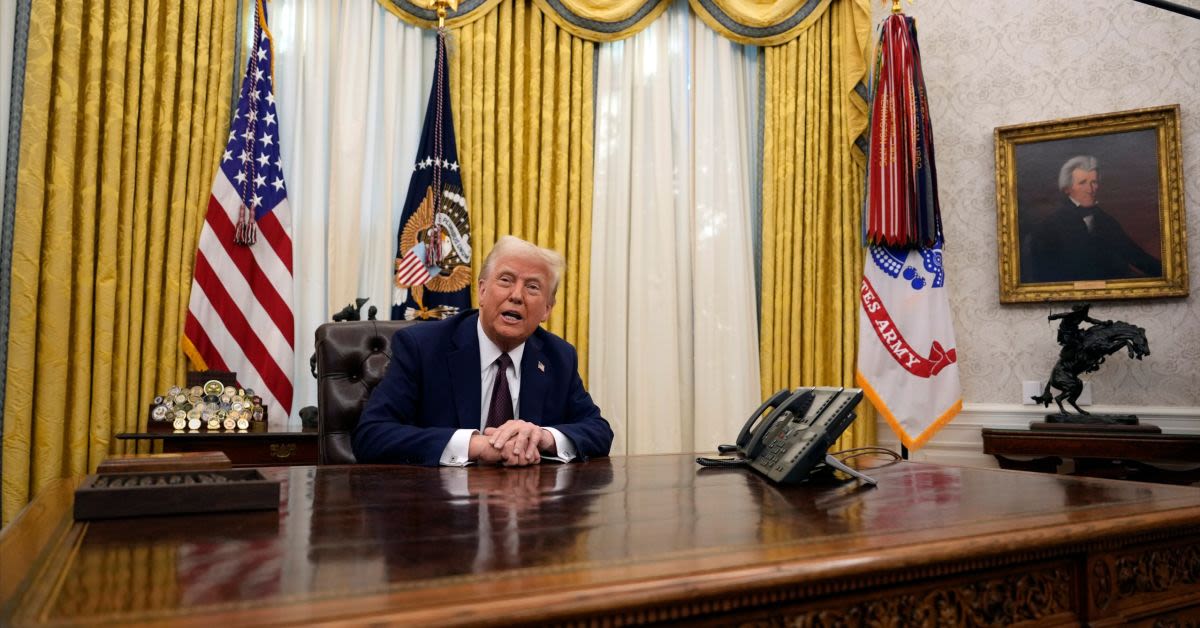
President Trump declared from the Oval Office that every state in the union has now joined his most-favored-nation prescription drug pricing agreements under Medicaid, marking a sweeping realignment of how the United States pays for life-saving medicines.
According to the Gateway Pundit, the President confirmed that all 50 states have signed onto the plan, which pegs what Medicaid pays for many brand-name drugs to the lowest prices charged in other developed countries. Standing before reporters, he framed the move as a historic victory for taxpayers and patients alike, saying, This will save states billions and billions of dollars per year on drugs and allow them to invest those savings in providing better health care and higher quality service for the American people.
President Trump, who has long criticized the pharmaceutical industry and foreign governments for exploiting American consumers, underscored the political and economic magnitude of the reform. I mean, this one thing alone should win us the midterms. It wont because the press doesnt report it. But this one thing alone. Think of it, the biggest drug reduction, prescription drug, in history, times maybe 10. Nobodys ever seen anything like it, he said, highlighting what he views as a media blackout on conservative policy successes.
At the heart of the initiative is a straightforward principle that rejects the notion that Americans must subsidize socialized medicine abroad. If they sell the drugs cheaper in Europe, as an example, they sell it cheaper in America. So, if a specific country is the lowest in the world, thats the price we pay, Trump said, making clear that foreign price controls will no longer be underwritten by U.S. taxpayers.
Since May 2025, the administration has secured agreements with 26 pharmaceutical companies to bring American prescription drug prices down to most-favored-nation status, aligning U.S. Medicaid prices with the lowest levels offered in peer nations. The rest are all coming in very rapidly, Trump said, to provide their drugs to Americans at discounts of 60, 70, 80, and even 90% discount.
The President contrasted this new reality with decades of bipartisan failure that left Americans paying more than anyone else for the same medicines. For decades, Americans paid the highest drug prices anywhere in the world by far. It wasnt even close. We were like a laughing stock. We were a whipping post, Trump added. But now, under these agreements, we pay the lowest prices ever paid by our country. We pay the lowest prices in the world. So we went from paying the highest drug prices in the world to paying the lowest drug prices in the world.
The White House Council of Economic Advisors projects that these reforms will save taxpayers $64.3 billion in Medicaid costs over the next ten years, a figure that underscores the scale of the shift away from business-as-usual in Washington. For conservatives who have long argued that tough negotiation and market-based leverage can outperform bureaucratic regulation, those numbers offer powerful validation.
According to the White House, all 50 States Medicaid programs will benefit from lower prescription drug prices under his agreements with pharmaceutical manufacturers to match the lowest prices paid by other developed nations (known as the most-favored-nation, or MFN, prices). Under the GENEROUS Medicaid Payment Model, drugmakers that participate must provide rebates on costly brand-name medicines so that the final price to Medicaid does not exceed the MFN price.
The model spans hundreds of drugs across nearly every major therapeutic class, including critical treatments for cancer, diabetes, and asthma that are central to Medicaid beneficiaries care. Due to the Presidents MFN deals, Medicaid programs have already received one million free prescriptions of Eliquis, a widely used heart medication, signaling that the policy is not merely theoretical but already reshaping real-world access to essential drugs.
For a political class that has promised lower drug prices for years and delivered little, the scope of these agreements raises an obvious question: why did it take this long for Washington to demand a better deal for American patients. As President Trump presses ahead with his second-term agenda, the most-favored-nation framework stands as a concrete example of conservative governance using Americas market power to defend taxpayers, challenge entrenched corporate interests, and put the needs of citizens ahead of global price schemes.
Login