
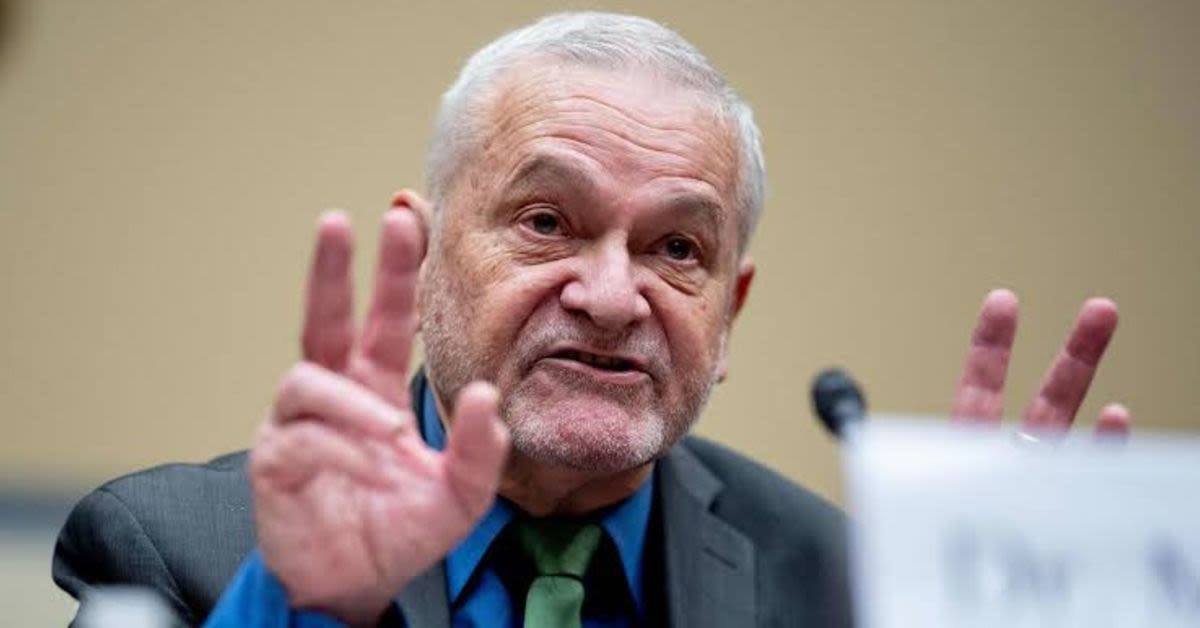
A longtime associate of Dr. Anthony Fauci has admitted in federal court that he participated in a scheme to conceal records related to the COVID-19 pandemic from the American public.
Dr. David Morens, a former senior adviser at the National Institute of Allergy and Infectious Diseases, pleaded guilty to a conspiracy charge tied to efforts to hide and destroy federal records, after initially facing counts including conspiracy against the United States; destruction, alteration, or falsification of records in federal investigations; concealment, removal, or mutilation of records; and aiding and abetting, according to Western Journal. The Department of Justice announced Tuesday that Morens had entered his guilty plea the previous Thursday, and he now faces a potential sentence of up to five years in prison.
The case stems from revelations in 2024 that Morens had used his personal email account to conduct official business concerning National Institutes of Health grants with EcoHealth Alliance, the controversial nonprofit that collaborated with the Wuhan Institute of Virology. In doing so, he ensured that key communications would be shielded from Freedom of Information Act requests, preventing the public and Congress from fully scrutinizing the governments handling of COVID-19 origins and related funding.
House investigators on the Select Subcommittee on the Coronavirus Pandemic uncovered emails in which Morens openly discussed how to route sensitive information away from official channels. In one message to EcoHealth President Peter Daszak, Morens wrote, I can either send stuff to Tony on his private gmail, or hand it to him at work or at his house. He is too smart to let colleagues send him stuff that could cause trouble.
Morens emails went even further, suggesting an intentional effort to erase records that might later be requested by journalists, watchdogs, or lawmakers. In 2021, Morens wrote, i learned from our foia lady here how to make emails disappear after i am foiad but before the search starts, so i think we are all safe, and he later added, Plus i deleted most of those earlier emails after sending them to gmail.
As the scandal widened, Fauci moved quickly to distance himself from his longtime colleague and defender. With respect to his recent testimony before this subcommittee, I knew nothing of Dr. Morenss actions regarding Dr. Daszak, EcoHealth or his emails. It is important to point out for the record that despite his title, and even though he was helpful to me in writing scientific papers, Dr. Morens was not an advisor to me on [NIAID] policy, or other substantive issues, Fauci said.
Federal officials, however, framed the case as emblematic of a deeper betrayal of public trust during one of the most consequential crises in modern history. These allegations represent a profound abuse of trust at a time when the American people needed it most during the height of a global pandemic, Acting Attorney General Todd Blanche said at the time Morens was indicted, according to a DOJ release.
Blanche emphasized that the alleged misconduct was not a mere technical violation but a deliberate attempt to suppress debate over how the pandemic began. As alleged in the indictment, Dr. Morens and his co-conspirators deliberately concealed information and falsified records in an effort to suppress alternative theories regarding the origins of COVID-19. Government officials have a solemn duty to provide honest, well-grounded facts and advice in service of the public interest not to advance their own personal or ideological agendas, he said.
The indictment also alleged that Morens personally benefited from his actions, adding a layer of corruption to the already serious transparency issues. Not only did Morens allegedly engage in the illegal obfuscation of his communications, but he received kickbacks for doing so. If you have engaged in activity conspiring against the United States, we will not stop until you face justice, FBI Director Kash Patel said in April when Morens was indicted.
Prosecutors and inspectors general stressed that the case highlights how bureaucrats can weaponize secrecy to evade accountability, particularly when policy decisions carry enormous social and economic consequences. When public officials deliberately circumvent the law to hide their communications from the public, they undermine the publics trust and the integrity of our institutions. This was especially true during the COVID-19 pandemic when transparency was needed most, said U.S. Attorney Kelly O. Hayes for the District of Maryland.
Hayes underscored that her office intends to pursue those who treat federal records laws as optional. Our office will continue to hold accountable those who seek to evade their legal obligations for their own gain, she said, while Special Agent in Charge Marcus L. Sykes of the Department of Health and Human Services Office of Inspector General added that such conduct strikes at the heart of constitutional oversight.
Public officials who disregard their legal obligations undermine the transparency that keeps our federal programs strong. The deliberate mishandling and concealment of records in a federal investigation is not just a breach of duty, it is a betrayal of public trust, Sykes said, capturing the broader concern that unelected officials used back channels and deletion tactics to shape the COVID-19 narrative.
For many Americans, especially those on the right who long suspected that federal health agencies were hiding inconvenient facts about the viruss origins and the governments pandemic response, Morens guilty plea will be seen as confirmation that their skepticism was justified. The case raises fresh questions about who else inside the federal health bureaucracy may have engaged in similar conduct, how far the cover-up extended, and whether Congress will finally impose real consequences on officials who treat transparency laws as obstacles rather than obligations.
Login