
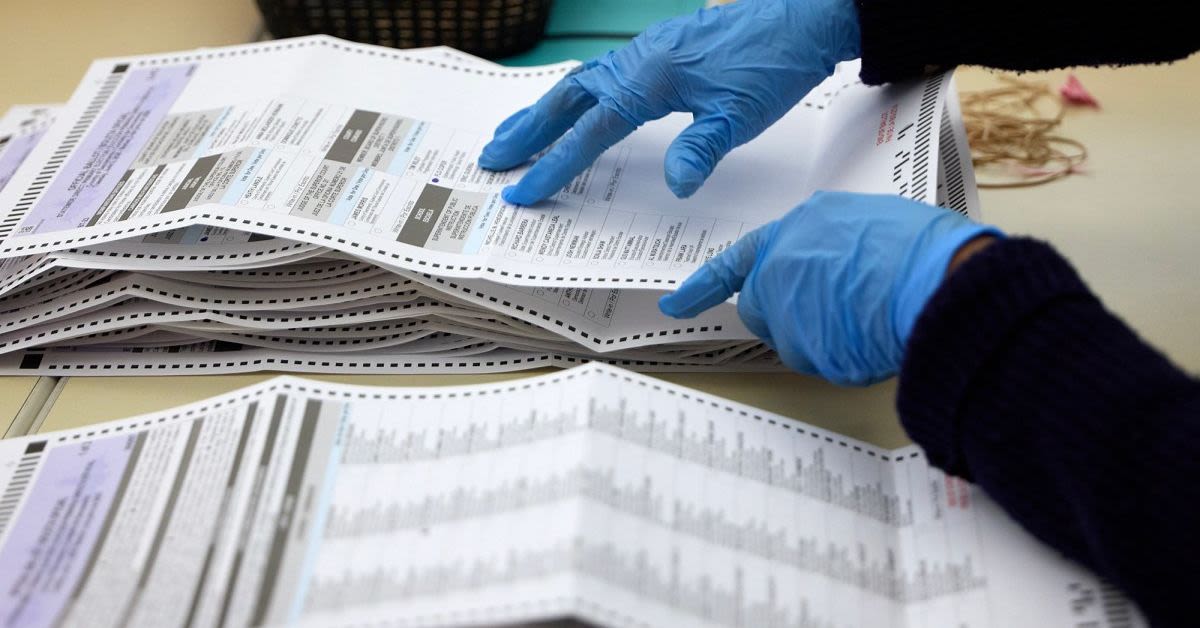
Wisconsin Democrats have been dealt a legal setback after a state judge rejected their attempt to let voters redo absentee ballots cast for primary candidates who later abandoned their campaigns.
According to Western Journal, Dane County Circuit Judge David Conway ruled that state law does not permit voters to spoil or replace an absentee ballot once it has been returned to local election officials. The decision, issued in a court order filed July 29, came in response to a lawsuit brought by three Dane County residents Joseph Alan Bins, Thomas Elert and Susan Roberts who argued they were effectively disenfranchised when their chosen Democratic candidate exited the race after they had already mailed in their ballots. Elert and Roberts maintained they would have delayed returning their absentee ballots had they known they would be barred from casting a new one once their preferred candidate withdrew, underscoring the risks inherent in early voting when volatile primary fields are still in flux.
Judge Conway anchored his ruling in the plain text of Wisconsins election statutes, rejecting efforts to stretch the law to accommodate the Democrats eleventh-hour maneuver. The Court concludes that the unambiguous language of the statute does not allow a voter to spoil an absentee ballot after it is returned. The clerks duty to issue a new ballot is triggered whenever a properly identified voter returns a spoiled or damaged ballot, the judge said, according to the order. That language, he found, clearly applies only when a voter physically returns a ballot that is spoiled or damaged before it is submitted, not after it has been officially received and logged by election officials.
The Wisconsin Elections Commission and the Democratic Party of Wisconsin did not immediately respond to the Daily Caller News Foundations request for comment, leaving unanswered whether they will seek legislative changes or further legal action. For now, the ruling reinforces a basic election principle long favored by conservatives: once a ballot is cast and received, it should not be subject to revision based on shifting political winds or partisan calculations. Allowing such do-overs would invite chaos, undermine confidence in results, and open the door to pressure campaigns and manipulation as candidates enter and exit races.
All three plaintiffs had voted for Democratic Lt. Gov. Sara Rodriguez in the partys gubernatorial primary before her campaign imploded over financial mismanagement. Rodriguezs campaign manager mishandled her financial records, prompting her to suspend her bid on July 17, Politico reported, leaving early voters who backed her without recourse. Today Im suspending my campaign. Thank you to everyone who believed and showed up for this campaign. Lets keep fighting together to protect the Wisconsin we love, Rodriguez said in an X post that day, attempting to rally supporters even as her candidacy collapsed.
The turmoil did not end there, as another prominent Democrat also abandoned the race amid weak support. Former Democratic Lt. Gov. Mandela Barnes exited the governors contest on July 30, citing poor polling numbers, according to PBS. Its become very clear who our nominee is going to be, Barnes said, according to the outlet, effectively conceding that the partys base had moved on and that his continued presence would only prolong internal divisions.
Socialist Democratic State Assemblywoman Francesca Hong initially appeared to be the dominant figure in the primary, but even that apparent certainty evaporated once votes were counted. Hong, who had been widely viewed as the heavy favorite heading into Tuesdays Democratic primary, conceded on Wednesday to Democratic Milwaukee County Executive David Crowley, who enjoyed the backing of outgoing Democratic Gov. Tony Evers. Former Wisconsin Economic Development Corporation CEO Missy Hughes had already bowed out earlier in the cycle, withdrawing from the race and endorsing Rodriguez on June 22, Wisconsin Public Radio reported, further illustrating the instability of the Democratic field.
The legal dispute over absentee ballots unfolded against this backdrop of Democratic infighting and candidate churn, highlighting the tension between convenience voting and electoral integrity. The Wisconsin Elections Commission had already addressed the issue earlier this summer, voting 4-2 on July 9 to bar the spoiling of absentee ballots that had already been returned, according to WisPolitics. Judge Conways ruling effectively affirms that decision, signaling that, at least in Wisconsin, the law will not bend to accommodate partisan regret or strategic recalculations after the fact.
For conservatives who have long warned about the dangers of expansive absentee voting and last-minute rule changes, the decision represents a modest but meaningful victory for clear rules and orderly elections. Voters who choose to cast ballots early, particularly in crowded primaries, do so with the understanding that political fortunes can change and candidates can falter, and the court has now made plain that such risks belong to the voter, not to election officials or the courts.
Login