
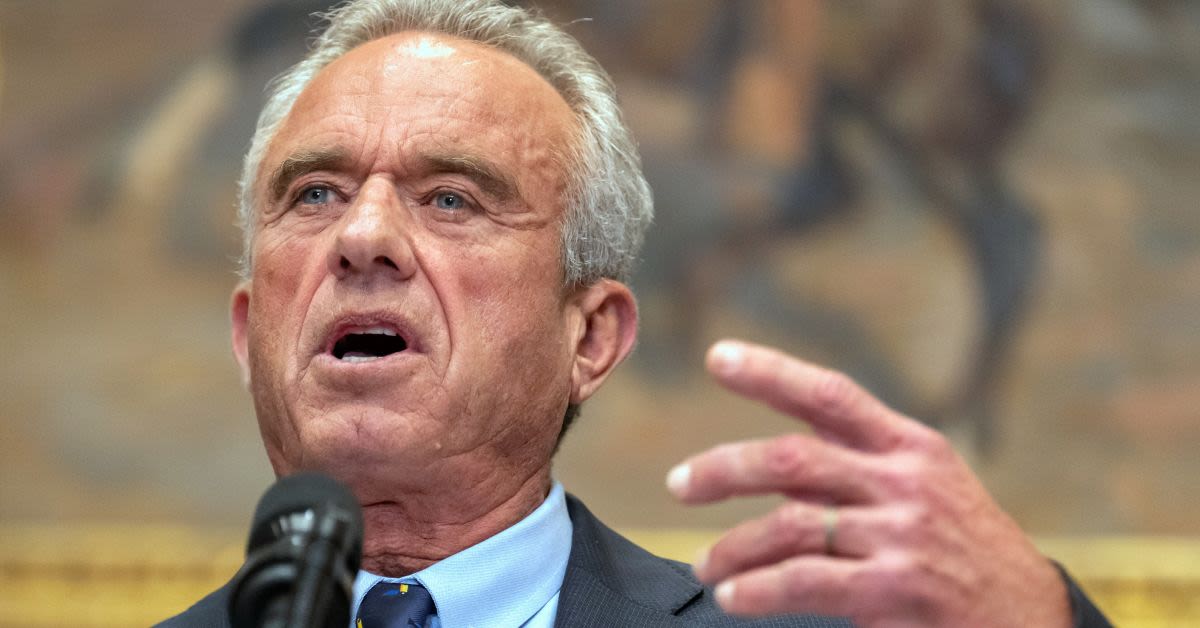
Health and Human Services Secretary Robert F. Kennedy Jr. has moved to dismantle a key organ procurement organization after federal investigators uncovered a pattern of shocking patient-safety failures that raise profound ethical and legal questions about the nations transplant system.
According to Gateway Pundit, Kennedy announced in Lexington, Kentucky, that the Department of Health and Human Services is initiating the decertification of Network for Hope, the federally designated organ procurement organization (OPO) responsible for Kentucky and parts of Indiana, Ohio, and West Virginia. The decision follows a sweeping federal review that found the group repeatedly pressed ahead with organ procurement despite clear indications that some patients were not suitable donors and, in some cases, may not even have been dead when the process began.
The Health Resources and Services Administration (HRSA) examined 351 Network for Hope cases from 2021 to 2024 in which organ donation had been authorized but ultimately did not occur. In 103 of those casesnearly 30 percentinvestigators identified concerning features, including 73 patients who displayed neurological signs flatly incompatible with organ donation.
These findings cut to the heart of public trust in a system that depends on families believing their loved ones will be treated with dignity and that death will be determined with certainty before organs are removed. Some of these potential donors may not even have been dead when the procurement process started, a scenario that would represent a grave violation of both medical ethics and basic human rights.
One case that helped trigger the investigation involved Anthony Thomas TJ Hoover II, whose ordeal has become a symbol of the scandal. His sister, Donna Rohrer, has said Hoover opened his eyes before the planned retrieval procedure and later thrashed, cried, and grabbed at a doctor during cardiac testing, and the process reportedly ended only after a physician refused to proceed; Hoover survived.
Kennedy laid out the governments findings in stark terms, underscoring that this was not a matter of minor paperwork errors but systemic disregard for patient safety. We reached this decision after extensive reviews by CMS and HRSA found persistent patient safety failures despite repeated oversight, repeated warnings, corrective action plans, and multiple opportunities to improve, he said, adding that Federal reviewers found serious deficiencies in nearly 30% of the cases they examined.
He detailed a pattern of reckless decision-making that placed vulnerable patients at risk. We found patients placed on the organ donation pathway who should have never been there. We found cases where the donation process continued despite signs that patients were not appropriate organ donors. We found repeated failures in clinical judgment, oversight, and patient safety. And we found that these problems continued even after the organization promised to correct them.
Kennedy emphasized that these were not abstract bureaucratic lapses but failures with life-or-death consequences. These failures had real consequences. One of those cases involved TJ Hoover, he said, noting that TJ showed signs of awareness while on the operating table, about to have his organs removed. Physicians refused to proceed with the organ recovery because they believed he was still alive.
Because a few doctors chose conscience over protocol, Hoover is living proof of what is at stake when government-approved entities are allowed to operate without meaningful accountability. Because they acted, TJ is alive and is here with us today, Kennedy said, adding, TJ, we are grateful that youre here, and were grateful to those physicians who had the courage to do the right thing.
HHS has acknowledged that under the Biden administration, an Organ Procurement and Transplantation Network committee closed the very case that sparked the federal investigation without taking any action. The department also claims that the previous administration knew about patient-safety violations but failed to hold the organization accountable, a reminder that both parties have allowed a powerful, quasi-monopolistic transplant bureaucracy to operate with far too little scrutiny.
Gateway Pundit previously reported on the scandal in July 2025 under the headline: Feds Reveal Dozens of Organ Donors May Not Have Been Dead When Procurement Processes Started! Despite those earlier warnings and a federally mandated corrective-action program, HRSA and the Centers for Medicare and Medicaid Services independently concluded that Network for Hope had not demonstrated sufficient improvement.
A May 2026 CMS review reportedly found ongoing problems in donor evaluation, adverse-event reviews, and administration, suggesting that the organization either could not or would not reform itself. Network for Hope disputes the governments conclusions, with CEO Barry Massa stating that the organization strongly disagrees with Kennedys decision and will appeal.
The group insists it complies with national transplant policies and says it has implemented a procedure allowing staff to pause a donation when safety concerns arise. Yet the sheer scale of the documented failures, combined with the chilling account of TJ Hoovers near-death on an operating table, will likely fuel calls from conservatives for far tighter oversight, stronger protections for patients and families, and a rollback of the unchecked power granted to federally sanctioned medical cartels that too often operate beyond the reach of ordinary Americans consent.
Login