
Michigans flagship cash-assistance initiative for pregnant women and new mothers is publicly marketed as something other than guaranteed income, even as the states own welfare blueprint explicitly defines it that way.
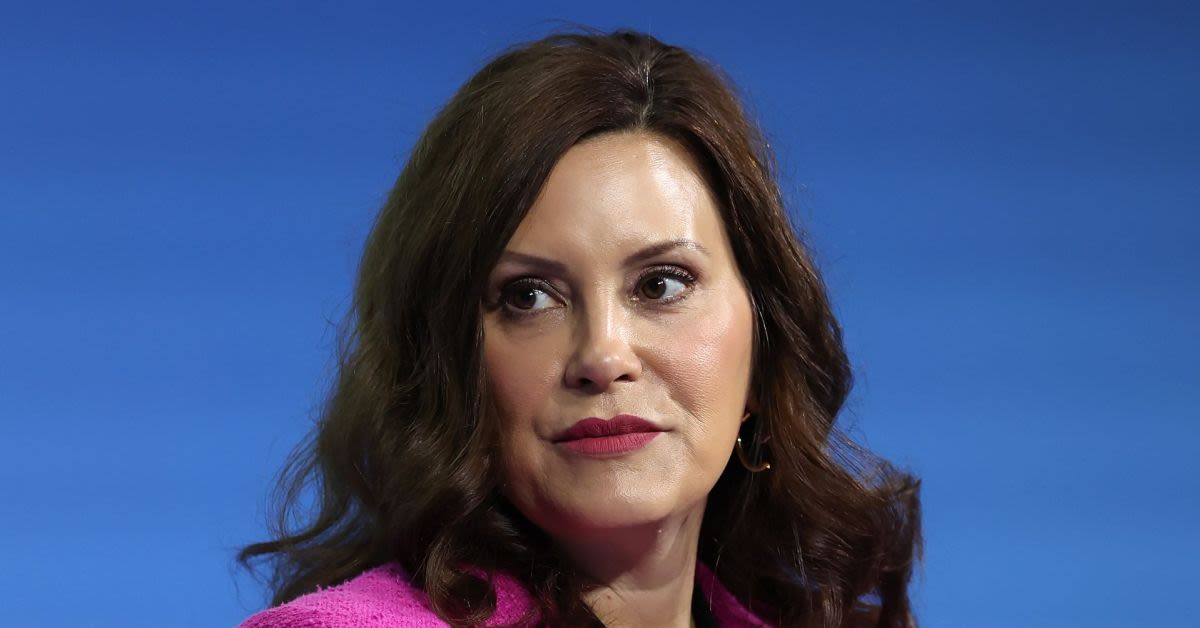
Backed by Democratic Gov. Gretchen Whitmer and administered through Michigan State University in partnership with the nonprofit GiveDirectly, the Rx Kids program offers pregnant women a $1,500 lump-sum payment followed by $500 per month for six or 12 months after birth. According to RedState, the initiative is universal within participating communities, imposes no income or work requirements, and places no restrictions on how recipients spend the money, making it indistinguishable in practice from the guaranteed-income schemes long championed by progressive activists.
The Michigan Department of Health and Human Services Temporary Assistance for Needy Families (TANF) State Plan, effective January 1, defines guaranteed-income payments as regular cash transfers that carry no work requirements or other conditions. The plan then identifies Rx Kids by name, stating plainly: GIP payments do not count as income for the Family Independence Program. RX Kids Payments is an example of a GIP payment.
Despite that unambiguous classification, Rx Kids publicly rejects the guaranteed-income label on its own website. Its FAQ instead describes the initiative as a temporary, health-focused child allowance designed to support families during pregnancy and infancy, insisting, The payments are not meant to be a permanent income stream. ... Rx Kids and child allowances operate within the existing social and economic system.
The programs preferred branding does not alter its underlying structure, which mirrors the very features associated with guaranteed income. In its own policy playbook, Rx Kids describes itself as universal, unconditional and predictable, promising that every participating family will receive the same payment amounts and even offering guidance to other states on how to tap TANF funds to replicate the model.
Michigan lawmakers initially committed $306.5 million in public money to Rx Kids, including $16.5 million in fiscal year 2024, $20 million in fiscal year 2025, another $20 million in fiscal year 2026, and a massive $250 million allocation from the Healthy Michigan Fund. Subsequent budget adjustments canceled roughly $14.6 million in unspent fiscal year 2025 funding, leaving an estimated $291.9 million in taxpayer-backed appropriations still dedicated to the program.
Yet the pace of spending has been strikingly slow relative to the size of the commitment. As of June 2, only about $10.8 million of the nearly $292 million appropriated had actually been disbursed, less than four cents on the dollar, with Rx Kids asserting that 85 percent of state funding flows directly to families, 5 percent supports operations at Michigan State University and GiveDirectly, and 10 percent covers indirect costs such as facilities, information technology, accounting and compliance.
Republican lawmakers, increasingly wary of using TANF and related funds to underwrite what they view as a de facto guaranteed-income pilot, moved to rein in the programs dedicated pipeline of state dollars. They succeeded in stripping a $20 million line item for Rx Kids from Michigans fiscal year 2027 budget and redirecting that money into five other categories, including prenatal-care outreach, maternal and child health administration, and supplemental payments under the states existing Family Independence Program.
Michigan House Speaker Matt Hall has argued that Rx Kids cannot legally tap those reallocated categories, contending that the shift effectively severs the program from future state funding. Program founder Dr. Mona Hanna, however, maintains that eligible participants can still receive TANF reimbursements under the new budget structure, leaving the Michigan Department of Health and Human Services to resolve a dispute that will determine whether Rx Kids has any viable path to continued public financing.
On the operational side, Rx Kids does impose some front-end controls on who can enroll and receive payments. Applicants must verify their identities, prove residency within participating communities, and confirm their pregnancies, with suspicious applications flagged for additional review and birth records cross-referenced before the monthly payments begin.
Once the cash is in recipients hands, however, the program deliberately avoids tracking how it is used. Rx Kids does not examine receipts, impose purchase restrictions, or collect transaction-level data, and Hanna told lawmakers that the only spending information comes from voluntary participant surveys, explaining, This is a program built on trust: trusting women, trusting mothers, trusting families to best meet their needs. ... No, we do not do monitoring.
Hanna has cited those surveys to claim that 94 percent of participating families report using the money to purchase baby supplies, but those figures rest entirely on self-reporting with no independent verification. She further argued that direct monitoring would drive up administrative costs and send a message that government does not trust the families it purports to help, a rationale that may resonate with progressive advocates but raises accountability concerns for taxpayers footing a nearly $300 million bill.
The House Oversight Committee has also pressed Rx Kids over its ties to national guaranteed-income networks, focusing on an advisory circle that included prominent figures in that movement. An archived webpage listed Economic Security Project co-founders Natalie Foster and Dorian Warren, along with Community Change co-president Lorella Praeli, all of whom are associated with efforts to normalize and expand unconditional cash-transfer programs.
That advisory-page listing vanished from the Rx Kids website shortly after the June 2 oversight hearing and now returns a 404 error. Michigan House Oversight Committee Chairman Jay DeBoyer accused the program of trying to obscure those relationships, stating, "Given all this, its telling that Dr. Mona would attempt to conceal these relationships following the hearing with the removal of information," and while the timing is documented, Rx Kids has not publicly demonstrated that the removal was unrelated to the scrutiny.
Even as questions linger over its advisory relationships, its data practices, and its future access to state funds, Rx Kids is pressing ahead with an aggressive expansion plan. The program is moving into more than 60 Michigan communities and projects that it will cover approximately 23,000 births annually, with Whitmer touting the initiative as a model for improving maternal health outcomes and easing financial strain on young families.
Supporters frame Rx Kids as a targeted, time-limited intervention tied to maternal and infant health, but the states own TANF plan leaves little doubt about how the program fits within broader welfare policy. Michigans official welfare blueprint explicitly classifies Rx Kids payments as guaranteed income, and after nearly $292 million in public appropriations, taxpayers are entitled to transparency and candor rather than a semantic tug-of-war between bureaucratic definitions and carefully crafted public-relations language.
Login