
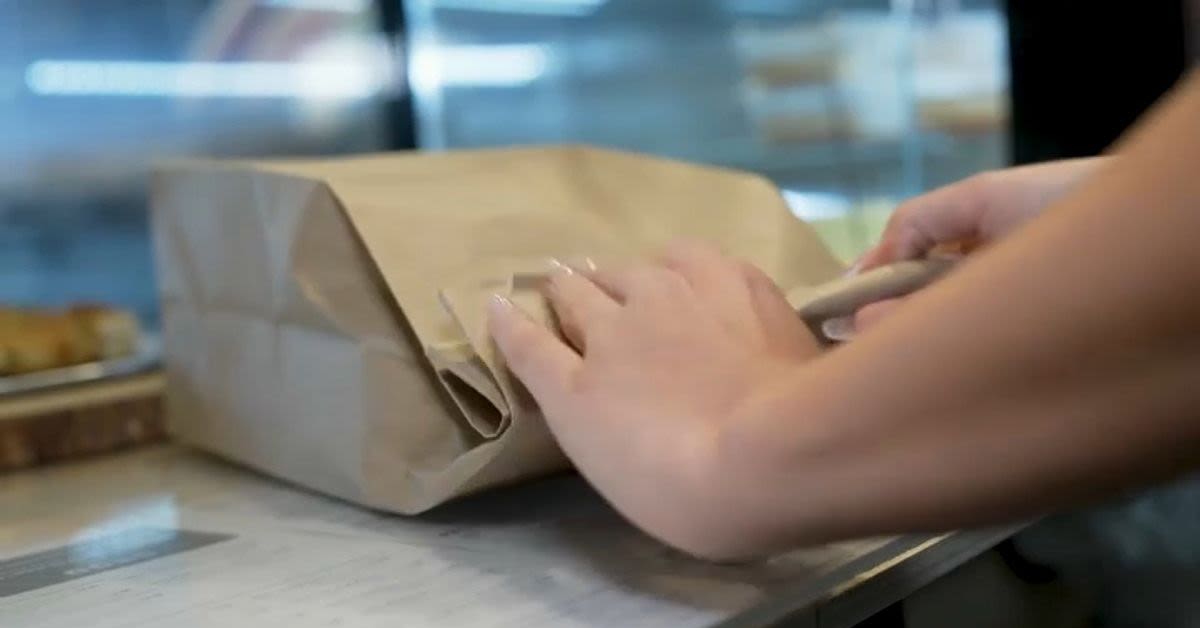
New Jersey residents grabbing takeout will now have to specifically ask for plastic utensils, straws and even condiment packets, as the states latest environmental mandate takes effect and sparks a fresh round of backlash.
The Skip the Stuff law, which critics see as yet another example of government overreach into everyday life, ends the long-standing practice of restaurants automatically stuffing to-go bags with disposable extras that many customers have long considered standard. As reported by The New York Post, the measure was signed by former Democratic Gov. Phil Murphy in January and took effect Aug. 1, with Trenton touting it as a way to cut plastic waste and shrink the environmental footprint of food businesses.
Supporters in the legislature describe the law as a logical extension of New Jerseys aggressive plastic-reduction agenda, which has already banned single-use plastic carryout bags and polystyrene foam food containers since 2022 and restricted plastic straws since 2021. The New Jersey Department of Environmental Protection (NJDEP) framed the goal in simple terms, saying the policy is meant to reduce waste by only taking what you actually need.
Unlike at grocery stores, where plastic bags are now off-limits even if a shopper wants one, takeout customers can still get free plastic knives, forks, spoons, chopsticks and condiment packets but only if they explicitly request them. Online platforms such as DoorDash and Instacart are also swept up in the new rules and must now default to not including utensils unless a customer actively opts in.
The law reaches beyond takeout counters to sit-down establishments, applying to restaurants with seating for at least 10 patrons. Those businesses are now limited to washable, reusable utensils for dine-in service and must offer condiments in full-size bottles or reusable containers instead of individual packets.
State regulators are urging residents to cooperate, arguing that small changes in consumer behavior can have a large environmental impact. NJDEP notes that roughly 95% of food packaging is thrown away after a single use, a statistic officials cite as proof that much of this plastic is unnecessary and avoidable.
Not every institution is covered, however, reflecting at least some recognition that rigid rules can be impractical in certain settings. K-12 schools, both public and private, along with state correctional facilities and healthcare facilities, are exempt from the law, while food court vendors have been granted a grace period until Aug. 1, 2028.
Enforcement will start with a light touch but can quickly become costly for noncompliant businesses. NJDEP says restaurants will receive a warning for a first violation, but a second offense could trigger fines of up to $100 per day, with subsequent violations carrying penalties of up to $250 per day.
Reaction on social media has been sharply critical, with many users dismissing the measure as empty posturing by Democrats rather than serious policy. One X user blasted the law, saying, Its obviously something Democrats came up with because it makes no sense.
Others went further, seeing the rule as part of a broader ideological drift toward centralized control and away from individual choice. The truth is, under communism nothing is free, including the inalienable rights and freedoms provided by western society. Control always starts small and innocuous, like plastic utensil restrictions, a commenter wrote, warning that such policies normalize government micromanagement of daily life.
Some critics worried that once the state normalizes regulating something as trivial as a plastic fork, there will be little to stop lawmakers from targeting other basic conveniences. Next will be toilet paper in public bathrooms, an X user mused, capturing a broader concern that progressive environmentalism often ignores practical realities and personal freedom.
Still, the online response was not entirely one-sided, with a minority of commenters applauding the state for nudging behavior rather than imposing a total prohibition. Why not? Most of it gets tossed in the trash unused anyway, one commenter pointed out, reflecting the view that modest restrictions on freebies are a reasonable trade-off for less waste, even as many New Jerseyans question whether yet another mandate is what their state really needs.
Login