
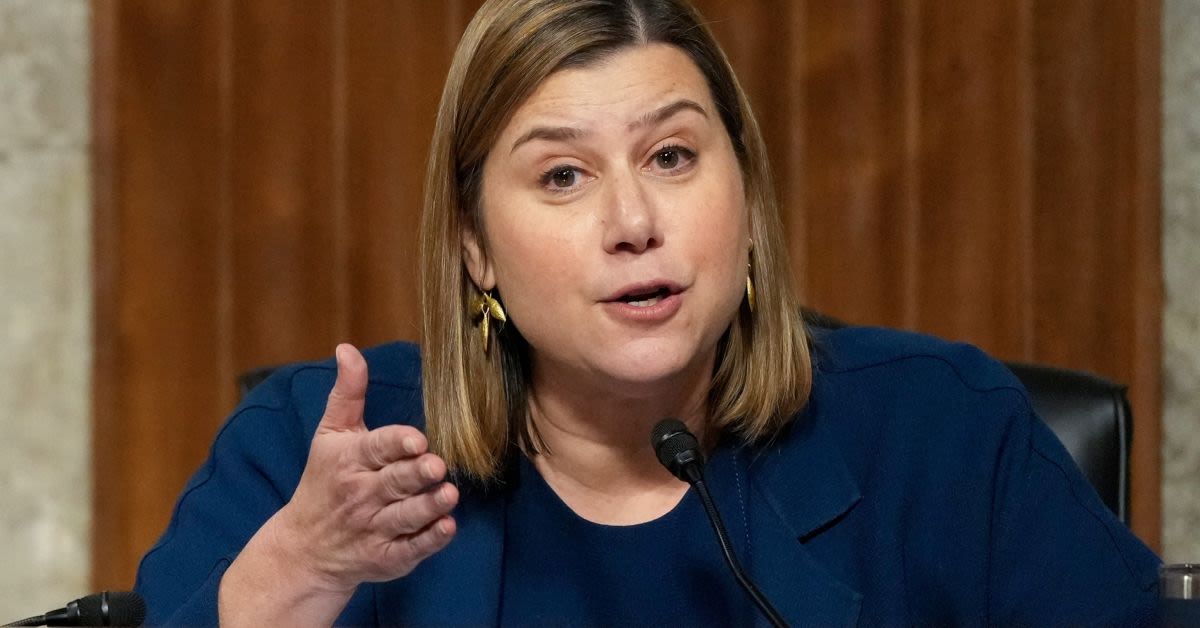
Sen. Elissa Slotkin (D-MI) is suddenly attracting the kind of attention that tends to swirl around politicians with ambitions far beyond their current office.
A new profile of Slotkins rise and maneuvering in Michigan politics, as reported by RedState from a Politico piece, focuses largely on her positioning in the state and her role in the increasingly bitter Democratic primary between Rep. Haley Stevens (MI-11) and Abdul El-Sayed for the Senate seat being vacated by Sen. Gary Peters (D-MI). Yet tucked into the story is a revealing exchange that hints at something more: a quiet curiosity about what a Slotkin presidential campaign might look like and who might staff it.
Later, I asked Slotkin about who she might lean on to staff a presidential campaign, the reporter noted, opening the door to a question most senators publicly dodge. Slotkin did not exactly slam that door shut, instead offering a carefully framed answer that sounded less like denial and more like a strategists critique of conventional wisdom.
I think the idea that there would be like a playbook for how to run for president, if you think there is, and youre just following that playbook, youre going to lose, because the electorate is changing faster than the consultants can figure out, she said. When the reporter observed, It sounds like youve spent some time thinking through that, Slotkin replied with a pointed, almost coy rejoinder: And traveling.
Publicly, there is little indication that a Slotkin presidential bid is imminent, and any such move would collide with a crowded Democratic bench and a deeply fractured party. Still, the fact that she is willing to entertain the mechanics of a national campaign underscores how many Democrats are already looking past the current leadership and quietly auditioning for the next act.
If Slotkin does harbor national ambitions, however, her record and political style carry red flags that could alarm voters who value privacy, restraint, and respect for political opponents. One episode highlighted in the Politico piece, flagged on social media by Politicos Adam Wren, has raised particular concern on the right and should trouble anyone wary of intelligence-community overreach into domestic politics.
On the campaign trail during her first run in 2018, Slotkin was being followed, as most competitive candidates are, by a Republican tracker who had been filming her for months. When he asked her on camera for her position on Medicare for All, Slotkin a former CIA analyst who served in the intelligence community under former Presidents George W. Bush and Barack Obama chose not to answer the policy question and instead delivered a deeply unsettling flex.
On the trail, she made a name for herself in when her Republican tracker, who at that point had followed her for months, asked her on camera for her take on Medicare for All. Rather than answering, the former CIA analyst and member of the intelligence community under former Presidents George W. Bush and Barack Obama replied with a question that spooked the operative. How are Sloane and Leroy? Slotkin pried, betraying that she knew the names of the trackers pets. How do you know my dogs names? he responded, as she shut the door to her vehicle with a smile on her face. (It remains a mystery how Slotkin divined the names, which werent on social media or publicly known; a Slotkin spokesperson said he wouldnt touch it.)
It remains a mystery how Slotkin, a former CIA analyst. divined the names of her GOP trackers dogs, which werent on social media or publicly known; a Slotkin spokesperson said he wouldnt touch it, Wren added in a post amplifying the anecdote. For many conservatives, that kind of behavior is not clever opposition handling but a chilling reminder of how intelligence skills can be turned inward on ordinary Americans and political adversaries.
Slotkin setting a new bar for creepy, one critic remarked, capturing the reaction of those who see this less as a joke and more as a warning shot. This was not a lighthearted jab or a witty rejoinder; it was a deliberate signal that she had obtained personal information about a private individual even on his dogs and was willing to weaponize it for effect.
Republicans are not opposed to needling political trackers; many on the right have enjoyed watching figures like Rep. Tim Burchett (R-TN) lob good-natured barbs at the operatives shadowing them. The difference is that Burchetts approach is rooted in humor and self-deprecation, not in unsettling demonstrations of what a former intelligence official can dig up about a low-level staffers life.
Slotkins record also includes a more overtly ideological move that raised alarms among conservatives and service members alike. She participated in a video directed at members of the military that attacked the Trump administration, warning that threats were coming from right here at home and telling them they can refuse illegal orders, rhetoric that critics saw as dangerously politicizing the chain of command and undermining civilian control of the military.
Her ambition has not gone unnoticed within her own party, either, particularly when it collides with entrenched Democratic power structures. Slotkin angered members of the Congressional Black Caucus when she argued that the Senate and House needed a new generation of leaders because the old models are not working, a comment that prompted CBC members to accuse her of posturing for higher office in 2028.
For voters who value limited government, civil liberties, and a clear boundary between intelligence work and domestic politics, these episodes paint a portrait of a lawmaker whose instincts lean toward surveillance-style intimidation and partisan activism rather than humility and restraint. If Slotkin does eventually test the waters of a presidential run, conservatives and perhaps some wary Democrats will likely remember not just her words about a changing electorate, but also the moment she chose to show a political opponent that nothing in his life, not even his dogs, was beyond her reach.
Login