
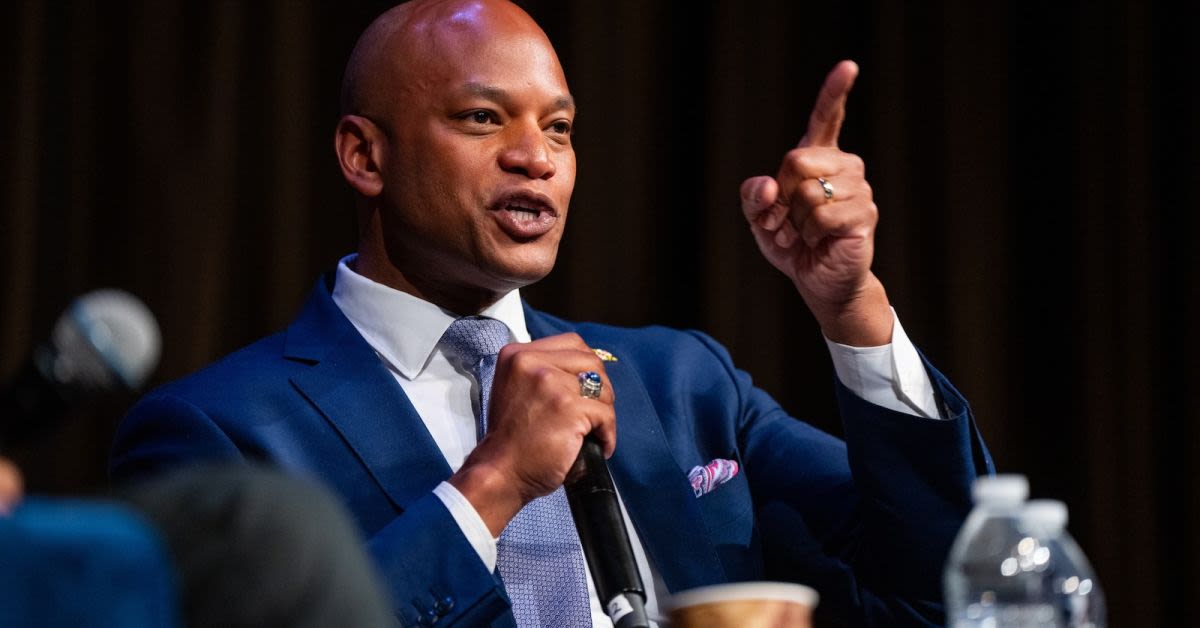
Gov. Wes Moore of Maryland is escalating his rhetoric against President Donald Trump, declaring he is very concerned that the president will use the machinery of the federal government to interfere with this falls midterm elections.
As reported by Newsmax, Moores warning came in an interview marking his ascent to the chairmanship of the National Governors Association (NGA), a role that instantly amplifies his national profile and fuels speculation about his future ambitions. The 47-year-old Democrat, often mentioned as a potential 2028 presidential contender, laid out a sweeping indictment of Trumps approach to election administration, citing what he described as efforts to restrict voting by mail, to obtain detailed voter information from the states, and even to potentially deploy federal troops or agents to polling places.
Moore argued that the NGA, one of the last major bipartisan forums in American politics, has a constitutional responsibility to safeguard the states authority over elections. He framed the issue not as a hypothetical threat but as a present and visible danger, declaring, I don't think that the president is trying to hide the ball on this, and adding, It's not even am I concerned about what the president could do? I'm concerned about what he's already doing in broad daylight. In Moores telling, the Trump administrations posture toward elections is part of a broader pattern of federal overreach that conservatives themselves have long warned against, even as he positions himself as a Democratic counterweight.
Moores rise to the NGA chairmanship mirrors the trajectory of past Democratic figures such as Bill Clinton, who used the same platform as governor of Arkansas to build a national brand. The Maryland governor is now the subject of persistent chatter that he will eventually seek the presidency, though he insists that any such talk is premature and distracting. He has flatly rejected the notion that he is planning a near-term White House bid, saying he will not get distracted before the November elections, even as his travel schedule tells a more complicated story.
His recent visits to early presidential proving grounds such as South Carolina and Nevada have only intensified speculation that he is quietly laying the groundwork for a future national campaign. The centerpiece of his agenda as NGA chair a sweeping Service United initiative aimed at building communities and drawing young Americans into the workforce through service-oriented roles looks very much like the kind of signature program a future presidential hopeful would showcase. Moore himself casts the effort in deeply personal terms, saying, Service will save us as a society because I know service saved me, a reference to his formative years in the Army.
The Service United campaign launches with $10 million in philanthropic backing, designed to scale up work Moore has already begun in Maryland. That includes a $5 million expansion of a state apprenticeship program announced this week, which he touts as a model for connecting young people to real-world skills and long-term employment. Private-sector partners are already lining up behind the initiative, underscoring a key conservative preference for public-private collaboration rather than top-down federal mandates.
Bechara Choucair, executive vice president and chief health officer at Kaiser Permanente, described the program as a practical pathway to prosperity. It's an opportunity to help people with a career path, he said, noting that Kaiser is working with Service United to build a youth mental health corps that addresses both workforce needs and a growing mental health crisis among young Americans. Dame Louise Richardson, president of the Andrew Carnegie Foundation, which is also backing the effort, said she hopes to see the day when you meet somebody, they don't just ask, Where did you go to college? but they ask, Where did you do your service year?
The broad contours of Moores service initiative have drawn praise from some Republicans, suggesting that at least parts of his agenda can transcend partisan divides. Oklahoma Gov. Kevin Stitt, the outgoing NGA chair and a conservative Republican, singled out the programs emphasis on hands-on learning and apprenticeships. One of the things I like is the apprenticeship model and getting kids out of the classroom and into more workforce learning, Stitt said. So I think that's brilliant.
Yet that bipartisan goodwill comes with clear caveats from the right, underscoring the political tightrope Moore must walk. Stitt, even as he praised the concept, issued a pointed warning against turning the initiative into another Washington-driven bureaucracy, cautioning against anything resembling a big government program. For conservatives, the line between encouraging service and constructing a new federal apparatus is a bright one, and Moores ability to keep his project grounded in state leadership and private philanthropy will be closely watched.
Moore himself has been sharply critical of what he sees as the federal governments sluggish and clumsy response to rapid changes in the labor market, particularly those driven by artificial intelligence. He argues that Washington has failed to provide clear, practical pathways for young Americans to build careers and accumulate wealth in an economy where traditional entry-level jobs are increasingly threatened. In his view, the White House has made matters worse by sidelining the states rather than empowering them.
We want to say that if a person goes on to a four-year college or chooses not to go to a four-year college, they still need to have pathways to long-term wages and wealth," Moore said, articulating a message that resonates with many working- and middle-class families. What we have seen from the federal government thus far has just been simply executive orders that have told the states to stay out of it. That critique, while aimed at Trump, also reflects a broader conservative concern about rule-by-executive-order and the erosion of federalism.
Moores relationship with Trump has been strained for months, reflecting the broader clash between the administration and several Democratic governors. Earlier this year, Trump sought to bar Moore and Colorado Gov. Jared Polis, a Democrat, from a White House meeting organized by the NGA, an extraordinary move that underscored the presidents willingness to personalize political disputes. The standoff ended only after Stitt intervened, persuading the White House to relent and allow the governors to attend.
Asked about Trump, Moore tried to emphasize his enjoyment of working with governors from both parties, a nod to the NGAs bipartisan tradition. But he quickly pivoted to a sharper critique of the presidents worldview, saying the president of the United States seems to consistently take an ideological view when it comes to securing the future of this country." The White House declined to comment on Moores characterization, leaving his accusations unanswered but also unchallenged on the record.
Even as he tangles with Trump, Moore faces turbulence within his own party, where ideological fissures are widening. In Maryland, where he is seeking reelection this fall, he has at times struggled to rally Democrats in the state legislature behind his agenda. Lawmakers are set to reconvene next week to consider a constitutional amendment on redistricting after an earlier effort he supported failed, a reminder that even in a blue state, intraparty disputes can be fierce.
Nationally, the Democratic Party is grappling with a surge of candidates aligned with democratic socialism, who have notched primary victories from New York City to Denver. Their rise has triggered an intense debate over whether the party is drifting too far left and jeopardizing its prospects in competitive races this fall. Upcoming contests in battleground states such as Michigan and Wisconsin are expected to further expose and deepen those divides.
Moore has been careful not to align himself explicitly with either wing of his party, preferring to cast himself as a pragmatic figure who respects the voters role in choosing nominees. He brushed aside questions about whether democratic socialists might cost Democrats winnable seats, insisting that the partys rank and file, not its leadership, should decide who carries the banner. Party bosses shouldn't be determining who members of the party are, he said, declining to specify whether he had Senate Democratic leader Chuck Schumer of New York in mind. The people should be the ones to have a final say on that.
At the same time, Moore has drawn clear ideological lines that place him at odds with the far left on core issues of law, order, and national sovereignty. I know where I am on issues, he said. I don't believe in abolishing the police. I don't believe in abolishing prisons. I don't believe in open borders. Those statements, while basic to many conservatives, mark a notable departure from the rhetoric of some progressive activists and signal Moores awareness that radical positions on crime and immigration are political liabilities.
The most immediate test of Moores leadership, however, will come in how he steers the NGA through a volatile election season without shattering its fragile bipartisan ethos. He will find himself between Republicans who are pressing for stricter rules on voter identification and tighter deadlines for mail-in ballots, and Democrats who frame such measures as voter suppression. The NGA chair will have to navigate these competing demands while insisting that states retain primary control over their own election systems.
Democratic Gov. Josh Stein of North Carolina, who governs one of the nations most hotly contested states and faces a marquee Senate race this fall, echoed Moores alarm about potential federal interference. I dont think you can be a clear-thinking person and not be concerned because all the signals are very worrisome, he said in an interview. But that said, I have confidence that if the voters come out in droves and vote the way that they want to vote, that the government will represent their wishes.
From the Trump administrations side, officials have pushed back by arguing that Democrats are obstructing meaningful election security reforms. White House spokeswoman Abigail Jackson said that "if Democrats really cared about securing our elections, they would pass the SAVE America Act, a proof-of-citizenship voting bill currently stalled in the Senate. For conservatives, such legislation is a commonsense safeguard to ensure that only American citizens cast ballots, while many Democrats portray it as an unnecessary barrier to voting.
Stitt, for his part, expressed confidence that the states will be able to conduct their elections without improper federal intrusion, aligning with a long-standing conservative emphasis on local control. He reiterated his support for the SAVE America Act and similar measures, while drawing a firm line against Washingtons direct involvement in running elections. States should control their own elections, he said, encapsulating a principle that has anchored Republican election policy for decades.
Moores own view of states rights has undergone a notable evolution, shaped in part by his clashes with Trump. He acknowledged that he once associated the rhetoric of states rights with segregationist figures such as Bull Connor, the notorious Birmingham, Alabama, public safety commissioner who unleashed fire hoses and dogs on peaceful civil rights protesters. Now, Moore said, the Trump era has forced him to reconsider that history and to recognize the importance of having actually strong governors.
For conservatives, that shift underscores a point they have long made: a robust system of federalism, with empowered states and accountable governors, is a critical check on any president, regardless of party. As Moore assumes the NGA chairmanship, he will be judged not only on his warnings about Trump but also on whether he respects the very principles of limited federal power and state sovereignty that he now claims to embrace. How he balances his partisan critiques with a genuine commitment to state-led solutions on elections, workforce development, and public safety will determine whether his rising profile becomes a durable national force or just another fleeting moment in a polarized political era.
Login