
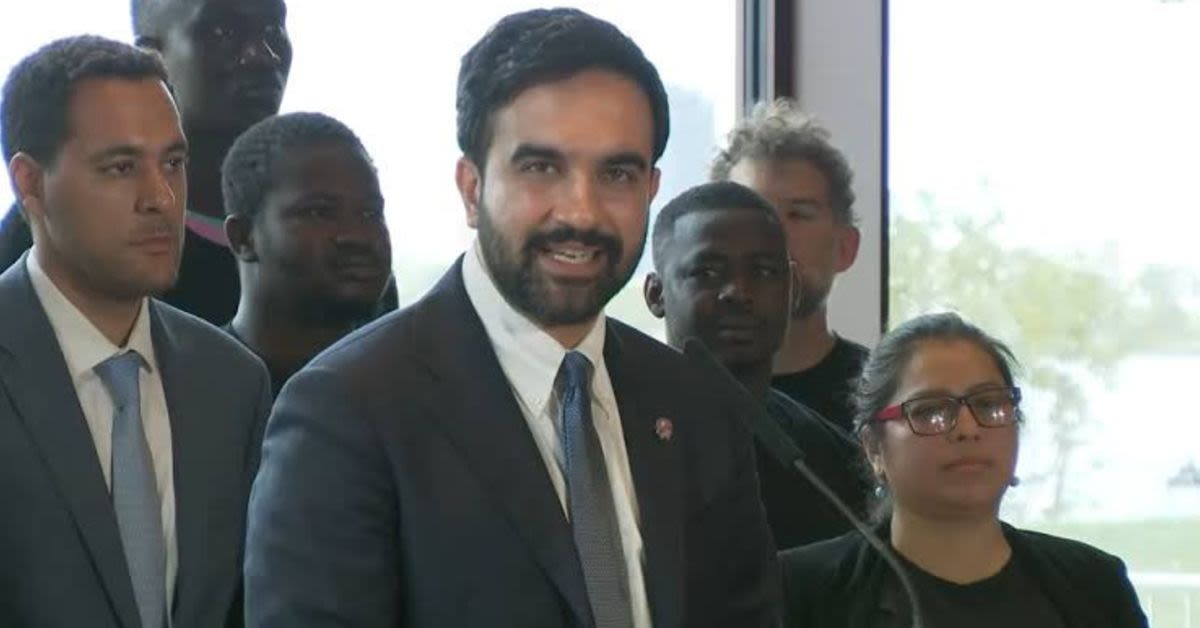
New York Citys newly elected socialist mayor, Zohran Mamdani, is openly entertaining the prospect of cash reparations for descendants of slaves living in the nations largest city, signaling a dramatic escalation in the lefts long-running campaign to redistribute wealth along racial lines.
According to Western Journal, Mamdanis stance emerged during a recent episode of The Roots podcast hosted by columnist Charles M. Blow, who read from a written statement the then-mayoral candidate had submitted to one of the commissions currently examining reparations. In that statement, Mamdani asserted, New York City participated actively in the slave trade and furthered its legacy through racist institutions, policies and laws. The city should reconcile and repair this legacy of slavery, stolen wealth and discrimination.
Blow noted that one of the commissions formal findings is expected next summer, setting the stage for a politically explosive debate over whether New York should follow the path of other progressive jurisdictions experimenting with race-based payouts.
He then pressed the mayor directly, asking, If a commission studying reparations in this city recommended cash reparations for people impacted by slavery in New York City, would you support that recommendation?
Mamdani refused to rule out such a move and instead doubled down on his earlier rhetoric, insisting he still endorsed his campaign-era statement. Its the truth; its not a personal assessment, he replied, framing his position as an objective reading of history rather than an ideological choice.
The mayor went on to argue that New Yorkers have wrongly imagined slavery as a sin confined to the South, rather than a stain that also marks the citys past. We often think about slavery and the complicity in slavery as being exclusively to certain geographic areas of the country. Here in New York City, we were very complicit, and so I look forward to whatever those findings are, Mamdani elaborated.
He further suggested that any reparations scheme would be part of a broader effort to acknowledge what history truly was, even as he declined to commit to specific policies before the commission reports. I cant give you an answer in advance of them, but I can tell you that this is critically important, because this is also what it looks like to acknowledge what history truly was, Mamdani added.
Conservatives, however, have long argued that the United States, far from being uniquely guilty, was in fact a pioneer in dismantling an institution that had plagued humanity for millennia. As discussed on a recent Western Journal podcast and in the new edition of the book We Hold These Truths, which examines the enduring influence of the Declaration of Independence, Americas record on slavery is actually commendable when measured against the backdrop of human history.
The Founders, despite their imperfections, took some of the earliest concrete steps in the modern era to curtail and ultimately abolish slavery, even as the practice remained widespread across the globe.
Pennsylvania, for example, voted to end slavery in 1780 during the Revolutionary War, and Benjamin Franklin himself a former slave owner went on to serve as president of the Pennsylvania Abolition Society, which sought to persuade other states to follow suit.
By 1804, during President Thomas Jeffersons first term, every state north of Maryland had voted either to phase out or abolish slavery entirely, a remarkable achievement at a time when virtually no other governments were moving in that direction. It bears emphasis that Great Britain, often held up by progressives as a moral counterpoint to the United States, did not outlaw slavery throughout its empire until 1833, decades after the American states had begun dismantling the institution.
The Founders also acted at the federal level, banning slavery in the Northwest Territory in 1787 and thereby preventing its spread into what would become Ohio, Michigan, Indiana, Illinois and Wisconsin.
They further inserted into the Constitution a provision allowing Congress to end the importation of African slaves, though not before 1808, as part of a difficult compromise with Southern states whose economies depended on slave labor.
In March 1807, Jefferson signed legislation to terminate the transatlantic slave trade effective Jan. 1, 1808, the earliest date permitted under the Constitution. Roughly half a century later, the United States fought the Civil War, which culminated in the emancipation of all slaves and placed America among the first nations in the world to abolish slavery outright.
This historical record, explored in greater depth in We Hold These Truths and the accompanying podcast, undercuts the narrative that the United States is uniquely defined by slavery and racism.
It also raises serious questions about the fairness and wisdom of imposing modern financial penalties on citizens who had no role in those long-ago injustices, particularly when the country has already paid such a high price in blood and treasure to end slavery and secure civil rights.
Nonetheless, progressive activists have pushed ahead with reparations experiments at the local level, and New York may soon be the next major battleground. Evanston, Illinois, became the first U.S. city to implement a reparations program for black residents, but that initiative has already encountered significant legal resistance.
Last month, ABC affiliate WLS-TV reported that six non-black residents filed suit to halt Evanstons plan to pay $25,000 in reparations for 20th-century race-based housing discrimination.
The city has already distributed over $7 million using revenue from a local tax on legal marijuana sales to hundreds of people in $25,000 increments to be used for home repairs, down payments on property, and interest or late penalties on property in the city, the outlet noted.
The Trump-era Justice Department has now intervened in the case, characterizing Evanstons program as unconstitutional racial favoritism masquerading as social justice. In a sharply worded statement, the department described the scheme as racially discriminatory, signaling that federal officials view such race-based payouts as incompatible with core civil-rights protections.
Assistant Attorney General Harmeet K. Dhillon of the DOJs Civil Rights Division made clear that governments have lawful tools to address past wrongs without resorting to racial spoils systems.
There are sound ways for a city to remedy past discrimination or direct resources to its most vulnerable citizens and neighborhoods. Simply handing out money based on race, however, is not the answer. It is race discrimination, pure and simple. And it is illegal, Dhillon said.
U.S. Attorney Andrew S. Boutros for the Northern District of Illinois echoed that constitutional concern, emphasizing the principle of individual equality before the law. The Constitution demands that the government treat citizens as individuals, not as members of a racial class. Distributing public funds based on an individuals ancestry or race divides the citizenry and establishes the very hierarchy the Equal Protection Clause was designed to dismantle, he stated.
At the heart of these challenges lies the 14th Amendments Equal Protection Clause, ratified in 1868 in the immediate aftermath of the Civil War. That provision declares that no state and by extension no local government shall deny to any person within its jurisdiction the equal protection of the laws, a standard that sits uneasily with race-based cash transfers.
If Mayor Mamdani ultimately attempts to implement a reparations program in New York City, it will almost certainly face a similar constitutional test, likely fast-tracked through the federal courts.
And if the Supreme Court adheres to the text and original meaning of the Constitution, as it has increasingly done in recent years, race-based reparations schemes are poised to be struck down as incompatible with the American promise of equal justice under law.
Login