
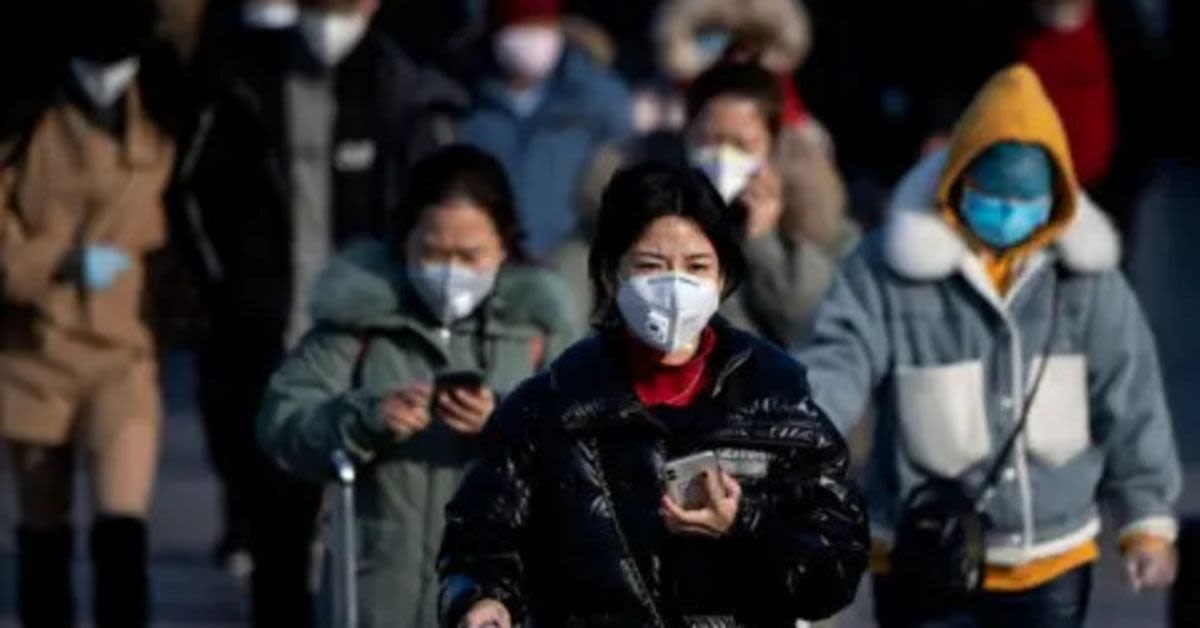
Chinas top health authorities are once again urging vulnerable citizens to mask up and seek out Wuhan coronavirus vaccines as infections surge across the country, raising fresh questions about the regimes transparency and preparedness more than four years after the pandemic began.
According to Breitbart, the Chinese Center for Disease Control and Prevention (CDC) has begun advising high?risk groups including the elderly, pregnant women, and people with chronic illnesses to obtain updated vaccine products and adopt stricter personal protection as case numbers climbed sharply in July. The state?run Global Times, serving as a mouthpiece for the Communist Party, announced in English on July 26 that officials had detected a spike in Wuhan coronavirus infections, with transmission reportedly accelerating far more rapidly in southern provinces than in the north and, for now, causing mostly mild disease.
The Global Times framed the situation as manageable, but even its own experts conceded that summer behavior may be mimicking winter?like conditions that favor viral spread. They suggested that hot temperatures driving people indoors to air conditioning has created similar conditions to winter, when many do not go outside because of the cold and the limited air circulation facilitates infections.
Hong Kongs South China Morning Post, which often provides a more detailed view than mainland outlets, identified the strain behind the latest wave as the Omicron NB.1.8.1 variant, describing its spread as moderate but disproportionately dangerous for seniors and those with underlying health problems. That characterization, while reassuring on the surface, still underscores the vulnerability of precisely the groups Beijing is now scrambling to protect after years of erratic zero?COVID policies and heavy?handed lockdowns.
The Chinese CDC disclosed last week that it is now recording more Wuhan coronavirus cases than influenza, a reversal that points to a quickening pace of infection. Most of the newly diagnosed patients fall between the ages of 15 and 59, indicating that neither children nor the elderly currently make up the majority of confirmed cases, even though they remain at higher risk of severe outcomes.
The [Wuhan coronavirus] test positivity rate stood at 16.3 percent, up 4.3 percentage points from the previous week, while the influenza positivity rate was 12.6 percent, down 0.9 percentage points week on week, the Global Times detailed. Those figures, coming from a tightly controlled propaganda outlet, likely represent a floor rather than a ceiling for the true scale of transmission in a country where citizens have strong incentives not to report illness.
The same Global Times report noted that authorities are now pressing older residents and those with medical conditions to adopt preventive measures, such as wearing masks in crowded places or on public transportation. Officials are also urging all eligible adults, with particular emphasis on pregnant women, to update their vaccine product dosages, even as questions linger about the efficacy and safety data behind Chinas domestically produced shots.
In an apparent effort to calm nerves in the political heart of the country, the state outlet China Daily relayed a statement on Wednesday from Beijings CDC downplaying the capitals risk. The agency insisted that the citys transmission rate remains within normal cyclical fluctuations and that hospitals are not under unusual strain, a familiar reassurance in a system where political stability routinely takes precedence over full disclosure.
The [Beijing health] center said visits to fever clinics remain low across the city, hospitals have sufficient medicine supplies, and the latest increase in cases has not placed noticeable pressure on the healthcare system, according to China Daily. Yet such assurances sit uneasily alongside the regimes track record: during previous respiratory waves, Chinese social media was flooded with images of chaotic hospital corridors, overwhelmed emergency rooms, and parents lining up for intravenous drips for children with routine respiratory symptoms.
Current data suggest that southern China is bearing the brunt of this latest flare?up, with the situation there described as more precarious than in the north. The U.S.-based Epoch Times, which played a key role in exposing the early disaster in Wuhan in 2020, reported Wednesday that the gap in case numbers between northern and southern regions has widened significantly, and pointed to massive flooding as a likely aggravating factor.
The paper, citing biomedical science professor Xiaoxu Sean Lin, warned that flood?related disruptions can fuel disease spread by triggering population displacement, centralized sheltering, poor ventilation, overcrowded medical facilities, and compromised nutrition and rest, all of which help respiratory pathogens gain a foothold. Lin argued that the official statistics released by the Communist Party represent only the tip of the iceberg, noting that many Chinese citizens simply do not report symptoms consistent with coronavirus infection, especially when dealing with a variant that often produces only mild illness.
The current wave is being attributed to Omicron NB.1.8.1, a subvariant that appears to favor the upper respiratory tract. The South China Morning Post listed the most common symptoms as fever and a sore throat, a profile that can easily be dismissed as a seasonal cold, further complicating accurate surveillance in a system already prone to undercounting.
The Morning Post, citing Peng Jie, deputy director of the infectious diseases department at Southern Medical Universitys Nanfang Hospital, noted that some experts are troubled by an increasingly unpredictable pattern of coronavirus spread during the summer months. While the Chinese CDC typically sees a winter surge across major respiratory diseases, state reports have explicitly acknowledged that they are not observing a parallel increase this summer in influenza or respiratory syncytial virus (RSV), which usually hit children and the elderly hardest.
Speaking to the Epoch Times, Taiwanese infectious disease specialist Cheng Yuan-yu advanced the air?conditioning hypothesis to explain why coronavirus transmission appears to be accelerating despite the heat. High outdoor temperatures drive people flocking to air-conditioned environments, which leads to spending extended periods in enclosed indoor spaces and has increased risk of indoor airborne transmission, Cheng reportedly said.
If that dynamic is indeed driving the surge, Cheng added, then everyday realities of urban life will skew infections toward working?age adults. He warned that situations such as people going to work while sick, the confined environments of commuting, waning immunity, biases in testing and health care-seeking behavior would naturally result in more diagnoses among those aged 15 to 59, rather than among children or the elderly.
The Wuhan coronavirus was first identified as a novel pathogen in the central Chinese city of Wuhan in early 2020, though subsequent reports suggest the earliest known case may date back to November 2019. In the critical early weeks, the Chinese Communist Party chose secrecy over transparency, violently silencing whistleblowers, allowing super-spreader events to proceed, and then resorting to draconian lockdowns and other human rights abuses that failed to contain the virus but devastated livelihoods.
Those decisions helped transform a local outbreak into a global catastrophe, with the virus ultimately infecting millions and killing more than 7 million people worldwide. As Beijing now reverts to familiar messaging about normal fluctuations and manageable hospital loads, the renewed push for masking and vaccination among vulnerable groups underscores a reality the regime cannot spin away: the virus that emerged under its watch, and spread under its cover?ups, continues to exact a toll both inside China and beyond its borders.
Login