
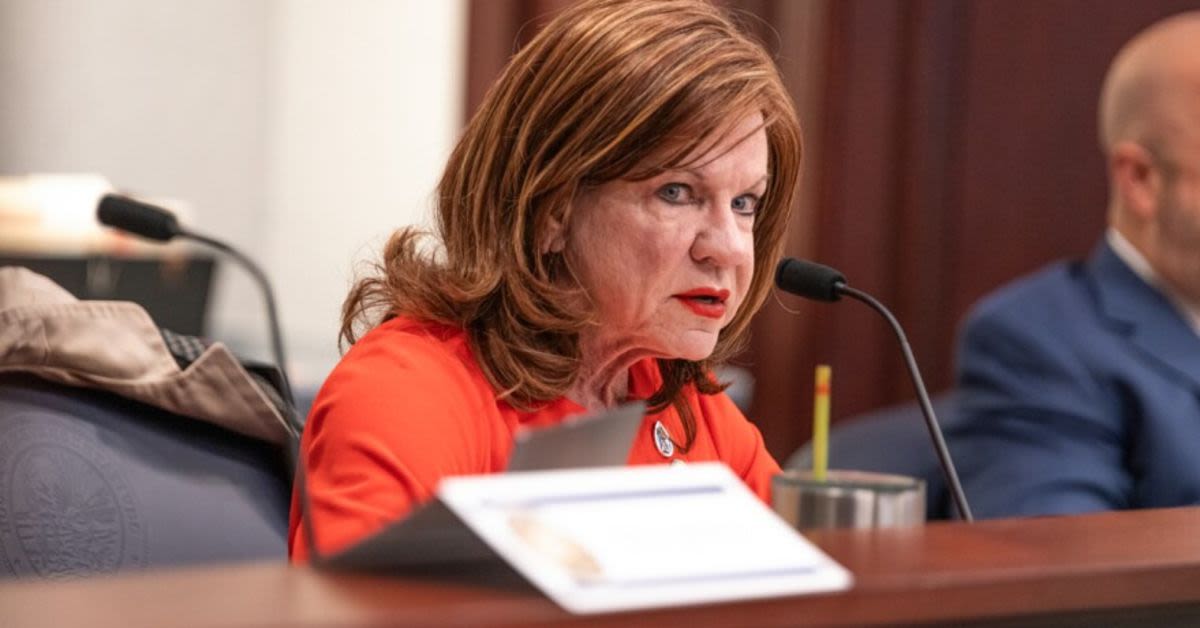
A single missed form has cost Florida Republicans a hard-fought House seat and handed Democrats a virtually effortless victory in one of the states most competitive districts.
According to WND, Democrats have effectively secured a pickup in Florida House District 47 after Republican incumbent Paula Stark failed to qualify for the ballot and then lost her legal bid to undo the error. Leon County Circuit Judge Joshua Hawkes dismissed Starks lawsuit on July 23 and directed the clerk to close the case, ending the two-term lawmakers last attempt to reclaim a spot on the 2026 ballot.
The fallout is a remarkable and entirely preventable setback for the GOP in a swing district that conservatives had twice managed to hold by narrow margins. With Stark disqualified, the only remaining candidates on the ballot are Democrats Jorge Figueroa and Anthony Nieves, leaving Republican voters without a standard-bearer in November.
There is no Republican candidate in the race, an outcome that would have been unthinkable just months ago in a district central to Floridas political battleground. Because no other party qualified a contender, the August 18 Democratic primary will be open to all registered voters in the district, regardless of party affiliation.
Whoever emerges from that primary will face no opponent in the general election and will automatically become the next state representative for House District 47. For conservatives, the episode underscores how bureaucratic technicalities and procedural traps can overturn the will of voters without a single ballot being cast in a general-election contest.
Stark, a Republican from St. Cloud who has represented the district for two terms, was removed from the ballot after the Florida Division of Elections ruled that her campaign failed to submit Form 6, the required public financial disclosure, before the noon qualifying deadline on June 12. Her campaign treasurer, Joel Davis, insisted he delivered the form on time and claimed a Division of Elections employee mistakenly handed it back to him.
That account collapsed under scrutiny when five state election workers contradicted Davis story in court. The employees testified that they did not recall receiving or returning Starks Form 6, and the campaign could not produce a time-stamped copy to prove the document had ever been properly filed.
Judge Hawkes ultimately rejected the campaigns narrative and sided with state officials. The Court does not credit the story of DOE staff immediately returning the Form 6, Hawkes wrote, according to WND. The Form 6 was not turned in before the noon deadline, and [Stark] did not show that she qualified for HD47.
Stark argued that she had electronically filed the disclosure with the Florida Commission on Ethics the night before the deadline, suggesting she had substantially complied with the law. State officials countered that the statute is clear: candidates must submit the required paperwork directly to the Division of Elections as part of the formal qualifying process, and anything less is insufficient.
Judge Hawkes initially gave Stark seven days to explain why her lawsuit should not be dismissed, offering a narrow window for her to salvage the campaign. The court has now closed the case, locking in the Democratic takeover and leaving Republicans to absorb a loss that came not at the ballot box, but at the filing counter.
The sting is sharper because Stark had already proven she could win in this politically divided territory. She first captured the seat in 2022 by defeating Nieves by only 878 votes out of more than 46,000 cast, and in 2024 she held on by just 1,246 votes out of more than 77,000 ballots, according to WND.
House District 47 includes St. Cloud, eastern Kissimmee, much of Osceola County and a slice of Orange County, an area that has been trending competitive but not decisively blue. It was widely expected to be one of Floridas marquee legislative contests this November, a race where Republicans could again make their case on public safety, parental rights and economic freedom.
Instead, a single missing financial disclosure has silenced Republican representation on the ballot and delivered Democrats a legislative seat without a general-election fight, raising serious concerns among conservatives about how easily voter choice can be nullified by administrative missteps. For a party that has invested heavily in Floridas legislative dominance, the episode is a stark reminder that even in a red-leaning state, attention to detail can be the difference between holding the line and surrendering a district without a vote.
Login