
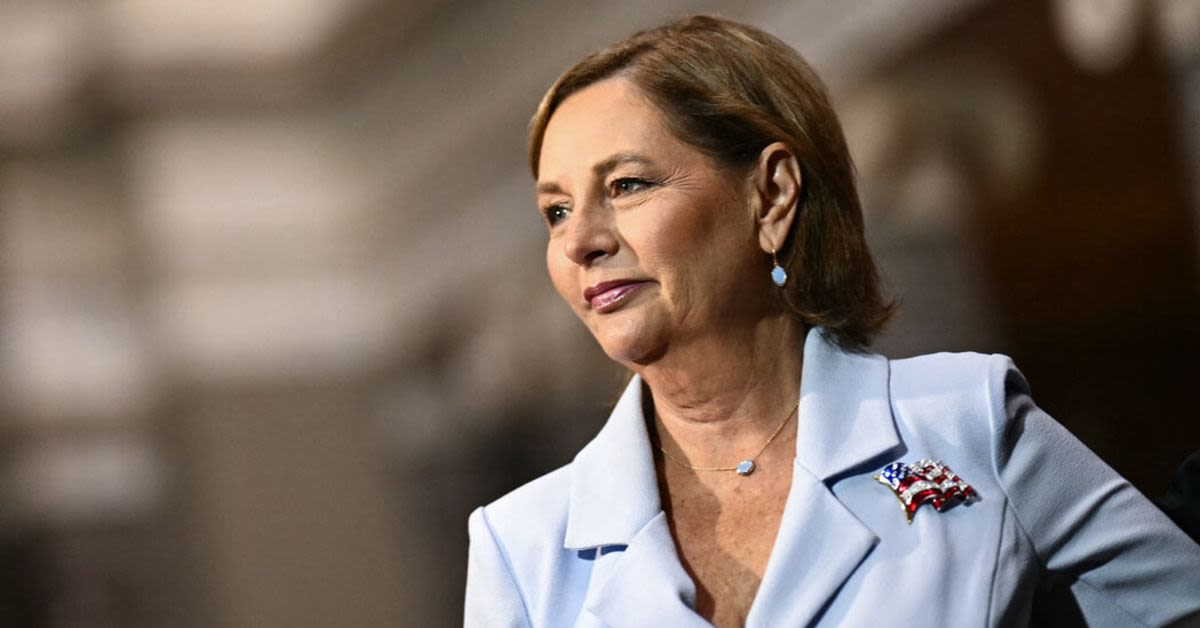
Interim Sen. Darline Graham enters South Carolinas Aug. 11 Republican primary with the powerful backing of President Donald Trump and a surge of public sympathy, yet she confronts a daunting set of political obstacles that could derail her bid for a full term.
Many GOP strategists in Washington and Columbia argue that Graham begins the race with undeniable advantages, but they also warn that she faces deep structural challenges that may prevent her from capturing the nomination, as reported by Newsmax. According to Axios, party professionals see a candidate whose strengths are substantial on paper but whose vulnerabilities could prove decisive in a competitive, conservative primary.
Her most potent asset is Trumps early and emphatic endorsement, delivered just days after Republican Gov. Henry McMaster appointed her to complete the late Sen. Lindsey Grahams term. Trump has hailed Darline Graham as the contender best positioned to carry forward her brothers legacy, a message that resonates strongly with many grassroots Republicans who still revere the former senators national profile.
Financial muscle is also lining up behind her. A super PAC that previously supported Lindsey Graham has pledged $900,000 to bolster her campaign, and advisers are examining whether she can legally tap into more than $2 million left in his campaign account, a potential windfall that could instantly elevate her media presence and ground game.
Yet the Graham name, long a fixture in South Carolina politics, cuts both ways. Republican operatives told Axios that while Lindsey Graham became one of the states most recognizable political figures over more than two decades in the Senate, many conservative voters never fully accepted his record as reliably aligned with their priorities.
Lindsey Grahams history of backing bipartisan immigration reform, his willingness to collaborate with Democrats, and his earlier criticism of Trump before their eventual alliance left a lingering distrust among parts of the GOP base. Several strategists now contend that Darline Graham may inherit not only her brothers loyal supporters but also his political ceiling, a limit on how far the Graham brand can go in a populist, Trump-era Republican Party.
Darline Grahams lack of electoral experience presents another serious hurdle. She is widely respected for her long-standing advocacy on behalf of South Carolinians with disabilities, but beyond that community she remains largely unknown to the broader Republican primary electorate that will decide her fate in August.
Unlike her rivals, Rep. Ralph Norman, R-S.C., and Rep. Russell Fry, R-S.C., she has never run for office or built a statewide political organization. Norman and Fry arrive with established donor networks, campaign infrastructures, and years of experience appealing to conservative voters, giving them a head start in a race where name recognition alone may not suffice.
Compounding these challenges is the fact that Graham has yet to clearly define her own political identity apart from her brothers legacy. Axios noted that while she recently announced she would co-sponsor the Trump-backed SAVE America Actlegislation aimed at strengthening election integrity by requiring proof of citizenship for voter registrationquestions persist about her positions on other core conservative issues such as spending, border security, and cultural policy.
Video circulating this week showed staff members physically shielding her from reporters pressing for details about the SAVE America Act, an image that raised concerns among some Republicans about her readiness for the scrutiny that comes with high office. She has also declined so far to commit to participating in candidate debates, a decision that risks reinforcing perceptions that her campaign is being stage-managed rather than driven by direct engagement with voters.
History, too, appears to be working against her. Political observers point out that South Carolina voters have traditionally been skeptical of appointed senators seeking to convert their temporary status into a full elected term, often viewing such bids as top-down impositions rather than organic, grassroots candidacies.
Some Republicans privately describe Darline Grahams run as an inherited succession, more dynastic than democratic, a perception that could prove toxic in a party increasingly hostile to political entitlement. The New York Times reported Friday that Trump initially discussed appointing Fry before ultimately embracing Darline Graham after an emotional Oval Office meeting following Lindsey Grahams death, a shift that underscores how personal loyalty and sentiment have shaped this race from the outset.
According to that account, the president concluded she was the candidate he loved most among those under consideration and moved quickly to endorse her publicly. That personal bond with Trump may help her weather attacks from rivals who portray her as untested or insufficiently conservative, especially in a state where Trumps word still carries enormous weight with Republican voters.
Even so, seasoned Republicans caution that it would be a mistake to dismiss Darline Grahams prospects. Trumps endorsement remains the single most valuable commodity in GOP primaries, and the sympathy for the Graham family, still fresh after Lindsey Grahams passing, continues to generate goodwill that money cannot buy.
Moreover, she has inherited an experienced political team intimately familiar with South Carolinas electoral terrain, a cadre of operatives who have navigated the states rough-and-tumble politics for decades. That apparatus, combined with substantial financial backing and Trumps blessing, gives her a formidable foundation if she can quickly sharpen her message and demonstrate independence without alienating the president.
For conservative voters, the central question is whether Darline Graham will emerge as a reliable champion of limited government, secure borders, election integrity, and traditional valuesor whether she will be seen as a continuation of the more establishment-friendly brand associated with her brothers earlier career. Her decision to support the SAVE America Act signals an awareness that Republican voters demand robust safeguards against voter fraud and insist on proof of citizenship for registration, a stance that aligns squarely with the partys base.
What remains unclear is how she will distinguish herself from seasoned conservatives like Norman and Fry on issues ranging from federal spending to cultural battles in schools and universities. With Trumps endorsement, a sympathetic electorate, and a powerful campaign machine at her disposal, Darline Graham has the tools to defy historical trends and internal skepticism, but she must still convince South Carolina Republicans that her candidacy is earned, not inherited, and that her conservatism is conviction-driven rather than merely convenient.
Login