
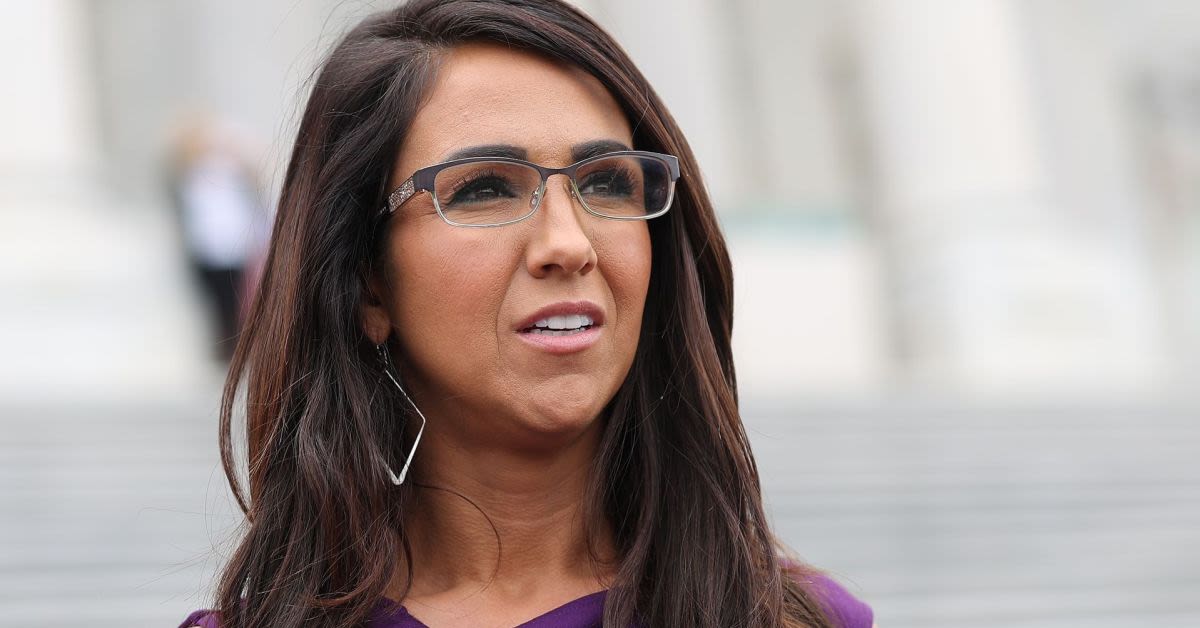
Republican Rep. Lauren Boebert of Colorados 4th Congressional District is defending her absence from one of the most consequential House votes of the year, and her account now includes both allegations of internal GOP duplicity and an unexpected disclosure about recent Botox treatments.
As reported by RedState, the House narrowly approved the $1.15 trillion National Defense Authorization Act (NDAA), a sweeping military policy and spending bill that also carries President Donald Trumps SAVE America Act. The measure passed on a 216212 vote and now heads to the Senate, with Boebert listed among just three members recorded as not voting on a package that most conservatives view as central to national security and military readiness.
Boebert, a staunch conservative known for bucking party leadership, insists her absence was not a matter of indifference but the result of misleading assurances from unnamed Republican staffers. In a pointed exchange outside the Capitol, she said a whole bunch of men tried to strong-arm her into backing the NDAA despite her objections to a specific provision involving defense technology cooperation with Israel.
New: Lauren Boebert says she missed the NDAA vote after GOP staffers apparently lied to her during negotiations. She also says shes recovering from Botox she got a few days ago, a video caption circulating on social media noted, capturing the unusual mix of high-stakes policy and personal disclosure. Boebert recounted, All these staffers are in there trying to get me to vote for the NDAA. I dont want to vote for the NDAA. Section 219 is still in there. Its a big tech swap between us and Israel. We dont do that with anyone.
The Colorado Republican said she had heard from constituents across the political spectrum who opposed the provision, underscoring that skepticism about exporting sensitive technology is not confined to one party. She further claimed that the White House and Defense Secretary Pete Hegseth wanted the language removed, suggesting that her resistance aligned with broader concerns inside the executive branch.
According to Boebert, she stayed off the House floor in the final moments of the vote while waiting for a promised call from Hegseth, believing she still had time to cast her vote once the issue was resolved. She said someone underneath him assured her the vote would remain open, only for the gavel to fall before she could register her position.
It did not, she said bluntly, describing how the clock ran out. Im in the back waiting for a call from the secretary. Im told that call is coming. Im talking to someone underneath him, and Im told the votes going to stay open. They close the vote, and so now I am forced to talk to TMZ.
The accusation is serious, implying that Republican staff may have manipulated the timing to box out a conservative critic of the bills tech-sharing language. Yet Boebert acknowledged she could not identify the staffers involved, repeatedly saying she did not know their names, a gap that complicates any effort to hold specific individuals accountable.
Section 219, the focus of her ire, would require the Secretary of Defense to appoint an official to coordinate defense technology cooperation between the United States and Israel. The bill calls for expanded bilateral research, development, testing, and industrial collaboration in some of the most sensitive areas of modern warfare and intelligence.
The cooperation would extend to artificial intelligence, quantum technology, cybersecurity, missile defense, biotechnology, electronic warfare, data fusion, and other advanced fields. Boebert dismissed the arrangement in stark terms as a big tech swap, likening it to past U.S. funding for Israels Iron Dome system, where she argued Israel retained the technological edge while American taxpayers saw little direct return.
Then, the interview veered sharply from geopolitics to personal appearance. I don't want to be on camera this week, and I've been on camera more than any other week. I'm talking out of the side of my mouth like a damn politician because my Botox hasn't caught up on this side. Maybe in two days this side will catch up to the other side, but here we are.
In just 77 seconds outside the Capitol, Boebert managed to link a missed $1.15 trillion defense vote, alleged betrayal by Republican staffers, a dispute over Israeli military technology, and what she described as a half-frozen face. For a party already wrestling with internal divisions over foreign policy and the proper limits of defense cooperation, her story adds another layer of intra-GOP drama.
Boebert may well have a valid grievance if staff misled her about the timing of the vote, and Republican leadership should clarify whether any promises were made and then withdrawn in the final moments. Yet her admission that she did not know the names of the men she accuses, coupled with the abrupt Botox detour, risks overshadowing her substantive concerns about safeguarding American technological advantage and respecting the will of her constituents.
The NDAA ultimately passed without her vote, securing the funding and authorities the Pentagon and many conservatives argue are essential in an increasingly dangerous world. Her explanation, however, with its blend of procedural complaint, national security skepticism, and personal candor, is likely to linger far longer in the minds of Republicans than a simple yea or nay ever would.
Login