
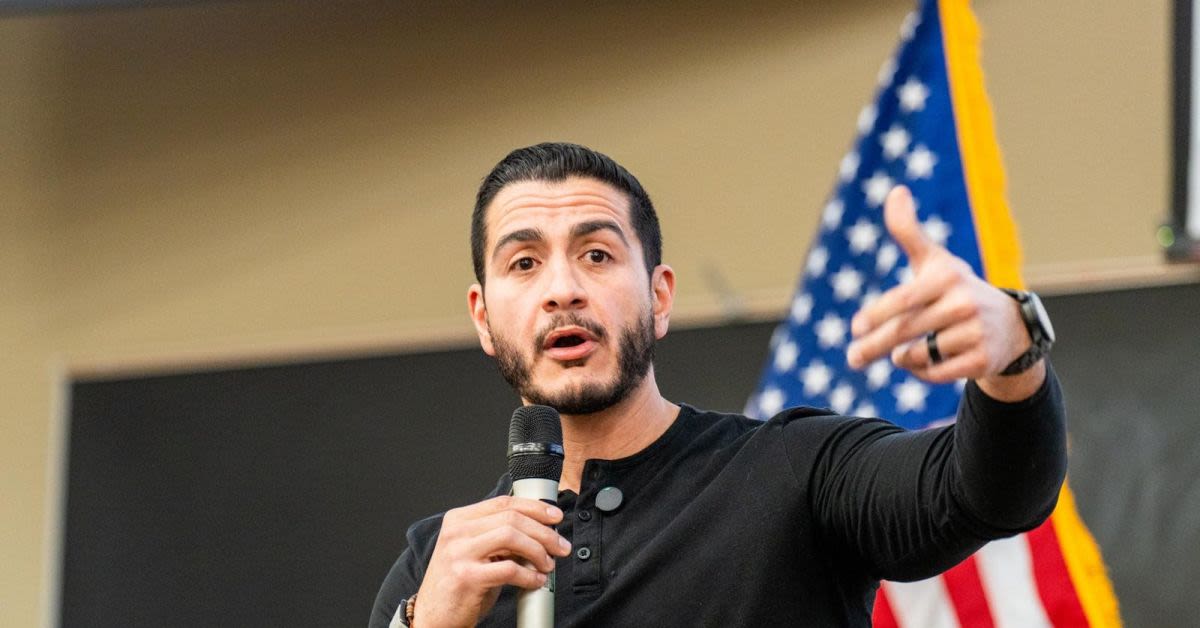
Democratic Michigan Senate hopeful Abdul El-Sayed attempted to distance himself from his own defund rhetoric by urging voters to ignore his deleted tweets and instead focus on his record of funding a juvenile detention facility.
During an appearance on CNNs The Arena, the progressive candidate was pressed on his past social media posts calling for defunding law enforcement, a position that has become politically toxic even among many Democrats, according to Breitbart.
Host Kasie Hunt noted that El-Sayed had scrubbed some of those statements as he launched his statewide campaign, and she framed the issue as one that would almost certainly resurface in a general election if he secures the Democratic nomination.
I also wanted to ask you about some of the tweets that you deleted as you were in the course of this race, just before, around this question of defunding the police, this is also something likely to come up in a general election, should you win this primary, Hunt said, highlighting the political risk of his earlier stance.
Do you stand by what you had previously said, that police in support of defunding the police, or do you believe police should be funded? she asked, forcing El-Sayed to clarify whether he still aligned with the radical defund movement that helped fuel a nationwide crime surge.
El-Sayed tried to pivot away from the ideological debate and toward his bureaucratic rsum, pointing to his tenure running Wayne Countys Department of Health, Human and Veteran Services.
So, Kasie, in my time leading Wayne Countys Department of Health, Human and Veteran Services, I had the responsibility of rebuilding a juvenile detention facility. I raised salaries 35% for workers there to make sure that the public health emergency that we had to call no longer existed. So, judge me by my work, rather than some deleted tweets , he said, presenting increased government spending as proof of his seriousness on public safety.
Hunt, however, cut him off and went directly to the heart of the matter that many voters see as a question of character and honesty.
Why did you delete the tweets? she asked, underscoring that erasing a record is not the same as changing a position.
El-Sayed admitted to systematically removing the posts, but framed the move as an effort to avoid scrutiny rather than an acknowledgment that his earlier views were misguided.
I deleted all the tweets because I didnt want them to be taken out of context like this so that you could distract from the actual conversation that Michiganders really want to have about what they want their leadership to actually fight for them to do, he replied, suggesting that media questions about his record are a distraction from his preferred talking points.
Hunt pressed again, narrowing the issue to a simple policy choice that many law-abiding citizens and police families see as non-negotiable.
Well, I think the question is just, if youre leading, would you fight to defund the police or would you not? she asked, seeking a clear yes-or-no answer that El-Sayed repeatedly avoided.
Ive already told you what I did, judge me by my work. I funded the system because it needed to be funded, El-Sayed insisted, again pointing to his management of a juvenile facility rather than addressing his broader ideological commitments.
Too often, the conversation we have is fund or defund. The question that we dont ask is what kind of system do we really want? he continued, shifting to a familiar progressive refrain about reimagining public safety rather than straightforwardly supporting law enforcement.
I want us to be investing in the kinds of interventions that actually protect people, whether youre talking about people on the streets or people in law enforcement, El-Sayed said, before listing a series of expansive government programs.
That means investing in recruitment and retirement for law enforcement. It also means investing in community violence intervention, investing in behavioral health response, investing in public health and anti-poverty measures. Those are things that are not mutually exclusive, he argued, presenting a big-spending, government-centric vision that aligns with the left wing of his party.
And I think this debate about 2020 and the ways that tweets are going to play [is] really nice on CNN, if you want to get clicks, he added, dismissing concerns about his own record as mere media theatrics.
Theyre not that effective, and nobody really asks me about them on the streets or in communities in Michigan. So, if you want to talk about housing or healthcare or corporate dominance in our politics, I think those are a lot more legitimate questions that people are actually asking me about what they want their next senator to do in the state of Michigan rather than for clickbait in D.C., he concluded, signaling that he would rather campaign on expansive social spending and attacks on business than on law and order.
Login