
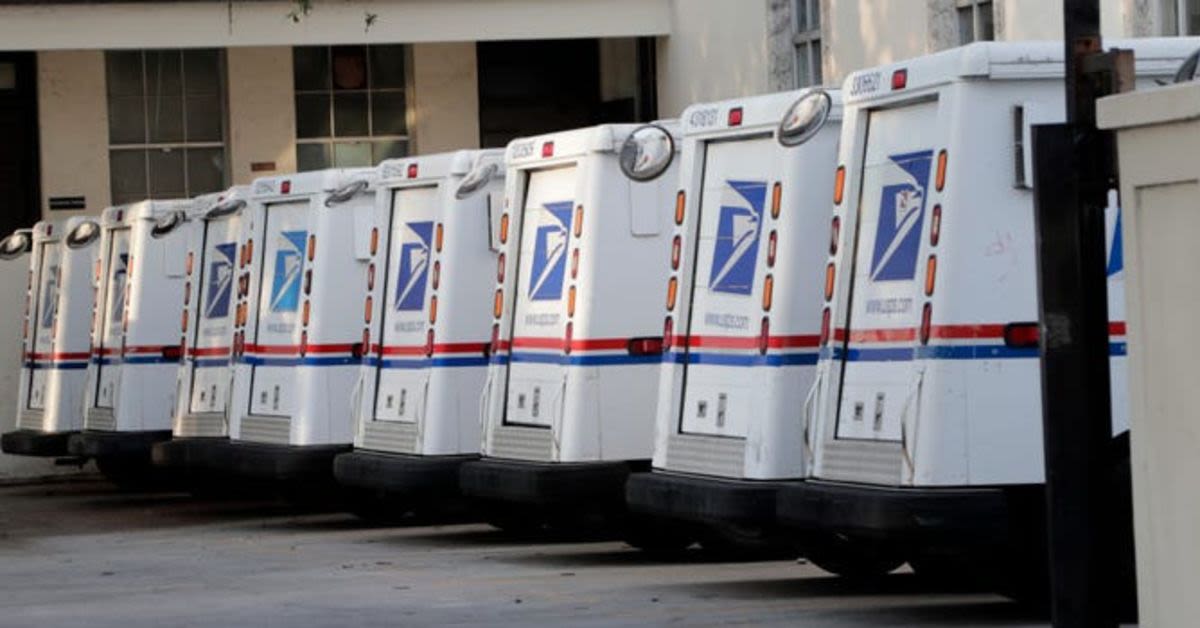
Democratic governors are pressuring the U.S. Postal Service (USPS) to abandon a proposed rule that would help implement a Trump administration executive order aimed at building a federal list of eligible voters and tightening access to mail-in ballots.
According to Breitbart, a coalition of Democratic governors demanded that USPS withdraw its rule designed to carry out President Donald Trumps directive to assemble a nationwide roster of eligible voters and potentially restrict who may receive a ballot by mail. The order, signed in March, instructs U.S. Citizenship and Immigration Services and the Social Security Administration to compile a citizenship list for each state, while directing the Postal Service to limit mailed ballots to individuals appearing on those lists.
USPS submitted its proposed rule to the Federal Register in late May, moving to operationalize the presidents order despite ongoing legal challenges. A federal judge has since blocked the executive order and prohibited federal agencies from enforcing it, ruling that it is unconstitutional because only Congress and the states not the president possess the authority to set election rules.
The latest letter to USPS was organized by Illinois Gov. JB Pritzker and signed by eight other Democratic governors from California, Connecticut, Minnesota, New York, Pennsylvania, Rhode Island, Washington, and Wisconsin. Citing the judges ruling, the governors urged the Postal Service to rescind the proposed rule drafted to carry out Trumps directive, framing the move as a defense of state control over elections.
Far from ensuring integrity in federal elections, the governors wrote in their six-page letter, the Proposed Rule would undermine trust in elections, needlessly complicate voting processes, arbitrarily disenfranchise millions of eligible voters, and undermine states constitutional role in ensuring free and fair elections. They further argued that the measure would hand the Postal Service unilateral power to refuse to deliver their ballots if a state refuses to collaborate with President Trumps unlawful directives.
USPS did not immediately respond to calls and emails seeking comment on the governors demands, maintaining public silence as the legal and political fight escalates. The agency had originally moved forward only after a separate federal judge, overseeing a different lawsuit against the executive order, declined to block it on the grounds that the administration had not yet taken concrete steps to implement it, a decision now under appeal by Democratic and civil-rights groups.
The executive order has also drawn resistance from within the postal workforce itself, raising concerns about mission creep and politicization of the mail system. Jonathan Smith, president of the American Postal Workers Union, previously stressed that postal employees are not election enforcers, stating their job is not to verify voter eligibility but to move mail from one destination to the next.
This is the second election-related executive order Trump has signed since returning to office, underscoring his continued focus on election integrity and citizenship verification. The first order, which has also been blocked in court, sought to require documented proof of citizenship for voter registration, a step conservatives have long argued is necessary to protect the ballot box from abuse.
Both orders center on Trumps effort to curb voting by noncitizens, an issue the left and many in the media routinely downplay by pointing to studies and local investigations that label such cases rare. Trump has likewise zeroed in on mail-in voting as vulnerable to fraud, even as he has used absentee ballots himself, arguing that basic safeguards and accurate voter rolls are indispensable to public confidence in elections.
Election officials and progressive think tanks insist there is no evidence of widespread problems with mail voting, which has become increasingly popular among voters of both parties. A 2025 report by the Brookings Institution claimed that instances of mail-ballot fraud were minuscule about four cases per 10 million mail ballots yet that finding has done little to settle the broader debate over whether Washington should tighten verification or leave states and localities to operate under looser standards.
Login