
A damning federal watchdog report has revealed that, at the very moment shots were fired at Donald Trump during his Butler, Pennsylvania, campaign rally, a Secret Service counter-drone operator was still Googling the location of the rooftop where would-be assassin Thomas Crooks was positioned.
According to RedState, the Department of Homeland Security inspector general found that instead of urgently coordinating with officers already on the ground, the operator turned to an internet search while the gunman took aim from just 155 yards away. This was only one of several catastrophic breakdowns in basic protective protocol detailed in the report, failures that collectively exposed a president and current Republican standard-bearer to mortal danger.
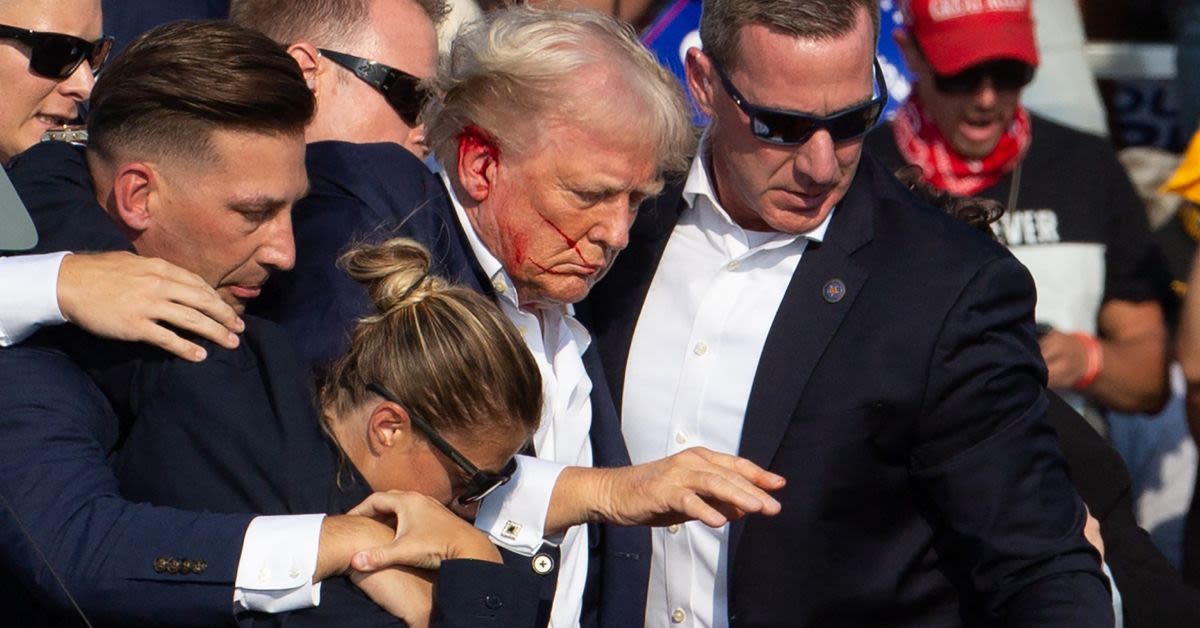
Even more disturbing, local law enforcement had already identified Crooks on the roof two minutes before the first shots rang out, yet Trumps protective detail was never alerted. President Trump was the target at the Butler campaign rally where he was shot and wounded, with the assassins bullet striking his ear and leaving him visibly bloodied on stage.
The attack claimed the life of Corey Comperatore, a retired volunteer fire chief who died shielding his wife and daughter, and two other men were seriously wounded in the gunfire. Multiple agents were later suspended without pay in connection with their response to the attempted assassination, underscoring the gravity of the operational collapse.
The newly released DHS inspector general report shows that the counter-drone operator was still searching online for the American Glass Research (AGR) building when Crooks opened fire. Instead of asking local law enforcement personnel for the AGR complexs location, the counter drone operator searched online for it, and was still searching when Crooks fired his first shots, the report states.
Local law enforcement had, at 6:09 p.m., called the Secret Service and the Pennsylvania State Police communications room, warning them of a suspicious person on the AGR complexs roof." Yet, as the report makes clear, that warning never translated into timely, actionable information for the agents directly responsible for Trumps immediate protection.
As a result, the presidents team remained completely unaware of the armed gunman just 155 yards away until bullets were already flying. Just two minutes later, at 6:11 p.m., Crooks opened fire with eight shots, and despite that narrow but critical window, the protective detail was never warned that an armed assailant had a clear line of sight to the stage.
The report further reveals that a Secret Service site agent had proposed using trucks already on location at the Butler Farm Show grounds to block the line of sight from the AGR building to the podium. That straightforward security measure was rejected by campaign staff because the vehicles would be too close to [President Trumps] press shot, prioritizing optics over maximum physical security.
An alternative placement for the trucks was supposedly agreed upon, but it was never implemented, and supervisors failed to follow up after being told that local law enforcement would handle the AGR complex. That miscommunication and lack of accountability left Crooks with an unobstructed 155-yard view of the podium, a vulnerability that any competent adversary could exploit.
The inspector general also highlighted troubling personnel decisions, noting that the lead agent at the event, Miyo Perez, was relatively inexperienced for such a high-risk assignment. Meanwhile, the two supervisors overseeing her planning escaped discipline and later received promotions from Sean Curran, the senior official who signed off on the Butler site security plan and who now serves as Director of the United States Secret Service.
Law enforcement ultimately managed to neutralize Crooks, shooting and killing him on the rooftop after he opened fire on the president and the crowd. By then, however, the damage was done: a respected community member lay dead, others were gravely injured, and the country had come perilously close to a political assassination that could have shaken the republic to its core.
"The Secret Services overall lack of policy and processes, coupled with limited intelligence sharing and poor collaboration and communication with protectee staff and state and local law enforcement, set the conditions that led to missing opportunities to prevent and detect the attempted assassination," the report reveals. It was, in the inspector generals telling, a systemic failure rather than a single isolated mistake, exposing deep institutional complacency within an agency entrusted with safeguarding the nations leaders.
For Americans who still believe in the rule of law and the peaceful transfer of power, the Butler debacle raises urgent questions about whether federal security agencies are truly preparedor willingto protect conservative political figures with the same rigor they claim to apply across the board. A man died in this attack, two others were severely wounded, the future President was almost killed, and the nation would have almost surely been plunged into absolute chaos, and yet the officials whose negligence contributed to this near-tragedy have largely avoided meaningful consequences while some have even advanced their careers.
Login