
Rex Heuermann, the hulking Long Island architect who admitted to being the Gilgo Beach serial killer, will die behind bars after prosecutors revealed he built a Dexter-style execution chamber in the basement of his family home.
According to Fox News, Suffolk County District Attorney Ray Tierney, the lead prosecutor who personally helped secure Heuermanns guilty plea, said investigators were able to reconstruct the chilling space where the killer is believed to have slaughtered most of his victims. Very evocative of that, and I think when we realized what it was, you know, that was some of the comments that were made, Tierney said, referring to the television antiheros plastic-lined kill room. We were actually able to recreate that, in the basement, in the exact location.
The macabre twist, revealed in the new docuseries The Gilgo Beach Killer: House of Secrets, is that the same basement room is now where Heuermanns ex-wife sleeps, a grim reminder of the double life he led beneath the faade of a suburban provider. The contrast between the ordinary exterior of the Massapequa Park house and the horrors concealed below underscores how a man living in plain sight, in a state with some of the strictest laws and most expansive government oversight in the country, was still able to prey on vulnerable women for years.
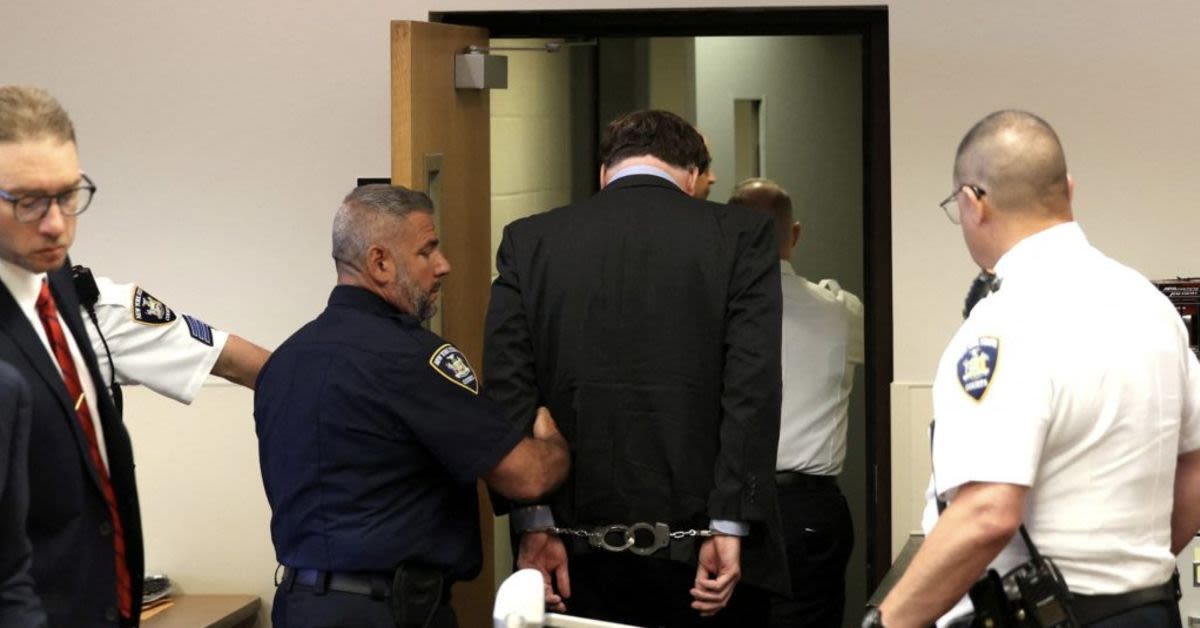
On Wednesday, Judge Timothy Mazzei imposed the harshest punishment available under New York law: three consecutive life sentences without the possibility of parole, followed by four consecutive terms of 25 years to life. The judge did not mince words as he addressed the convicted killer in a packed Suffolk County courtroom, telling him, Youre a disgusting and despicable small man, if youre a man at all, and adding, And youre a coward.
Moments after delivering the sentence, Mazzei ordered court officers to remove Heuermann from the courtroom, signaling that the justice system had finally caught up with a man who had eluded it for decades. Tierney later said Heuermann is expected to be transferred to a state prison facility before the end of the week, where he will spend the remainder of his life under maximum security.
In a post-sentencing interview with Fox News and Fox News Digital, Tierney detailed why investigators returned to the basement long after Heuermanns arrest and an exhaustive initial search of the home. The renewed forensic sweep, conducted with infrared and ultraviolet lighting, was prompted by the discovery of a chilling digital artifact: a deleted document on Heuermanns computer labeled HK, which Tierney said stood for hunt-kill.
Although Heuermann had created and deleted multiple versions of the HK file over time, forensic specialists were able to recover only one, but it was enough to expose the methodical mind of a predator who treated murder like a project plan. Prosecutors described the document as a detailed planning tool in which Heuermann mapped traffic cameras along his routes to and from body dump sites, listed supplies he needed for the killings, and reminded himself to be well rested and alert to potential screams.
The file also captured his cold-blooded deliberations over how best to construct his basement kill room, down to the hardware used to hang plastic sheeting. He was hanging plastic sheets from the ceiling and on the walls, Tierney said. Thats what the document talks about, and then what he says is dont use push pins, because it ruins the ceiling. Use tape.
Armed with that information, detectives returned to the house with specialized lighting to search for physical traces that might match the digital blueprint. We could see the adhesive stains on the wall, Tierney said. And then what we are able to do is we were able to see that they made a perfect square and thats where, we believe, the crimes occurred.
The physical disparity between Heuermann and his victims only deepened the horror of the crimes. Described as an ogre by the lone eyewitness in the case, Heuermann stands about 6 feet 4 inches tall and weighs close to 300 pounds, while his victims were petite women, roughly 5 feet tall and about 100 pounds, a fact he chillingly acknowledged in his HK document with the notation that small is good.
Authorities say the known victims span nearly two decades, from the 1993 murder of 28-year-old Sandra Costilla in North Sea to the 2010 disappearance of 27-year-old Amber Lynn Costello. The list also includes Karen Vergata, 34, whose remains were found on Fire Island and near Tobay Beach; Valerie Mack, 24, discovered in Manorville and along Ocean Parkway near Gilgo Beach; and Jessica Taylor, 20, whose body parts were likewise found in Manorville and along Ocean Parkway.
Then there are the so-called Gilgo Four, whose remains were located in the brush just north of Ocean Parkway, east of Gilgo Beach: Maureen Brainard-Barnes, 25; Melissa Barthelemy, 24; Megan Waterman, 22; and Amber Lynn Costello, 27. These women, many of them struggling economically and working as escorts, were precisely the kind of vulnerable individuals most failed by a system that often prioritizes political narratives over basic public safety.
Before Mazzei handed down the sentence, the courtroom heard searing victim impact statements from relatives who have lived for years with the trauma, uncertainty and public spectacle surrounding the case. Macks adoptive parents were among the first to speak, with her father telling Heuermann that despite the savagery of his acts, you never touched her soul, and insisting, Valerie is the one who is free today, and you are not.
Relatives of Jessica Taylor described the agony of learning that only partial remains had initially been recovered, and the renewed pain each time the case resurfaced in the media. One cousin ridiculed Heuermanns supposed criminal genius, pointing out that he had devised elaborate schemes to avoid detection yet still left behind enough evidence for investigators to track him down and dismantle his carefully constructed faade.
The most wrenching testimony came from the family of Maureen Brainard-Barnes, one of the Gilgo Four whose disappearance helped expose the broader pattern of killings along Long Islands South Shore. Her sister, Melissa Cann, recalled their final conversation, telling the court, The last words she said to me were, I love you. Ill see you tomorrow.
Cann spoke of years of survivors guilt and a personal mission to keep pressure on authorities to identify the killer and bring him to justice. Her persistence, and that of other family members, stands in stark contrast to the bureaucratic inertia and political distractions that long plagued the investigation, a reminder that ordinary citizens often do more to advance justice than sprawling government institutions.
Brainard-Barnes daughter, Nicolette, told the court she was only 7 years old when her mother was murdered and now finds herself older than her mother was at the time of her death. She emphasized that the women her mother died alongside mattered infinitely more than Heuermann and branded him a coward who takes out his own shortcomings on others.
On April 8, Heuermann pleaded guilty to seven murders and, in a chilling admission, confessed to the 1996 killing of Vergata, a crime for which he had not previously been charged. Asked whether there may be additional victims, Tierney declined to speculate publicly, saying that if evidence emerges indicating more killings, he will present it to a grand jury and seek a new indictment.
Tierney also disclosed that prosecutors possess additional evidence against Heuermann that has not yet been released, underscoring that the public record still does not capture the full scope of the case. He described how, over the years, Heuermann evolved from a disorganized killer into an organized one, refining his methods and learning from his own crimes in a way that made him more dangerous and harder to catch.
According to Tierney, early in his criminal career, Heuermanns behavior was more chaotic and sloppy, but over time he became increasingly methodical, as reflected in the HK planning document, his changing modus operandi and digital footprints showing he obsessively monitored news coverage of the murders. At some point, he also obtained a copy of Mindhunter, the influential book by former FBI profiler John Douglas, whose work helped pioneer modern criminal profiling.
Tierney used a sports analogy to explain how the killer weaponized that knowledge. If youre a high school football player and you get, Peyton Mannings book, you want to become a better quarterback, he said. So he took that book, not to gain insight, but to become a better serial killer, specifically not to get caught.
As part of his plea agreement, Heuermann has agreed to sit down with the FBIs Behavioral Analysis Unit (BAU) for clinical evaluation, a rare opportunity for federal experts to study a prolific serial killer who operated for years in a densely populated, heavily policed region. Douglas, whose work inspired Mindhunter, once led the FBIs Behavioral Science Unit, the forerunner of the BAU, and his methods have shaped how law enforcement understands and tracks serial predators.
That was a suggestion of mine, Tierney revealed, explaining why he pushed for the BAUs involvement. Im a former federal prosecutor. Im familiar with the work of BAU. I know I knew about the Mindhunter book by this defendant. I knew that that was something that he was interested in, so I thought it would be a good opportunity.
Tierney said investigators hope to extract insights from Heuermann in a controlled, clinical setting that could help law enforcement identify and stop similar offenders in the future. For a justice system often hamstrung by political agendas and soft-on-crime policies, the chance to learn from a case like this could prove invaluable in protecting future victims, particularly those on societys margins who are too often ignored until it is too late.
The Gilgo Beach case, long a symbol of institutional failure and delayed justice, now stands as a stark reminder of what happens when predators exploit both human vulnerability and systemic blind spots. With Heuermann locked away for life and his own meticulous hunt-kill playbook turned against him, the families of the dead at least have the assurance that the man who terrorized their loved ones will never again walk free, even as investigators quietly probe whether the full extent of his crimes has yet been revealed.
Login