
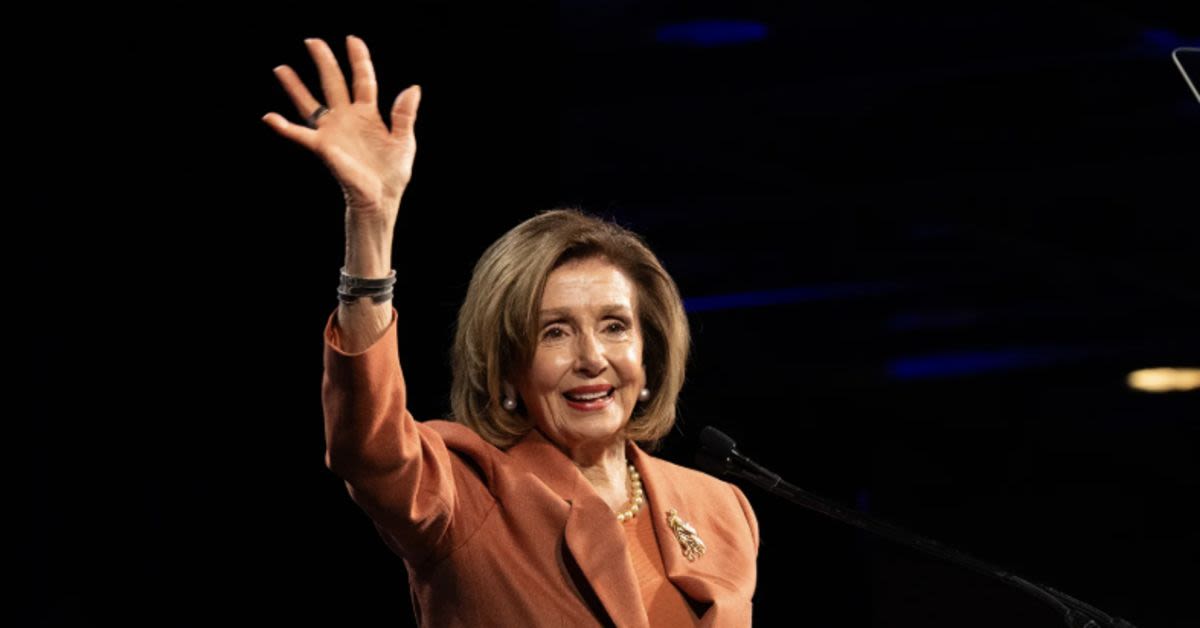
Nancy Pelosis long tenure in Congress is entering a new phase in which her influence may be measured not only by the legislation she championed, but by the ideological heir she has now chosen to fill her San Francisco House seat.
In a move that underscores the Democratic Partys continued drift leftward, Pelosi has formally endorsed Connie Chan, a San Francisco supervisor, to succeed her in the House of Representatives. According to Newsmax, the former House Speakers decision reflects a blend of political calculation, ideological affinity, and strategic concern over who will best preserve her legacy in a city that has become a laboratory for progressive governance.
Pelosi has made clear that she views Chan as a faithful steward of the citys dominant liberal ethos and the priorities of its Democratic establishment. Pelosi praised her preferred successor by declaring that Chan "understands San Francisco our values, our diversity, our communities."
That formulation signals more than mere hometown pride; it is a coded affirmation that Chan will defend the progressive policies that have defined San Franciscos political culture, even as many residents grow weary of rising crime, homelessness, and the cost of living. For Pelosi, the endorsement also shores up her long-standing alliance with organized labor, as Chan has cultivated strong support from unions and working-class constituencies that remain a powerful force in local politics.
Chan is widely regarded as a progressive Democrat firmly rooted in the labor-left wing of San Franciscos political spectrum, rather than a centrist or business-friendly moderate. Her record and campaign platform place her squarely on the far-left flank of the party, a positioning that has drawn praise from activists and concern from those who see the city as a cautionary tale of progressive excess.
Among the positions critics describe as "very left-wing" is Chans support for establishing a city-run public bank in San Francisco, a concept long championed by socialist and anti-capitalist activists who seek to weaken private financial institutions. She has also backed aggressive tenant organizing and rent protections, including San Franciscos "Union-at-Home" ordinance that allows tenants to collectively bargain with landlords, a policy that alarms property owners and raises questions about private contract rights.
Chan has further distinguished herself by advocating expanded social services that would significantly enlarge the role of local government and its fiscal footprint. Her agenda includes proposals such as fare-free public transit and extended food assistance programs, initiatives that appeal to progressive voters but raise concerns among fiscal conservatives about long-term sustainability and taxpayer burden.
Perhaps most telling for many moderate and independent voters, Chan opposed the recall of progressive District Attorney Chesa Boudin, even as a broad cross-section of San Franciscans supported his removal amid public anger over crime and public disorder. That stance aligned her with the citys most ideological activists and against a recall movement that was widely seen as a grassroots revolt against soft-on-crime policies.
Chan is running on a platform centered on working families, labor unions, immigrant rights, and taxing billionaires, a familiar progressive formula that emphasizes redistribution over growth. She has also refused donations from corporate PACs and from certain industries, including fossil fuel and pharmaceutical interests, a posture that bolsters her image with the activist left while signaling hostility toward major sectors of the American economy.
News coverage routinely describes Chan as a progressive or as part of San Franciscos left flank, reinforcing the perception that she is no centrist bridge-builder but a committed ideological actor. For conservatives, her rise illustrates how deeply entrenched the far-left has become in urban Democratic strongholds, even as the consequences of such policies drive many residents and businesses to flee.
Yet, as far left as Chan appears, Pelosi evidently concluded that she would be a more reliable and manageable governing ally than Saikat Chakrabarti, another candidate in the race. Chakrabarti, the former chief of staff to Rep. Alexandria Ocasio-Cortez and co-founder of Justice Democrats, ran as an anti-establishment insurgent openly criticizing Democratic leadership and seeking to push the party even further left.
One Democrat insider told Newsmax that Chan, while progressive, is regarded as more institutionally pragmatic and easier for Pelosis allies to work with than Chakrabarti, whose record suggests a willingness to wage war on his own partys hierarchy. That assessment highlights a key dynamic in todays Democratic Party: establishment figures like Pelosi are increasingly willing to embrace far-left policy agendas, so long as they are advanced by loyalists who will not challenge leaderships grip on power.
For voters beyond San Francisco, the PelosiChan alliance offers a revealing glimpse into where national Democrats may be headed on issues ranging from criminal justice and housing to taxation and the size of government. As Pelosi seeks to cement her legacy, her choice of a staunch progressive who champions public banking, expanded welfare-style programs, and aggressive tenant collectivism underscores how far the partys center of gravity has shiftedand raises the question of whether the rest of the country is prepared to follow San Franciscos lead.
Login