
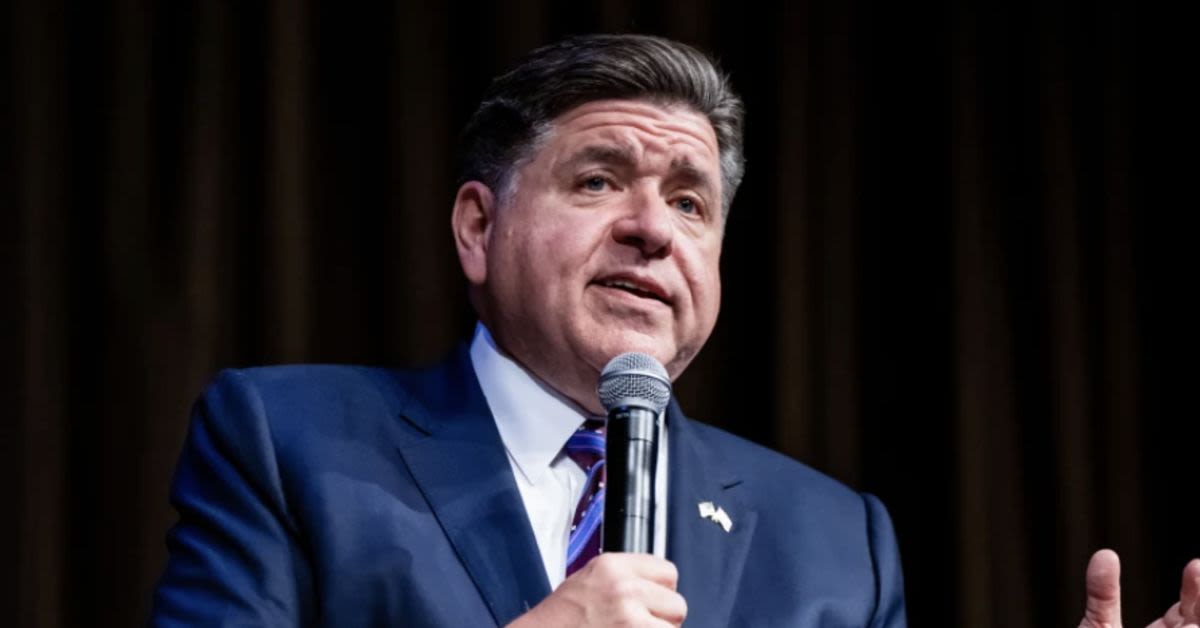
Democratic Illinois Gov. J.B. Pritzker, a billionaire heir to the Hyatt hotel fortune, has been quietly deploying his wealth and political influence to underwrite key Democratic committees, senior party figures and a slate of 2026 congressional hopefuls viewed as vital to the partys future.
According to the Daily Callers review of public Federal Election Commission (FEC) filings, Pritzker has been writing checks both in his own name and through long-standing campaign accounts to a broad array of Democratic candidates and committees. The records show that he has steered six- and seven-figure sums into the partys central fundraising arms, including the Democratic Congressional Campaign Committee (DCCC), the Democratic Senatorial Campaign Committee (DSCC) and the Democratic National Committee (DNC), positioning himself as one of the most significant individual financiers in the partys national infrastructure.
Veteran political operatives say the pattern of giving looks less like routine party loyalty and more like the groundwork for a presidential bid in a post-Biden Democratic Party. The scale and targeting of Pritzkers donations suggest he believes he can compete head-to-head with other ambitious Democratic governors such as Californias Gavin Newsom, Pennsylvanias Josh Shapiro and Michigans Gretchen Whitmer, as well as former Vice President Kamala Harris, all of whom are widely discussed as potential 2028 contenders.
The Daily Caller spoke with long-time Republican political consultant Ryan Girdusky, who argued that Pritzkers financial maneuvers are part of a long-running audition for the national stage. Pritzker has been flirting for this run [for president] for quite some time; hes got some advantages. His biggest advantage is his money, Girdusky said, adding that the governors current spending spree is Pritzker just trying to buy some favorability.
Pritzkers capacity to do so is rooted in a family empire and personal ventures that have made him one of the wealthiest officeholders in the country. The Illinois governor is a scion of the Pritzker clan, owners of the Hyatt hotel chain, and he has launched several venture capital and investment firms that have further expanded both his fortune and his ability to bankroll political causes aligned with his progressive agenda.
FEC filings show that on Dec. 31, 2025, Pritzker sent $250,000 in three separate disbursements to the DNC Services Corp/Democratic National Committee, which also operates under the banner of the Democratic Grassroots Victory Fund. In October 2025, he supplemented those national party contributions with a $200,000 infusion to House Minority Leader Hakeem Jeffriess joint fundraising vehicle, the Jeffries Battleground Protection Fund, underscoring his interest in shoring up the partys House leadership.
The governors largesse has extended systematically across the partys congressional campaign arms. In September 2025, Pritzker made two contributions totaling $148,000 to the DCCC, following three donations on June 20, 2025, to the DSCC that together amounted to $310,000, effectively buying himself a seat at the table in both chambers campaign operations.
His checkbook has also been opened wide for outside groups that function as de facto super PACs for Democratic leadership in Congress. In May 2025, Pritzker gave $1 million to the House Majority PAC, and just days before the 2024 election he poured another $1 million into the Senate Majority PAC, signaling his willingness to underwrite the partys most aggressive efforts to retain and expand power in Washington.
Pritzker has not confined his political courtship to Washington-based committees. In the first quarter of 2026, he funneled $5 million, through two separate donations, into the Illinois Future PAC, a vehicle backing Lt. Gov. Juliana Strattons bid for the open U.S. Senate seat being vacated by long-time Democratic Sen. Dick Durbin, who is retiring. That followed $5 million he had already pumped into the same PAC in the fourth quarter of 2025, bringing his total support for the Stratton-aligned operation to $10 million in just six months and effectively making him its principal patron.
Girdusky, the Republican consultant, said the strategy is obvious even if the payoff is uncertain. Its not shocking. It may work with some people, but you cant answer a quid pro quo, he observed, suggesting that Pritzker may have to wait years before he can fully cash in the political debts he is now creating.
The consultant also warned that money alone cannot erase Pritzkers political liabilities, particularly outside his home state. He was the big winner in Illinois; his backed candidates did best. But at the end of the day, if he goes into South Carolina with a five percent approval rating, it doesnt matter how much money hes giving. Thats generally his problem, Girdusky told the Caller, highlighting the gap between Pritzkers financial clout and his national appeal.
Beyond the marquee checks to national committees and leadership-aligned PACs, FEC records show a dense pattern of maximum or near-maximum contributions to individual House campaigns in strategically important districts. Among the beneficiaries are Reps. Dina Titus of Nevada, Marcy Kaptur of Ohio, John Mannion of New York, Jahana Hayes of Connecticut, Dave Min of California, Grace Meng of New York, Brad Schneider of Illinois, Nellie Pou of New Jersey, Susie Lee of Nevada, Janelle Bynum of Oregon and Emilia Sykes of Ohio.
The list continues with Josh Riley of New York, Laura Gillen of New York, Kristen McDonald Rivet of Michigan, Don Davis of North Carolina, Frank Mrvan of Indiana, Vicente Gonzalez of Texas, Henry Cuellar of Texas, Derek Tran of California, Josh Harder of California, Marie Gluesenkamp Perez of Washington, Eugene Vindman of Virginia and Steven Horsford of Nevada. These are not random choices: many hold vulnerable seats in red or purple territory, are close allies of Jeffries or occupy influential roles in states that will matter early in a Democratic presidential primary calendar.
Under federal law, there is no cap on the total amount an individual can donate across the political landscape, provided they do not exceed the maximum allowed to any single candidate or committee. Pritzker appears to be exploiting that structure to the hilt, but his office and campaign operation did not respond to the Daily Callers request for comment, leaving unanswered how directly these donations are tied to his own national ambitions.
The pattern of giving underscores a broader strategic map. Almost all of the House Democrats receiving Pritzkers financial backing either sit in districts Republicans are targeting, maintain close ties to Jeffries or hold senior positions in states that will be pivotal in any future Democratic presidential nominating contest, from Nevada to Michigan to North Carolina. The Caller has previously reported that Pritzker also contributed to the Iowa congressional campaign of Sarah Trone Garriott, who is challenging Republican Rep. Zach Nunn, a move that places Pritzkers money squarely in the first-in-the-nation caucus state.
A second Republican consultant, granted anonymity due to the sensitivity of his fundraising work, told the Caller that Pritzkers spending has already been felt on the ground in battleground states. We were dealing with [Pritzker] in Wisconsin. He was basically matching us dollar for dollar, the consultant said, describing a Democratic donor willing to go toe-to-toe with GOP efforts in a state that has repeatedly decided national elections by razor-thin margins.
For this operative, there is little doubt about the endgame. This is 100 percent him setting up for a presidential run, the consultant insisted. Ive seen this coming for a while; others have seen this coming for a while These are all favors hes going to cash in, he added, framing Pritzkers generosity as a calculated investment rather than mere party loyalty.
Pritzkers reach extends into key Senate contests as well, where control of the chamber often hinges on a handful of races. He has made at least one $25,000 contribution to Georgia Democratic Sen. Jon Ossoffs victory fund, $7,000 to Ohio Sen. Sherrod Browns campaign and $17,000 to former North Carolina Gov. Roy Coopers Senate victory fund and campaign, all in states that will be central to any future Electoral College map.
As of March 30, 2026, Pritzker had also given $3,500 to James Talaricos Senate campaign in Texas, a state long coveted by Democrats but still firmly in Republican hands. These Senate investments mirror his House strategy: target high-profile races in competitive states where future presidential candidates will need allies, infrastructure and goodwill if they hope to compete.
The anonymous GOP fundraising consultant told the Daily Caller that Pritzkers personal fortune makes him a different kind of player than past Democratic aspirants. A guy like Pritzker is a unique situation because of his personal bankroll, he said, noting that while Barack Obama also cultivated a national donor network before 2008, Obama had to rely on an aggressive small-dollar fundraising operation rather than a family fortune. Thats kind of the old [former Chicago Mayor Richard] Daley game, the consultant added, invoking the machine-style politics that once dominated Democratic strongholds like Chicago.
The same consultant suggested that Pritzkers spending spree is also shaped by intra-party rivalries, particularly in Illinois and the broader Democratic establishment. I know that him and Rahm Emanuel hate each other, he said. Pritzker is trying to buy off support before Rahm. Not just in Illinois politics but around the country.
That rivalry, he warned, could become a defining subplot of the next Democratic presidential primary. Rahm is a definite threat. Especially with his brother [Ari] running Hollywood and likely having Obamas support, the consultant added, hinting at a looming clash between two well-connected Democratic power brokers, each with access to different pillars of the partys donor and media ecosystems.
Despite his vast wealth, recent reporting suggests Pritzker may not simply write himself a blank check if he runs for president. NBC News has reported that Pritzker notwithstanding his billionaire status is unlikely to fully self-fund a potential 2028 bid, preferring instead to build a more traditional national fundraising apparatus that could demonstrate grassroots enthusiasm and broaden his base of support.
Pritzker has reached out to operatives who have national fundraising experience and internally discussed what digital fundraising might look like, the outlet reported on Friday, indicating that the governor is already gaming out how to blend his personal fortune with a professionalized national finance operation. For conservatives wary of big-money politics, that approach raises familiar concerns about a Democratic Party increasingly dominated by wealthy coastal and urban elites who preach redistribution while relying on billionaires to power their campaigns.
TIME Magazine reported at the end of April that Pritzker is likely aiming higher than another term in Springfield, eyeing a White House run in what is expected to be a crowded and contentious Democratic field. Even Pritzker has begun to drop hints about his intentions, telling the Reverend Al Sharpton during an event last month that he will be involved in 2028, a coy formulation that does little to disguise the scale of his ambitions or the role his checkbook is already playing in shaping the party he hopes one day to lead.
Login