
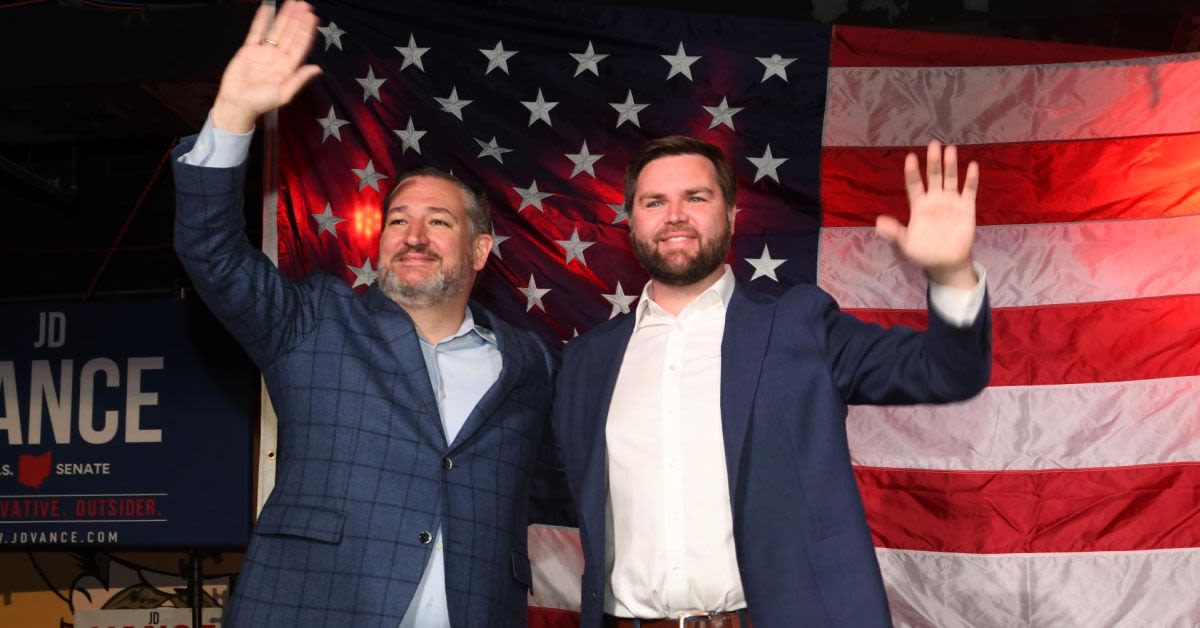
Two of the most prominent figures in todays Republican Party are descending on Iowa in the coming days, underscoring how the 2026 midterms and the looming 2028 presidential race are already converging in one of the GOPs most consequential battlegrounds.
According to Fox News, Vice President JD Vance and Sen. Ted Cruz of Texas will arrive in the Hawkeye State with the midterm map squarely in their sights, as Republicans prepare to defend a narrow Senate edge and a razor-thin House majority just over six months before Election Day. Yet the political reality is unmistakable: once the midterms are in the rearview mirror, the contest to succeed term-limited President Donald Trump will begin in earnest, and every handshake, speech, and fundraiser in Iowa doubles as an early audition for 2028.
Iowas outsized role in Republican politics is not new, but the stakes this cycle are unusually high. With three competitive House districts and hotly contested Senate and gubernatorial races on the horizon, veteran GOP strategist David Kochel captured the moment succinctly, saying, "Iowas important."
Kochel argued that the states competitiveness will draw a flood of resources and national attention, while simultaneously serving as a proving ground for the next generation of conservative standard-bearers. "Because of how competitive Iowa looks to be right now... theres going to be a lot of money coming in and a lot of attention paid and because its Iowa, I think well have a pretty healthy parade of 2028 potentials coming through to try to do what they can to help in the midterms," Kochel emphasized. "Its the best excuse to come to Iowa and get to know people and get seen and road test some messaging."
Cruz, a stalwart of the conservative movement and a favorite of constitutional originalists, will arrive first. On Friday, he is slated to deliver the keynote address at the Annual Spring Kickoff for the Iowa Faith & Freedom Coalition, a powerhouse organization among social conservatives whose influence has long shaped Republican primaries in the state.
The title of Cruzs address leaves little doubt about his message or his ambitions. The speech, billed as "Constitutional Courage Cruzing Toward Victory: A Roadmap for 2026," signals a focus on defending the founding charter, pushing back against progressive overreach, and charting a path for Republicans to expand their majorities by appealing to faith-based voters and constitutional conservatives.
Cruzs relationship with Iowa is both historic and strategic. He won the 2016 Iowa presidential caucuses and finished as runner-up to Trump in that years turbulent GOP primary, a performance that cemented his status as a national conservative leader and a serious presidential contender.
In the last cycle, Cruz weighed another White House bid before ultimately opting to seek re-election to the Senate. When asked recently by Fox News Digital whether he is seriously eyeing 2028, he kept his cards close, saying, "There will be plenty of time to make those decisions. I don't have an announcement for you today."
Even without a formal declaration, Cruzs actions suggest he is carefully positioning himself for another run. He is increasingly casting himself as a principled conservative alternative to Vance, who is widely viewed as the leading MAGA and America First successor to Trump and currently dominates early 2028 polling.
Cruz has drawn significant attention for his high-profile clashes with figures on the populist right, including Tucker Carlson, a dynamic that has paradoxically strengthened his standing among many conservative donors and institutional leaders. At the same time, he has deepened his grassroots reach through his widely downloaded podcast, "Verdict with Ted Cruz," which has become a staple for many Republican activists and voters seeking in-depth conservative analysis.
Vance, for his part, will touch down in Iowa on Tuesday in a visit that blends official duties with unmistakable political overtones. He is scheduled to appear alongside Republican Rep. Zach Nunn, who faces a difficult re-election fight in a swing district in the southwestern part of the state, a race that could help determine whether Republicans maintain control of the House.
This trip marks Vances first visit as vice president to either Iowa or New Hampshire, the latter of which hosts the first-in-the-nation GOP primary immediately after the Iowa caucuses. The timing and location of the visit, coming ahead of what many in the party expect to be a Vance 2028 presidential campaign, reinforce the perception that he is methodically building a national profile while helping to shore up the partys congressional majorities.
Kochel predicted that Vances presence will be impossible to ignore. "Hes going to get a lot of exposure and TV coverage," Kochel said of the vice president, noting that the combination of his office, his message, and the media spotlight will give him a powerful platform in a state that has launched many Republican presidential hopefuls.
Publicly, Vance has brushed aside questions about 2028, insisting that his focus remains on governing and on the immediate electoral battles ahead. He has dismissed the chatter as "premature" and "disloyal" to Trump, stressing that his priority is to perform his duties as vice president and to help Republicans defend their slim Senate and fragile House majorities in the midterms.
Behind the scenes, however, Vance has assembled a seasoned team of political advisers who could rapidly convert their current operation into a full-fledged presidential campaign infrastructure. That quiet preparation, combined with his strong standing in early polling, has made him the de facto front-runner in the emerging 2028 Republican field.
While Vance currently leads the pack, Secretary of State Marco Rubio has experienced a notable surge in support for a potential presidential bid. His rising profile, driven in part by his expanded responsibilities on the world stage including his role in the U.S. operation in Venezuela and the Iran war has reminded many Republicans of his foreign policy credentials and his long-standing advocacy for a robust American presence abroad.
Rubio, who previously served as a senator from Florida and was part of the crowded 2016 GOP primary field that Trump ultimately dominated, has reemerged as a serious contender in conservative circles. At last months Conservative Political Action Conference (CPAC), he finished a strong second to Vance in the 2028 Republican presidential nomination straw poll, a result that underscored his renewed appeal among grassroots activists.
Trump himself has played a significant role in elevating Rubios stature. The president has showered his secretary of state with praise, recently proclaiming that Rubio would be remembered as "the greatest secretary of state in history."
Trump has also floated the idea of a unity ticket that would combine the strengths of both men. He has touted a Vance-Rubio pairing as "unstoppable," though he has carefully avoided specifying which of the two should lead the ticket, a deliberate ambiguity that keeps both camps aligned with him and with each other.
At the same time, Trump has been explicit about where he sees the center of gravity in the partys future leadership. He said last year that Vance is "most likely" his heir apparent, adding, "In all fairness, he's the vice president."
Rubio, for his part, has publicly deferred to Vances position and popularity within the party. He told Vanity Fair late last year, "If JD Vance runs for president, he's going to be our nominee, and I'll be one of the first people to support him."
Despite those assurances, some Republican donors who favor Rubio have begun quietly exploring ways to elevate his political profile and keep his options open. GOP sources confirmed earlier this year to Fox News that this donor group is working behind the scenes to bolster Rubios standing, a move that reflects both his growing appeal and the natural jockeying that precedes any open presidential contest.
That behind-the-scenes maneuvering has not been universally welcomed within Trumps inner circle. "Vice President Vance is the future of the Republican Party, and Marco Rubio is one of his closest friends in the administration," an operative in Trump's political orbit told Fox News, signaling frustration with efforts to pit the two men against each other.
The operative, who requested anonymity to speak candidly, warned that such efforts risk undermining party unity at a time when Republicans should be focused on defeating Democrats and expanding conservative governance. "The divisive stories from some donors trying to cause chaos are not helpful," the operative emphasized.
Vance himself has moved to tamp down any narrative of rivalry with Rubio. He told Fox News' Martha MacCallum in February that "Marco is my closest friend in the administration," a pointed reminder that the two men see themselves as allies rather than adversaries.
In a separate appearance on Fox News' "The Story," the vice president criticized attempts particularly in the media to manufacture conflict where none exists. "I think it's so interesting the media wants to create this conflict where there just isn't any conflict," he said, underscoring a broader conservative critique of press narratives that seek to divide Republicans while giving Democrats a pass.
Beyond Vance, Cruz, and Rubio, the Republican bench for 2028 is deep and ideologically diverse, though firmly rooted in conservative principles. Political analysts routinely mention several sitting governors as potential contenders, including Ron DeSantis of Florida, Brian Kemp of Georgia, and Sarah Huckabee Sanders of Arkansas, as well as former Virginia Gov. Glenn Youngkin, each of whom has built a reputation for pushing back against progressive policies in their states.
On Capitol Hill, a number of senators are also seen as possible presidential aspirants. Tom Cotton of Arkansas, Josh Hawley of Missouri, and Rick Scott of Florida are frequently cited by pundits as figures who could carry the conservative banner in a future national contest, each with a distinct brand of constitutionalism, populism, or fiscal restraint.
The list of potential contenders does not end there. Rep. Byron Donalds of Florida, a vocal MAGA champion and a rising star among grassroots conservatives, is running for governor this year, a race that could further elevate his national profile and position him for higher office down the line.
Then there is Donald Trump Jr., the president-elect's eldest son and a relentless advocate for the MAGA movement, whose name inevitably surfaces whenever Republicans discuss the partys future leadership. However, his close personal and political relationship with Vance makes it highly unlikely that he would mount a White House bid in the next cycle, as such a move would risk fracturing the very coalition his father and Vance have worked to consolidate.
As Vance and Cruz arrive in Iowa, the immediate focus will be on 2026 on defending conservative gains, stopping the progressive agenda in Washington, and ensuring that Republicans maintain control of Congress. Yet every speech, every endorsement, and every handshake in the state that has long set the tone for GOP presidential politics will also shape the contours of the 2028 race, where the partys future direction America First populism, traditional constitutional conservatism, or some blend of both will be tested before the nation.
Login