
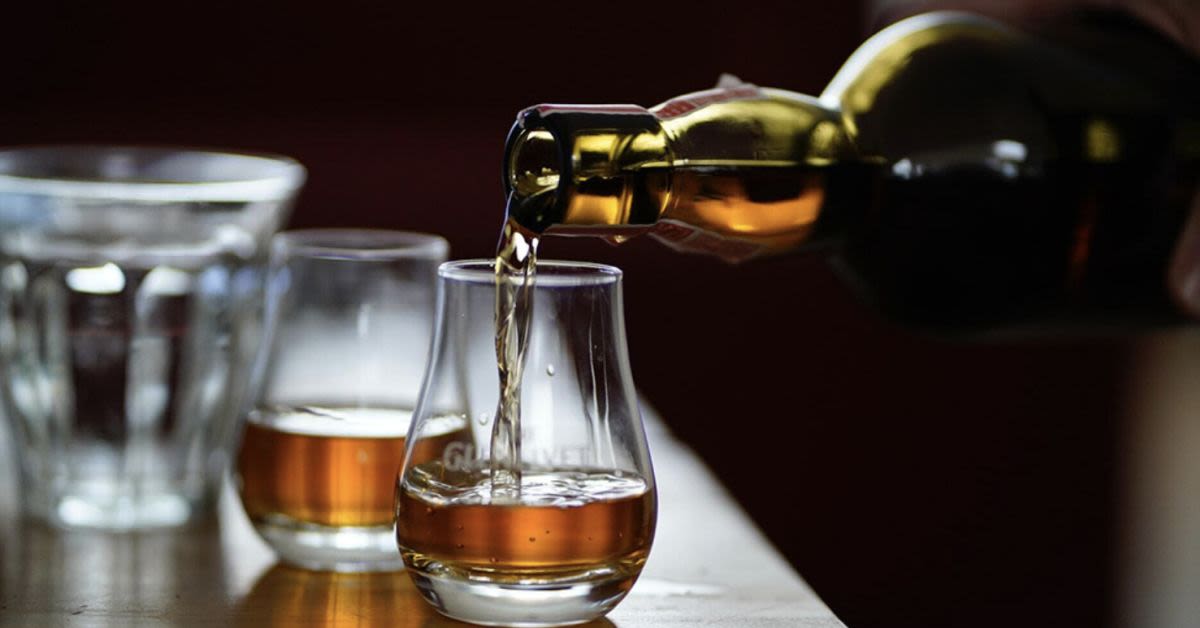
President Donald Trump has moved to lift a 10% tariff on Scottish whisky, casting the decision as both a diplomatic gesture to the British monarchy and a strategic boost for transatlantic trade.
The announcement followed the high-profile White House visit of King Charles III and Queen Camilla, a meeting the president portrayed as a catalyst for renewed economic cooperation between two of the worlds most storied spirits producers. According to Newsmax, Trump framed the rollback as a sign of respect for the royal couple and as a practical step to deepen ties between Scotlands whisky industry and Kentuckys bourbon sector, both of which have been squeezed by recent trade frictions.
Trump laid out his reasoning in a characteristically expansive post on Truth Social, linking the move directly to the royal visit and to the shared economic interests of American and British producers.
In Honor of the King and Queen of the United Kingdom, who have just left the White House, soon headed back to their wonderful Country, I will be removing the Tariffs and Restrictions on Whiskey having to do with Scotland's ability to work with the Commonwealth of Kentucky on Whiskey and Bourbon, two very important Industries within Scotland and Kentucky, he wrote.
The president stressed that the change was long overdue, arguing that bureaucratic inertia and protectionist instincts had hampered a mutually beneficial trade in both spirits and the materials that support them. People have wanted to do this for a long time, in that there had been great Inter-Country Trade, especially having to do with the Wooden Barrels used, he continued, underscoring the practical, supply-chain dimension of the decision rather than the ideological tariff wars favored by globalist technocrats.
Trump also credited the British monarch and his consort with helping to break the logjam, suggesting that their visit provided the final push for a policy shift that others had failed to secure. The King and Queen got me to do something that nobody else was able to do, without hardly even asking! A wonderful Honor to have them both in the U.S.A., he declared, tying the rollback to personal diplomacy rather than to pressure from international institutions.
The 10% levy, imposed in April 2025 as part of a broader package of trade measures, had quickly become a sore point for Scottish distillers and their American partners. According to the Scotch Whisky Association, exports to the United States dropped by roughly 15% in the months after the tariff took effect, a decline that highlighted how punitive trade policies can boomerang against consumers and allied industries.
British officials had lobbied Washington to reverse course, arguing that the tariff was a textbook case of a policy that hurt both sides of the Atlantic. They stressed that American bourbon producers, many of them small and family-run operations in Kentucky, rely heavily on used Scotch barrels in the distilling process, making the tariff a direct threat to U.S. jobs and investment as well as to Scottish exports.
Trump seized on that argument, emphasizing the symbiotic relationship between the two industries and the unique role of wooden barrels in creating the flavor profiles that have made both Scotch and bourbon global bestsellers. They use the barrels from the one, take care of the other, and the barrels are only good for one year. In other words, they can't be used twice, he said, according to the New York Post.
The president went further, highlighting the one-time use of barrels as a feature rather than a flaw, a process that he said enhances quality rather than waste. They can only be used once. But the once makes it, makes it a better substance and a better taste, he added, offering a laymans endorsement of a production method prized by distillers and connoisseurs alike.
Trump also reminded listeners of his long-stated personal abstinence from alcohol, a point that has often distinguished him from the political and media elites who lecture Americans on lifestyle choices while ignoring their own. I'm not a big drinker, he said, noting that his decision was driven not by personal preference but by a desire to strengthen American industry and reward fair, reciprocal trade with a close ally.
Industry leaders in the United States quickly applauded the move, describing it as a practical, pro-business correction to a policy that had introduced uncertainty into a sector already grappling with inflation and regulatory burdens. Chris Swonger, president of the Distilled Spirits Council, hailed the rollback as a major victory for American hospitality businesses that are deeply impacted by international trade, a clear signal that Main Street bars, restaurants, and distributors stand to benefit.
Swonger argued that the decision would restore predictability to a cross-border market that supports thousands of American jobs, from distillery workers in Kentucky to servers and bartenders across the country. This action strengthens transatlantic ties, brings much-needed certainty to our industry and allows spirits producers on both sides of the Atlantic to grow, invest and support jobs at a critical time, he said in a statement, aligning the move with broader conservative priorities of growth and private-sector investment.
On social media, Swonger reinforced his praise, directly crediting the president for taking decisive action where others had stalled.
In a post on X, he said that the trade group was thrilled to see @POTUS' Truth Social post and thank him for his leadership on this issue, underscoring that the initiative came from the White House rather than from unelected trade bureaucrats.
For many conservatives, the rollback illustrates a broader philosophy: tariffs can be a tactical tool in negotiations, but they should not become permanent obstacles that punish American workers and consumers in the name of abstract global fairness. By targeting a narrow, counterproductive levy and removing it when it no longer served U.S. interests, Trump signaled a willingness to recalibrate policy in favor of real-world economic outcomes instead of ideological rigidity.
The decision also comes at a time when both American and British producers face headwinds from inflation, energy costs, and lingering supply-chain disruptions, making regulatory relief especially welcome. For Kentucky bourbon makers and Scottish distillers alike, the end of the 10% tariff offers a clearer path to investment, expansion, and job creation, while reinforcing a trade relationship rooted in shared history and mutual benefit rather than in bureaucratic interference.
Login