
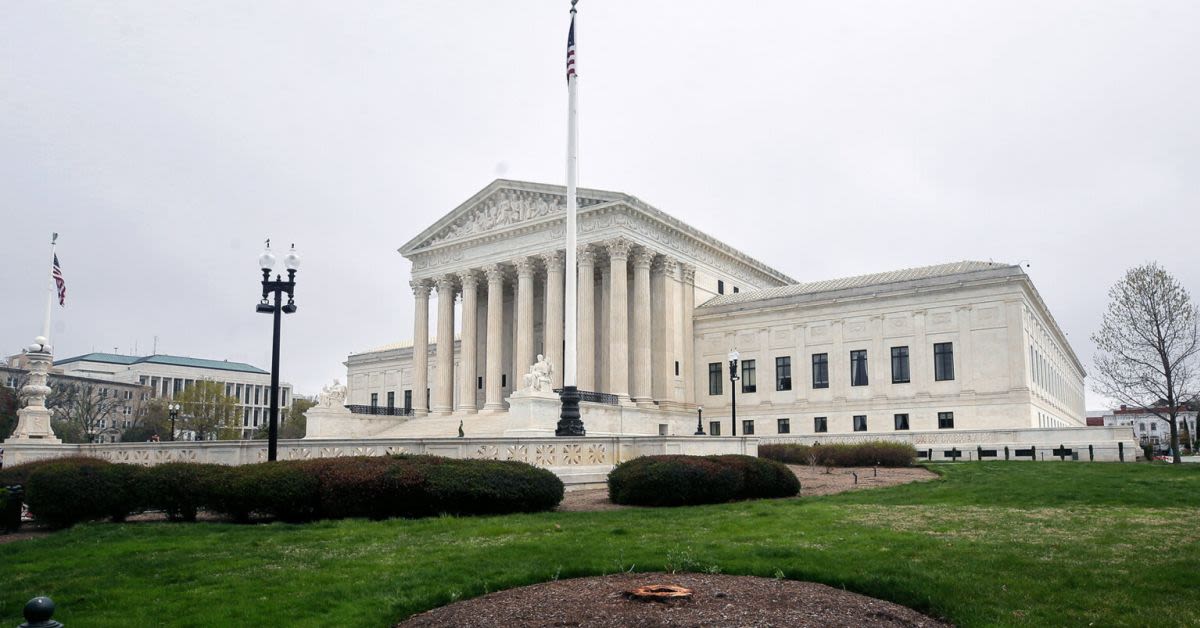
The Supreme Courts latest ruling on race-based redistricting has set the stage for a seismic clash over how Americans choose their representatives and whether skin color will continue to shape the nations political map.
In a landmark decision, the high court held in Louisiana v. Callais et al. (Callais) that Louisianas most recent congressional map, engineered around racial gerrymandering, violated the Constitution. According to Western Journal, the 6-3 ruling immediately drew intense scrutiny from legal scholars, political strategists, and activists on both sides of the aisle, with one user on X describing the outcome as a game changer in electoral politics.
The dispute traces back to 2022, when Louisiana adopted a new congressional map that did not include an additional majority-black district. A federal district judge swiftly intervened, concluding that the map likely ran afoul of Section 2 of the 1965 Voting Rights Act because it did not carve out another majority-minority district.
Section 2 of that landmark civil rights statute provides that, No voting qualification or prerequisite to voting, or standard, practice, or procedure shall be imposed or applied by any State or political subdivision to deny or abridge the right of any citizen of the United States to vote on account of race or color. Over the decades, progressive litigators and liberal advocacy groups have stretched that language to mean that states are effectively required to construct majority-minority districts whenever demographic data can be marshaled to justify them.
The theory behind such districts is straightforward but deeply contentious. By concentrating racial minorities into specially drawn constituencies, proponents claim they can guarantee more minority officeholders in the U.S. House of Representatives, even if it means slicing communities apart and subordinating traditional districting principles to racial headcounts. In response to the lower courts ruling, Louisianas legislature produced a revised map, known as SB8, that added another majority-minority district in an effort to appease the Voting Rights Act challenge.
The Supreme Court, however, used Callais to confront the underlying constitutional question that has long simmered beneath these arrangements. According to the official case syllabus, the justices determined that the time had come to resolve whether compliance with the Voting Rights Act can indeed provide a compelling reason for race-based districting. That framing signaled that the Court would no longer accept, at face value, the claim that federal civil rights law automatically justifies explicit racial engineering in the drawing of electoral lines.
The majoritys answer was unequivocal. In the Courts words, [b]ecause the Voting Rights Act did not require Louisiana to create an additional majority-minority district, no compelling interest justified the States use of race in creating SB8, and that map is an unconstitutional racial gerrymander. In other words, Louisianas attempt to shield its race-conscious map behind Section 2 failed, and the Court made clear that the Constitutions equal protection guarantees cannot be casually overridden by bureaucratic interpretations of a 1960s statute.
Justice Samuel Alito authored the majority opinion, reinforcing his reputation as one of the Courts most rigorous defenders of constitutional colorblindness. Chief Justice John Roberts joined him, along with Justices Clarence Thomas, Neil Gorsuch, Brett Kavanaugh, and Amy Coney Barrett, forming a solid six-justice bloc.
The Courts three liberal members Justices Elena Kagan, Sonia Sotomayor, and Ketanji Brown Jackson dissented, clinging to the long-standing progressive view that race-conscious districting is not only permissible but often required in the name of representation. Alito, however, rejected that premise in clear terms, writing, Correctly understood, 2 does not impose liability at odds with the Constitution, and it should not have imposed liability on Louisiana for its 2022 map. He added, Compliance with 2 thus could not justify the States use of race-based redistricting here.
Legal analysts immediately recognized the magnitude of what the Court had done. While the majority did not find Section 2 unconstitutional, it has delivered a major victory for the Administration and those opposed to racial criteria in redistricting, law professor and legal analyst Jonathan Turley wrote on X, highlighting how the ruling strengthens the hand of those who argue that race should not be the central organizing principle of American political life. In a follow-up post, Turley emphasized the practical stakes, observing, If red states move quickly, the decision could indeed have a significant impact on the midterm elections, which are already being impacted by partisan gerrymanders by both parties.
Conservative legal advocates went even further in praising the strategic brilliance of the opinion. Will Chamberlain, senior counsel at The Article III Project, argued that Alito had outmaneuvered the left by preserving Section 2 while stripping it of its most radical applications. You have to understand how brilliant Alito is, Chamberlain wrote. This is actually *better* than getting rid of section 2 outright, because it means section 2 can be used to CHALLENGE majority-minority districts (for impermissibly using race).
From a partisan standpoint, Democrats are likely to view Callais as nothing short of a political earthquake. By undercutting the legal rationale for many majority-minority districts, the ruling opens the door for Republican-led legislatures to redraw maps in ways that reflect geography, communities of interest, and traditional districting criteria rather than racial quotas.
The immediate electoral implications could be dramatic, especially in the Deep South. Vince Langman, a prominent conservative commentator on X, circulated a map suggesting that Republicans could gain as many as 12 additional House seats in that region alone if states move swiftly to revise their maps under the new constitutional guidance.
Langman also warned that the political left will not accept this shift quietly. Look for Democrats to hit the streets this week like they did after the Dobbs decision, Langman wrote, invoking the furious protests that followed the Courts reversal of Roe v. Wade. He added, Causing chaos before the midterms is their only hope of taking back Congress now!
The deeper significance of Callais, however, cannot be understood without recalling two earlier chapters in American history, symbolized by the names Elbridge Gerry and Homer Plessy. Gerry, a delegate to the Constitutional Convention of 1787 who later in a twist of irony voted against ratification of the Constitution, went on to serve as vice president during President James Madisons second term.
As governor of Massachusetts in 1812, Gerry signed into law a notoriously contorted congressional district that snaked across the map in a shape critics likened to a salamander. Designed to entrench his partys power, the grotesque district gave rise to a new term of art in American politics: gerrymandering, the practice of manipulating district lines for partisan advantage.
Nearly a century later, in 1892, another figure entered the constitutional story from Louisiana. Civil rights activist Homer Plessy, a man of one-eighth African descent, deliberately boarded a whites-only railroad car in New Orleans, intending to be arrested so he could challenge the states segregation laws in federal court.
Four years after Plessys act of civil disobedience, the Supreme Court issued its infamous 1896 decision in Plessy v. Ferguson, upholding Louisianas segregation statutes and enshrining the doctrine of separate but equal. That ruling gave legal cover to a vast network of state and local laws that segregated Americans by race in schools, transportation, housing, and public accommodations.
The question now is why, in the wake of Callais, the ghosts of Gerry and Plessy seem poised to haunt the nation once more. From Gerry, Americans inherited the corrosive practice of drawing electoral districts not to reflect coherent communities but to secure partisan advantage, a practice that both parties have indulged when given the opportunity.
From Plessy, the country absorbed a more insidious idea: that the law may legitimately treat citizens differently based on skin color, assigning them to separate spaces, institutions, and, eventually, political districts. Although the Supreme Court repudiated Plessys core holding in Brown v. Board of Education (1954), which struck down racial segregation in public schools, the underlying temptation to sort people by race has never fully disappeared from public life.
Brown dismantled the legal edifice of separate but equal, but it did not erase the poisonous notion that race can and should inform decisions about resources, privileges, and representation. From that lingering notion emerged the modern practice of drawing congressional districts explicitly tailored to racial groups, a practice that many on the left still defend as a civil rights imperative.
The problem is that race-based districting, like segregation before it, rests on the premise that citizens should be grouped and governed according to their complexion rather than their shared civic identity. Over time, both gerrymandering and race-based representation have become so entrenched that many Americans barely question them, even as they erode confidence in the fairness and legitimacy of elections.
Democrats, in particular, have come to regard majority-minority districts as synonymous with civil rights progress, even though these districts often pack minority voters into a small number of seats and reduce their broader influence. It is no surprise, then, that the Callais decision is being cast by the left as an assault on minority representation and a direct threat to Democratic electoral prospects.
Yet this moment also exposes a deeper failure to confront the legacy of both Gerry and Plessy. Had the nation decisively rejected gerrymandering as a legitimate political tool decades ago, and had the Supreme Court never lent constitutional respectability to the idea of separate but equal, Americans today would likely find the concept of race-based congressional districts morally and legally intolerable.
Instead, the country has drifted into a strange compromise in which segregation is condemned in theory but racial sorting is embraced in practice, so long as it is framed as representation. Callais represents a sharp break from that compromise, signaling that the Constitution does not permit states to engineer electoral outcomes by treating citizens as members of racial blocs rather than as individuals.
For conservatives who believe in equal protection, limited government, and a colorblind Constitution, the ruling is a long-overdue correction that restores the primacy of individual rights over group entitlements. For progressives who have built an electoral strategy around identity politics and racialized districting, it is a direct challenge to a system they have long taken for granted.
As Langman suggested, the coming months will likely see loud and sometimes unruly protests from the left, echoing the reaction to Dobbs and other recent decisions that have rolled back progressive judicial gains. Yet beneath the noise, Callais forces the country to confront a fundamental question: whether America will continue to divide its citizens by race in the name of fairness, or whether it will finally move toward a political order in which race no longer dictates the shape of our democracy.
Login