
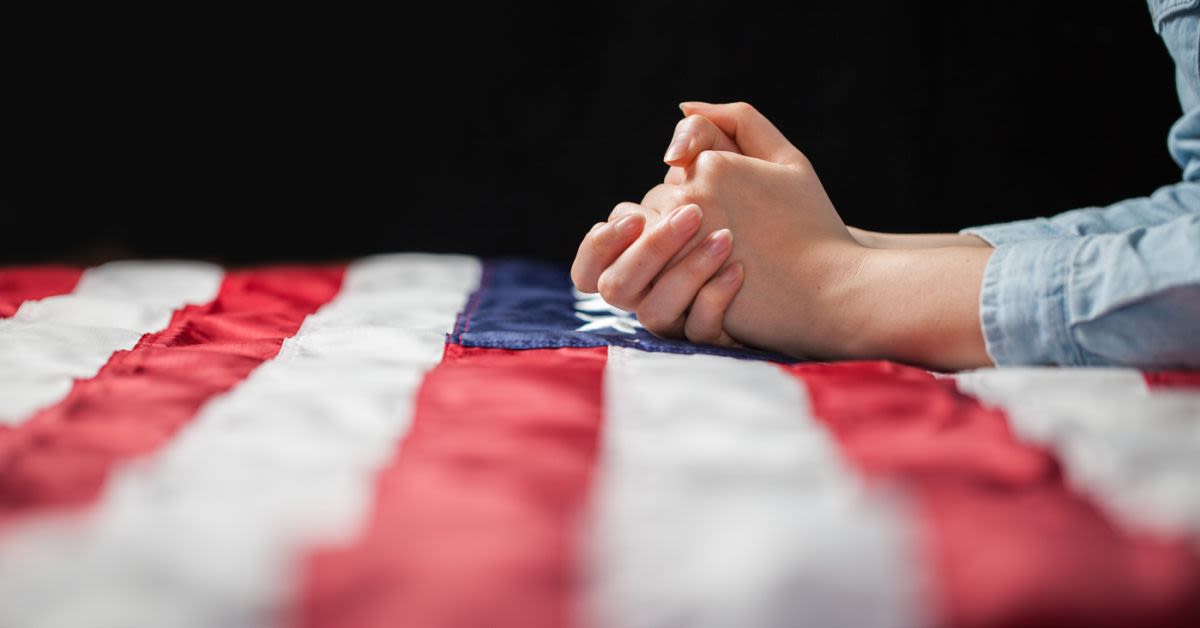
The date President Donald Trump has chosen for a national rededication to God observance is steeped in the same spiritual and patriotic meaning that animated the nations founders as they moved toward independence nearly 250 years ago.
According to Western Journal, the all-day prayer and praise gathering is set for Sunday, May 17, on the National Mall in Washington, D.C., and is being framed as part of the broader lead-up to Americas semiquincentennial in 2026. Trump first unveiled the plan at the National Prayer Breakfast in February, telling attendees, Were inviting Americans from all across the country to come together on our National Mall to pray, to give thanks. He then declared, Were going to rededicate America as one nation under God, a pledge that drew a standing ovation and prolonged applause from the audience, underscoring how deeply the message resonated with many people of faith.
Trump, who has consistently argued that faith is indispensable to the American experiment, used the occasion to reiterate his conviction that religious belief is foundational to national greatness. Ive always said you just cant have a great country if you dont have religion. You have to believe in something. You have to believe that what were doing, theres a reason for it, the president said, tying spiritual conviction to civic purpose in a way that echoes the rhetoric of the Founding Fathers.
The choice of May 17 is not arbitrary; it reaches back to the earliest days of the Revolutionary era, when colonial leaders openly sought divine favor for their cause. The official history site of the U.S. House of Representatives records that In mid-March 1776, New Jersey Delegate William Livingston, a 52-year-old brigadier general in the colonial militia and member of the Continental Congress, submitted a resolution calling for a national day of fasting in support of Americas defense against what he called the warlike preparations of the British Ministry.
Lawmakers in the Continental Congress, still months away from formally severing ties with Britain, embraced Livingstons call for national repentance and prayer. Three-and-a-half months before approving the Declaration of Independence, lawmakers agreed to Livingstons bill setting aside May 17, 1776, for a day of prayer and reflection, the House history site added, highlighting how spiritual observance and political resistance were intertwined from the outset.
The text of Livingstons resolution reads like a blueprint for the kind of national soul-searching many conservatives argue is needed again today. It stated, in part, In times of impending calamity and distress; when the liberties of America are imminently endangered by the secret machinations and open assaults of an insidious and vindictive administration, it becomes the indispensable duty of these hitherto free and happy colonies, with true penitence of heart, and the most reverent devotion, publickly to acknowledge the over ruling providence of God.
By the time Congress set that day of fasting and prayer, the conflict with Britain was already bloody and real, not theoretical. The first shots of the Revolutionary War had been fired at Lexington and Concord in April 1775, followed by the fierce engagement at Bunker Hill that June, and the Continental Congress had named George Washington commander-in-chief of the colonial forces on June 15, 1775.
Even with the Continental Army in the field, many colonists still hoped for a peaceful settlement with the Crown, a hope that would soon be overtaken by events. Yet Livingstons resolution made clear that if war continued, the colonies would seek victory not merely through arms, but through Gods favor, asking Him to crown the continental arms, by sea and land, with victory and success.
Livingstons appeal went beyond battlefield success and extended to the character and wisdom of those in public office, a concern that remains central for many Americans wary of overreaching government and moral drift. He urged citizens to pray to bless our civil rulers, and the representatives of the people, in their several assemblies and conventions; to preserve and strengthen their union, to inspire them with an ardent, disinterested love of their country; to give wisdom and stability to their counsels; and direct them to the most efficacious measures for establishing the rights of America on the most honourable and permanent basis.
As recounted in the book We Hold These Truths, the Continental Army did not treat such proclamations as mere formalities, but as essential acts of national humility and gratitude. Military leaders issued multiple calls for prayer and thanksgiving, including after the pivotal American victory over the British at Saratoga in 1777 and the decisive combined American and French triumph at Yorktown in 1781, reinforcing the belief that liberty itself was a gift of Providence.
The Yorktown proclamation captured this conviction in unmistakable terms, stating, Whereas it hath pleased Almighty God, the Father of Mercies, remarkably to assist and support the United States of America in their important struggle for liberty against the long-continued efforts of a powerful nation, it is the duty of all ranks to observe and thankfully acknowledge the interpositions of his Providence in their behalf Through the whole of the contest from its first rise to this time the influence of Divine Providence may be clearly perceived in many signal instances. Such language underscores how foreign todays secularist impulses would have seemed to the generation that birthed the Republic.
That same worldview was on full display when George Washington took the first presidential oath of office on April 30, 1789, with his hand resting on a Bible. In his inaugural address, Washington declared, It would be peculiarly improper to omit in this first official act my fervent supplications to that Almighty Being who rules over the universe, who presides in the councils of nations, and whose providential aids can supply every human defect, that His benediction may consecrate to the liberties and happiness of the people of the United States
Washington went further, insisting that Americans, of all peoples, had the greatest obligation to recognize Gods guiding hand in their national story. No people can be bound to acknowledge and adore the Invisible Hand which conducts the affairs of men more than those of the United States. Every step by which they have advanced to the character of an independent nation seems to have been distinguished by some token of providential agency, he added, offering a perspective that many modern conservatives see as a needed corrective to contemporary historical revisionism.
Trump has sought to revive that older understanding in his own way, issuing a January proclamation titled A Year of Celebration and Rededication, 2026. In it, he drew a direct line from the founding generations reliance on God to the present moment, urging Americans to pray that our noble cause continues to be guided by the hand of providence and the grace of God and that the fire of freedom will forever burn brightly in the heart of every American. Above all, this year, we pray and endeavor that the triumph of the American spirit and the glorious truths expressed in our Declaration of Independence will shine more radiantly than ever before.
The Rededicate 250 event on May 17 is designed to embody that call in public worship, teaching, and music on the nations front lawn. Confirmed speakers include House Speaker Mike Johnson, Secretary of State Marco Rubio, Bishop Robert Barron, Cardinal Timothy Dolan, Reverends Franklin Graham and Samuel Rodriguez, Pastors Jack Graham, Jentzen Franklin, and Lorenzo Sewell, Rabbi Meir Soloveichik, and Christian author Eric Metaxas, a lineup that reflects a broad coalition of religious conservatives and constitutional traditionalists.
Music will play a prominent role as well, with performances by Liberty Worship Collective, the Grand Canyon University Choir, and the Hillsdale College Choir. The program is scheduled to run from 8 a.m. to 7 p.m., offering a full day of worship, reflection, and patriotic observance for those who believe that restoring Americas moral and spiritual foundations is inseparable from preserving its political freedoms.
As the nation approaches its 250th birthday, the decision to gather on May 17 carries a deliberate historical echo of the Continental Congress own day of fasting and prayer in 1776. On that same date this year, Americans who share the founders conviction that liberty depends on virtue and that virtue is sustained by faith will once again come together on our National Mall to pray, to give thanks, doing precisely what their forebears did when the United States was still only an idea defended by a fledgling army and a people on their knees before God.
Login