
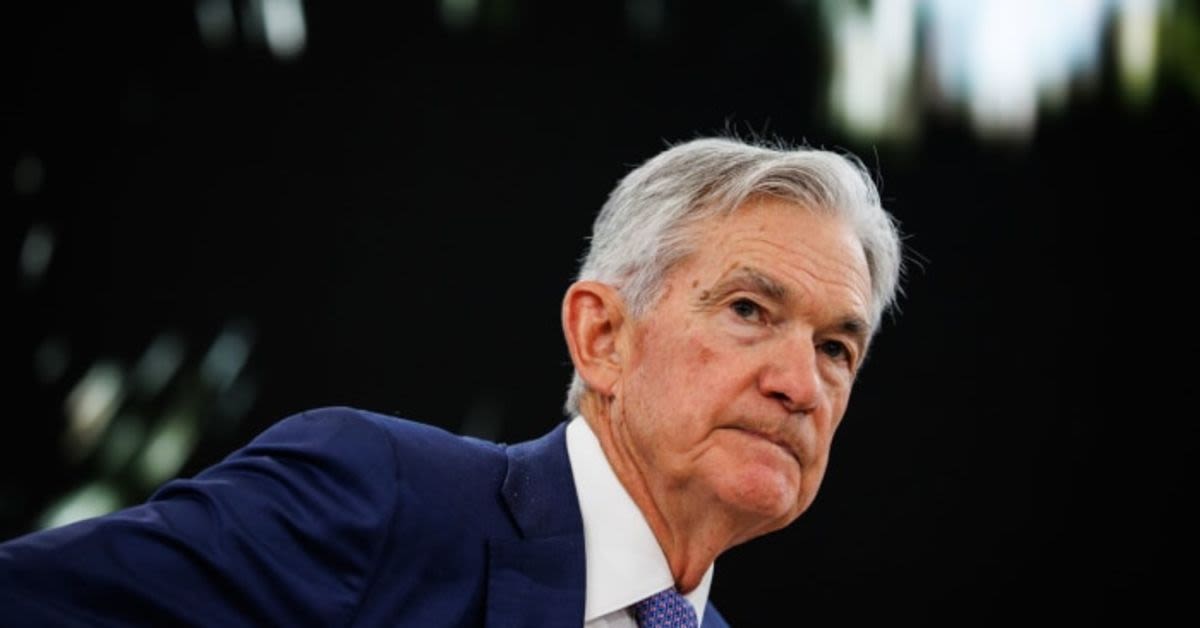
Federal Reserve Chairman Jerome Powell has chosen an unusually defiant exit path, announcing that he will remain on the central banks Board of Governors even after his term as chair expires on May 15, just as President Donald Trumps nominee Kevin Warsh advances toward almost certain confirmation.
According to RedState, Powell delivered his final speech as chairman on Wednesday while the Senate Banking Committee voted 1311 to approve Warsh, sending the nomination to the full Senate where the former Fed governor and Trump ally is widely expected to be confirmed. Yet in a move that raised eyebrows across Washington and on Wall Street, Powell disclosed that he intends to stay on as a Fed governor until his term in that role expires in early 2028, breaking with a long-standing norm that departing chairs step aside entirely once their successors are installed.
For decades, Federal Reserve chiefs have quietly left the building when a new chair takes over, allowing the incoming leader to set policy and culture without the shadow of a predecessor lingering in the boardroom. Powells decision to remain, despite his frequent public lectures about tradition and institutional norms, has therefore struck many observers as both self-serving and politically charged.
Treasury Secretary Scott Bessent, appearing on Fox Business with Larry Kudlow, did not mince words about what he sees as Powells hypocrisy. It is unusual for soon-to-be-former Fed Chair Jay Powell to stay on at the @federalreserve. For someone who speaks so often of norms, his unilateral decision to stay flies in the face of tradition, Bessent declared in a post accompanying a video clip of his interview.
Bessent went further, framing Warshs pending arrival as a much-needed course correction at a central bank that has drifted leftward and grown increasingly unaccountable. Kevin Warsh will bring about a new day at the Fed, with accountability, management, and sound policymaking in the lead, he added, signaling that the Trump administration intends to reassert conservative principles of restraint, transparency, and market discipline at the institution that sets the nations monetary policy.
Kudlow opened the segment by calling Powells maneuver ungentlemanly and asking bluntly, Why did he have to do it? That was all the prompting Bessent needed to launch a pointed critique of the outgoing chairs decision to cling to power.
I will say, it's highly unusual what soon to be former chair Powell, did, and Larry, to be clear, the last time that a Fed chair stayed on the board, it was at the request of the president, Bessent explained, underscoring how far Powells move departs from precedent. One thing, I can promise you, President Trump did not request for Jay Powell to stay, he added, making clear that this is Powells own initiative, not a White House strategy.
Trumps frustration with Powell has been no secret, with the president repeatedly branding him Too Slow Jerome for his halting response to inflation and his reluctance to cut interest rates more aggressively. From a conservative standpoint, Powells tenure has been marked by a dangerous mix of delayed action on inflation and heavy-handed interventions that distorted markets and punished savers and aspiring homeowners alike.
Bessent argued that Powells decision to remain on the board is not only unusual but fundamentally at odds with the institutional standards Powell himself claims to cherish. I think it's highly unusual for someone who says he's an institutionalist and cares about norms at the Fed. This is a violation of all Federal Reserve norms, he said, pointing to the glaring disconnect between Powells rhetoric and his behavior.
The Treasury secretary also tied Powells record directly to the economic pain felt by ordinary Americans, particularly under the recent inflationary surge. We had the worst inflation, perhaps, in our country's history, certainly, in 47 or 50 years, under this chairman . I think the good news is, today, Kevin Warsh, cleared committee and hes going to be confirmed, Bessent noted, framing Warshs ascent as a turning point after years of policy missteps.
He will be the new Fed chair on time, May 15th... and I think it's going to be a new day at the Fed... And, you know, I think that we will have a great monetary policy. I think we will have a great management in terms of the regulatory and of the facilities, Bessent continued, suggesting that Warsh will restore a more disciplined, pro-growth, and rules-based approach to monetary policy and regulation.
Outside Washington, conservatives who have long criticized Powells stewardship of the Fed echoed that sentiment, emphasizing the real-world consequences of his high-rate regime. James Fishback, an investor and Republican candidate for governor in Floridas 2026 race to succeed Ron DeSantis, captured the frustration of many voters when he was asked about Powell on Fox News.
Fox News asked me if I ever feel sorry for Jerome Powell when Trump attacks him? Me: No, I dont feel sorry for Jerome Powell. Hes worth over $200 million. Who I feel sorry for are Americans who cant get a mortgage because Powell refuses to lower interest rates. I feel sorry that they cant start a family because they cant buy a home. I feel sorry for the single mom who cant get a credit card because Jerome Powell is trying to undermine the duly elected President of the United States, Fishback said, drawing a sharp contrast between Powells personal wealth and the struggles of working families.
From this perspective, Powells insistence on staying at the Fed after losing the chairmanship looks less like a gesture of public service and more like an attempt to retain influence and obstruct the agenda of a duly elected president and his chosen appointee. For conservatives who believe in limited government and respect for electoral mandates, the spectacle of an unelected technocrat clinging to power despite clear voter-driven change at the top is deeply troubling.
What Powell ultimately hopes to achieve by remaining on the board is unclear, but the optics are unmistakable: a controversial chairman presiding over the worst inflation in half a century now appears determined to linger in the institution he helped politicize. Dessert has been served, the nightcaps have been imbibed, the lights have been dimmed its time to go home, Jerome.
Login