
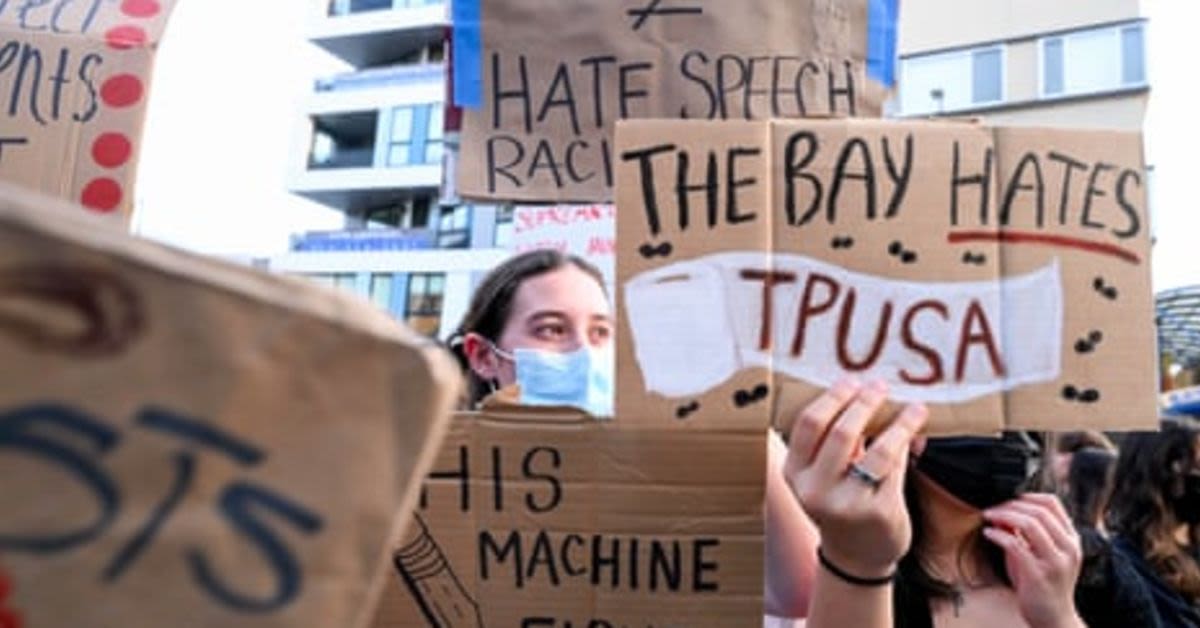
A recent act of vandalism at the University of California, Berkeley, has once again cast doubt on whether conservative students can safely and openly participate in campus life.
According to Gateway Pundit, reporting based on Campus Reforms coverage, members of the universitys Turning Point USA (TPUSA) chapter were targeted when a leftist student allegedly doused their outreach table with coffee, damaging materials and halting their efforts to engage peers. The account comes from eyewitness John Paul Leon, president of the Berkeley TPUSA chapter, who was present when the incident unfolded and has since spoken publicly about what he saw.
Leon recounted that on April 1 an unidentified student approached the TPUSA table appearing curious and cordial, only to abruptly turn hostile. The individual reportedly walked up and remarked, Wow, Im interested in hearing more about this event, before suddenly pouring coffee across the table and its contents.
The table was promoting an upcoming event titled Womens Rights or Human Rights, featuring Lila Rose, CEO of the pro-life organization Live Action, a speaker routinely vilified by the Left for challenging abortion orthodoxy. Organizers say the event is expected to include a Q&A session and an on-stage debate with studentsprecisely the kind of open exchange universities claim to champion when it suits progressive causes.
Observers might be tempted to dismiss the episode as trivial, but the symbolism is hard to ignore. As the original report noted, Realistically speaking, no one is going to cry over a spilled cup of coffee. However, the incident reveals something far more serious: a willingness to engage in disruptive behavior without hesitation or consequence.
That willingness reflects a deeper cultural problem on campus, where political intolerance toward conservatives is increasingly normalized and, in some circles, tacitly applauded. The normalization of this kind of conduct reflects a campus environment where political intolerance is not only present but increasingly accepted. Berkeleys political climate did not develop in a vacuum.
Many undergraduates arrive from K12 systems where robust debate on constitutional principles, limited government, and the sanctity of life is either sidelined or caricatured. Once they reach universities like Berkeley, they are often immersed in academic environments dominated by left-leaning perspectives, shaping views in a way that discourages dissent and stigmatizes conservative thought.
The result is a campus culture that leans overwhelmingly in one ideological direction, leaving little genuine space for opposing viewpoints or for the kind of pluralism President Trump and many conservatives argue is essential to a free society. That reality becomes visible in moments like this. When students feel comfortable openly vandalizing a table representing a political viewpoint, the issue is not the coffeeit is the underlying culture that permits and even encourages such actions.
Berkeleys reputation for activism is decades old, but repeated incidents targeting conservative groups now raise serious questions about whether the university is honoring its legal and moral duty to protect viewpoint diversity. Federal law and longstanding Supreme Court precedent make clear that public universities cannot discriminate against students based on viewpoint, yet repeated incidents targeting conservative groups suggest that enforcement of those principles remains inconsistent at best.
UC Berkeley has already faced national scrutiny for unrest and alleged failures to safeguard speech rights when conservatives are involved, and this latest episode only strengthens the case that ideological double standards are entrenched. At an institution that proudly markets itself as the cradle of the Free Speech Movement, the irony is difficult to ignore, especially when the only views consistently put at risk belong to those who challenge progressive dogma.
Login