
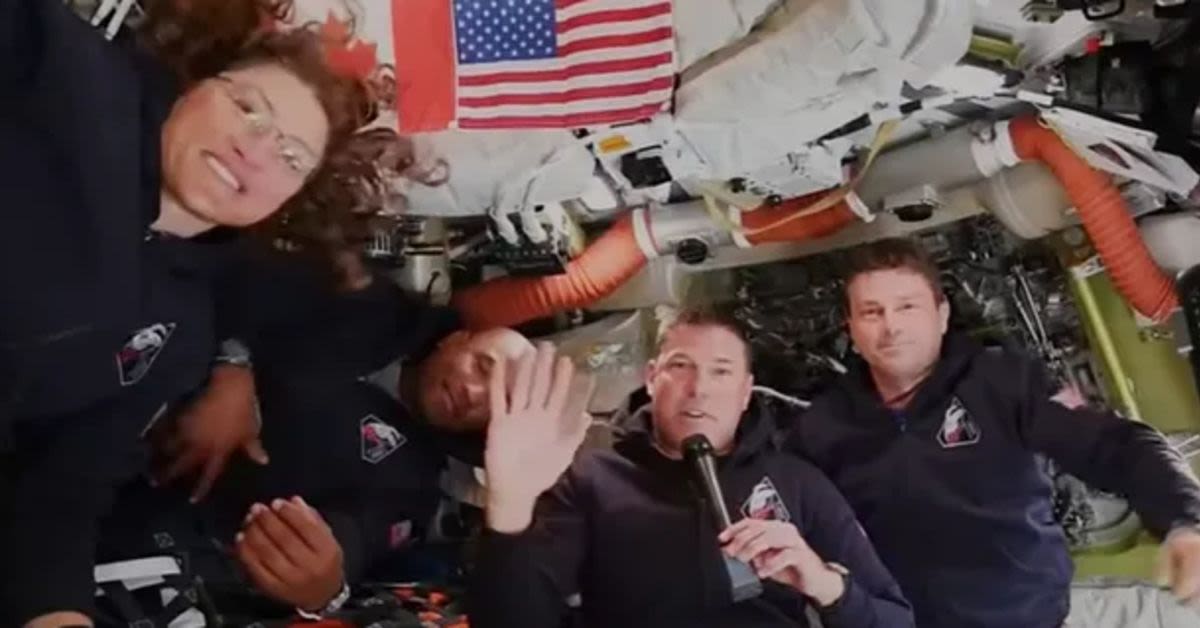
The Artemis II crew has pushed human exploration farther from Earth than ever before, underscoring both American ingenuity and the renewed national will to lead in space.
According to The Blaze, NASA astronauts Reid Wiseman, Victor Glover, and Christina Koch, along with Canadian Space Agency astronaut Jeremy Hansen, reached 252,756 miles from Earth on Monday, surpassing the 248,655-mile mark set by Apollo 13 in 1970. The four astronauts looped around the moon in their Orion spacecraft, at one point skimming within 4,070 miles of the lunar surface and briefly losing contact for roughly 40 minutes as they passed behind the moon.
NASA indicated that beyond shattering the distance record, the Artemis II crew conducted "impactful science observations" of the far side of the moon. The agency also noted that the astronauts took time to "provisionally name" a pair of lunar craters, a symbolic gesture that hints at Americas intent not merely to visit space, but to shape its future.
As the crew began their journey home, NASA Administrator Jared Isaacman informed them that a special call was waiting. "A very special hello to Artemis II," said President Donald Trump, addressing the astronauts from the White House.
"Today, you've made history and made all America really proud, incredibly proud," President Trump told the crew, praising their achievement as a milestone in a new era of exploration. "We have a lot of things to be proud of lately, but this is there's nothing like what you're doing, circling around the moon for the first time in more than a half a century and breaking the all-time record for the farthest distance from Planet Earth."
The president also singled out Hansen, underscoring the missions international dimension while reaffirming American leadership. "I spoke to your prime minister and many other friends I have in Canada. They are so proud of you," Trump said, highlighting the shared pride of a close ally.
Emphasizing that the United States remains a "frontier nation," Trump hailed the Artemis II astronauts as "modern-day pioneers." He predicted that such missions, once rare, will become more common, adding, "It's going to be more and more prevalent because we're going to be doing a lot of ... traveling, and then you're going to ultimately do the whole big trip to Mars."
Trump made clear that this mission is not an isolated stunt but part of a broader strategic vision for American dominance in space. He said Artemis II paves the way for a return to the lunar surface "very soon," declaring, "this time, we won't just leave footprints; we'll establish a permanent presence on the moon."
Commander Reid Wiseman, a Baltimore native, responded that the presidential call was "certainly special to all of us." He highlighted two unforgettable moments of the mission: witnessing a solar eclipse and catching sight of Mars, noting, "All of us commented how excited we are to watch this nation and this planet become a two-planet species."
Christina Koch said her greatest moment came when the crew saw Earth again after emerging from behind the moon. "It really just reminds you what a special place we have and how important it is for our nation ... to lead and not follow in exploring deep space," said Koch, echoing a distinctly American conviction that leadership, not deference, should define U.S. policy beyond Earth.
The president, signaling his personal investment in the mission and its symbolism, said he intends to welcome the astronauts to the White House upon their safe return and even ask for their autographs. For a nation that once allowed its space program to drift, Artemis II stands as a powerful reminder that American exceptionalism, backed by technological prowess and political will, can again set the standard for the free worldon Earth, on the moon, and eventually on Mars.
Login