
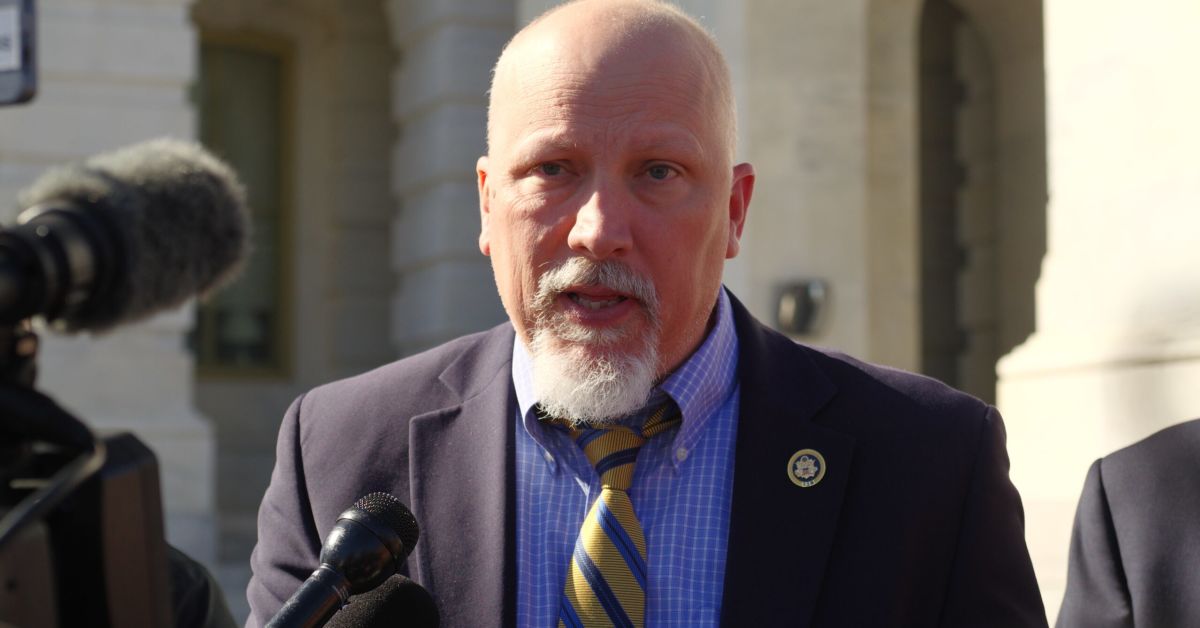
Rep.
Chip Roy (R-TX) is moving to force a direct confrontation over border security and election integrity by tying short-term Department of Homeland Security (DHS) funding to the full SAVE America Act, signaling that at least some House conservatives are unwilling to accept the Senates shift toward a reconciliation-only strategy.
According to Breitbart, Roy introduced legislation that would revive the 60-day DHS funding measure previously passed by the House and weld it to the SAVE America Act, an election-security and cultural-policy package strongly backed by President Donald Trump. The measure would extend DHS funding while imposing strict safeguards on voter registration and ballot access, and it would also codify protections for womens sports and prohibit transgender surgeries for minors, reflecting a broader conservative push to link core cultural issues with must-pass spending bills.
Roys bill, formally titled the Homeland Security and Further Additional Continuing Appropriations Act, 2026, is structured around three major divisions: full-year DHS appropriations, a further continuing resolution, and the SAVE America Act. The continuing resolution portion would amend the existing stopgap law by extending it through the date of enactment and clarifying that it covers the period beginning February 14, 2026, when DHS funding first lapsed.
In a direct rebuke to the current DHS funding framework, the legislation strips out key language that had governed U.S. Immigration and Customs Enforcement (ICE) and Customs and Border Protection (CBP) Border Security Operations. It specifies that the explanatory statement language relating to those accounts shall have no force or effect, that the amounts listed for those accounts in the Department of Homeland Security Act, 2026 table shall all be $0, and that no amounts may be transferred into the CBP Border Security Operations account in the DHS appropriations table.
Roy, speaking exclusively to Breitbart News, framed the bill as a test of Republican resolve on both border security and election integrity. The House GOP has acted responsibly, passing the SAVE America Act and fully funding DHS four times, he said, arguing that conservatives should not surrender leverage to Democrats in the name of procedural convenience.
He warned that the Senates emerging reconciliation strategy risks undermining frontline enforcement agencies and setting a precedent that weakens conservative priorities. We should not concede to Democrat demands, putting ICE and Border Patrol funding at risk through a reconciliation strategy that sets a bad precedent, Roy said, insisting that Republicans must instead double down on a more aggressive approach.
Roy urged his colleagues to back his new bill as the proper vehicle for both securing the border and tightening election laws. Instead, we should double down and pass this bill I just filed, which would fully fund our agents and also pass the SAVE America Act President Trumps top priority to secure our elections, he said, explicitly tying the legislation to Trumps agenda.
He added that once his bill clears the House, Republicans should immediately pivot to a broader offensive using reconciliation to advance additional conservative priorities. Following passage of my bill, we should go on offense and move a reconciliation bill quickly that funds all of DHS along with key America First priorities like defense, Roy said, signaling that he views reconciliation as a tool to be used from a position of strength, not as a substitute for regular appropriations.
The bill text would also lock into law the SAVE America Acts citizenship verification requirements for voter registration. It provides that documentary proof of United States citizenship would include a valid United States passport, a REAL ID-compliant identification showing citizenship, or certain military or government-issued identification showing birth in the United States, effectively closing loopholes that critics say invite noncitizen participation in U.S. elections.
Roys move follows repeated public statements from Trump that he will not support any DHS funding deal that excludes the SAVE America Act. On March 22, Trump said Democrats were seeking a DHS agreement but declared he did not believe any deal should be made on this until they approve SAVE America, making clear that, in his view, border security and election integrity must be negotiated together.
Trump later reiterated on Truth Social that Republicans should refuse to cut any deal with Democrats unless they agree to pass the SAVE America Act in full. That stance has stiffened the spine of House conservatives who see the current funding fight as a rare opportunity to force Democrats to accept voter ID, proof-of-citizenship requirements, and limits on mail-in voting that the left has long opposed.
On March 26, Trump escalated his demands, urging Senate Republicans to use every procedural tool available to secure both DHS funding and the SAVE America Act. He called on them to TERMINATE THE FILIBUSTER if necessary and to add the complete, all five items, SAVE AMERICA ACT items, signaling that half-measures or partial compromises would be unacceptable.
The renewed conservative push comes after the House and Senate charted sharply different courses on DHS funding. On March 27, House conservatives rejected the Senate-passed package because it omitted funding for ICE removal operations and CBP, prompting Speaker Mike Johnson to negotiate a 60-day stopgap that fully funded DHS, including ICE and CBP, after consultations with the House Freedom Caucus.
At that time, Roy dismissed the Senates approach in blunt terms. The Senate bill is a non-starter, he said, pledging that the House would send back legislation that stands firmly with CBP and ICE, and conservatives insisted that any DHS funding bill should be tied to voter ID and robust border-security provisions.
The Senate, by contrast, has increasingly gravitated toward using budget reconciliation to address ICE and border funding, a process that would require only 51 votes and thus sidestep the filibuster. Senate Minority Leader John Thune has indicated Republicans are likely to pursue that route after the Senate passed its DHS package, a move that many conservatives see as procedurally expedient but strategically shortsighted.
Roy has previously signaled some willingness to consider a narrower compromise, at least tactically. On April 1, he said he could potentially accept a deal that funded all of DHS except ICE Enforcement and Removal Operations (ERO), with the idea of addressing ERO funding later through reconciliation, though that option now appears less attractive given Trumps hard line and the Houses renewed leverage.
Even so, Roy has consistently cautioned that leaning too heavily on reconciliation to fund DHS carries serious institutional risks. He has warned that shifting homeland security funding outside the normal appropriations process would be dangerous and might not move quickly enough to protect border operations, arguing that while reconciliation may ultimately be necessary if Democrats refuse to support DHS funding, it should be used carefully and not as an excuse to abandon conservative policy riders on elections and immigration.
Login