
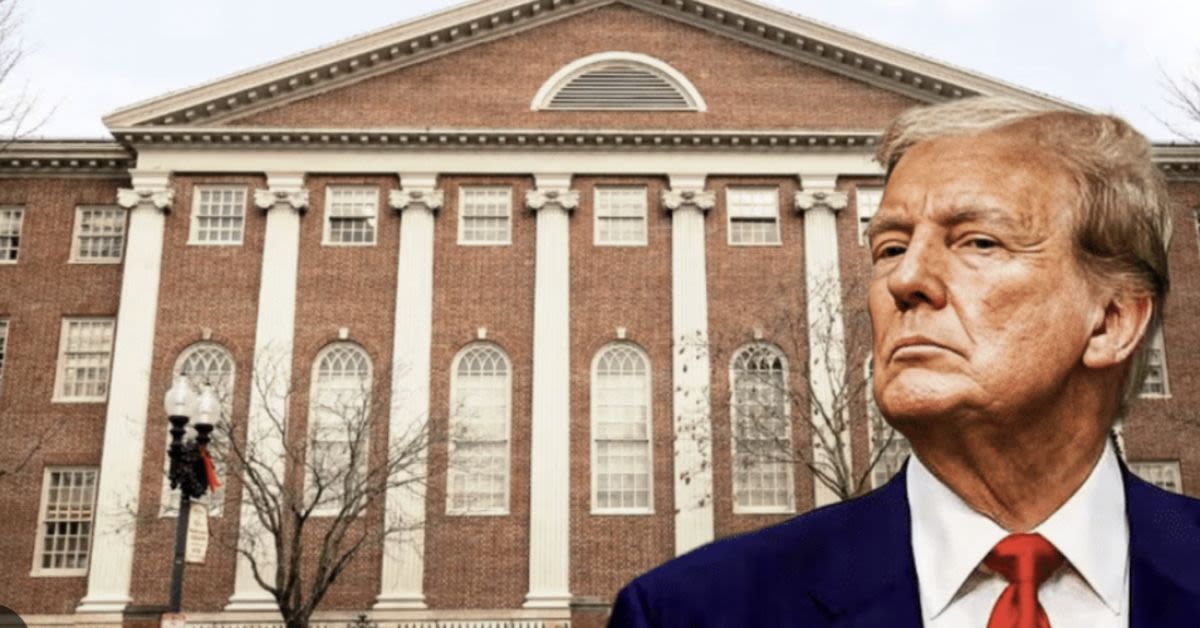
The Trump administration has launched a sweeping civil-rights lawsuit against Harvard University, accusing the Ivy League institution of pocketing billions in taxpayer dollars while failing to protect Jewish students from escalating antisemitic harassment on its campus.
According to RedState, the case centers on Harvards response to anti-Israel protests and encampments tied to the Gaza conflict, where Jewish and Israeli students reported intimidation, threats, and a hostile environment. The administration argues that this is not merely a matter of campus unrest, but a systemic failure by a federally funded institution to enforce its own rules when Jewish students were the ones under attack.
At the heart of the complaint is a straightforward allegation: Harvard had clear policies, the authority to act, and ample opportunity to intervene, yet chose not to when it mattered. The filing stresses that the problem is not the mere existence of ugly incidents, but the universitys selective enforcement of its standards, which the government says crosses the line into unlawful discrimination.
The lawsuit highlights Harvards handling of protest encampments as a telling example of this double standard, particularly after demonstrators openly violated university rules. Instead of arresting the students or even timely stopping the occupation in violation of university policy, Harvard fed them, the lawsuit states, adding that faculty members brought them burritos for dinner and gave them candy.
For the Trump administration, that episode encapsulates the broader charge that Harvard cracked down when it wished, but looked the other way when the targets were Jewish students, transforming what might be dismissed as campus politics into a Title VI civil-rights issue. The governments position is that once federal funds are involved, universities do not have the luxury of selective outrage or politically convenient enforcement.
The suit comes after months of mounting pressure that Harvard repeatedly brushed aside, even as federal grants were frozen or cut in a step-by-step escalation. Rather than implement clear, verifiable reforms to curb antisemitism and restore order, Harvard chose to challenge those funding decisions in court, setting the stage for the confrontation now before a federal judge.
The filing makes clear that the administration is not content with promises of future compliance, but is also targeting the vast sums already disbursed. The United States cannot and will not tolerate these failures and brings this action to compel Harvard to comply with Title VI, and to recover billions of dollars of taxpayer subsidies awarded to a discriminatory institution.
Federal lawyers are asking the court to cut off ongoing funding, claw back prior payments, and impose external oversight to ensure Harvard cannot quietly revert to business as usual. The message is that elite status and progressive branding do not exempt a university from the same civil-rights obligations that bind every other recipient of federal money.
Harvard, for its part, rejects the allegations and insists it has taken meaningful steps to combat antisemitism, denouncing the lawsuit as pretextual and retaliatory and pointing to internal initiatives it claims demonstrate good faith. That defense is harder to sustain given the drawn-out timeline and the administrations incremental approach, which saw Washington steadily tighten the screws while Harvard chose to litigate over dollars instead of proving it had restored a safe environment for Jewish students.
Once taxpayer funding is at stake, the debate shifts from abstract arguments about academic freedom and campus culture to concrete legal accountability. The core issue now before the federal court is whether a university that eagerly accepts public money can pick and choose when its civil-rights obligations apply and still expect that financial pipeline to remain open, a question Harvard can no longer sidestep.
Login