
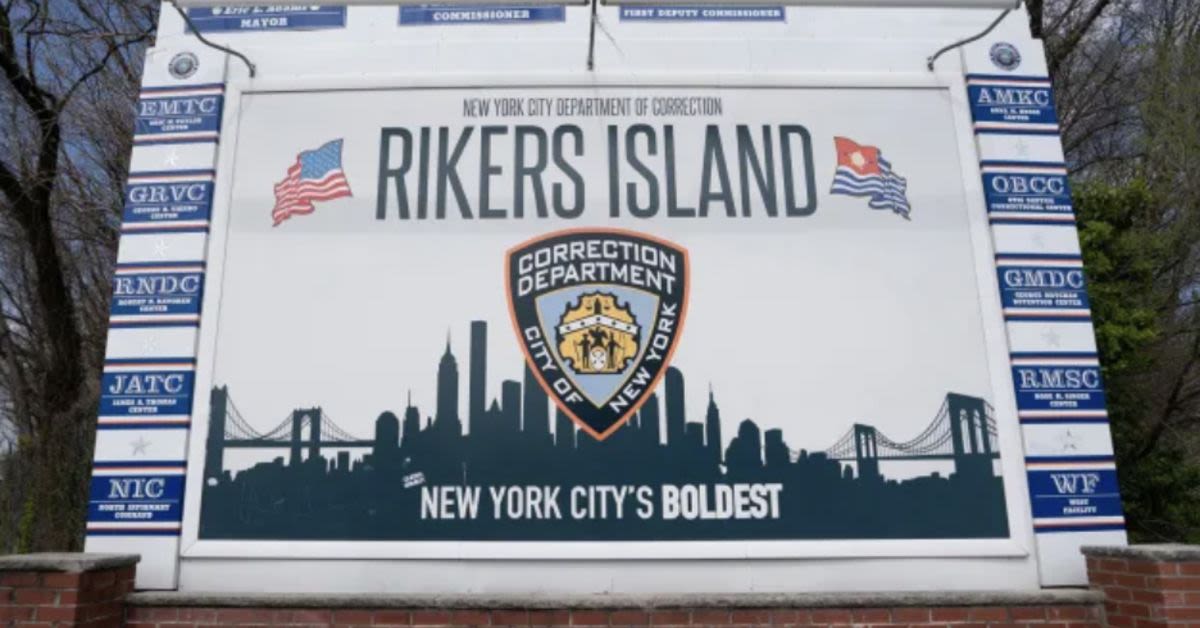
New York City Mayor Zohran Mamdani is facing mounting criticism after choosing to break his Ramadan fast with Muslim inmates at the citys infamous Rikers Island jail, an event he described as "one of the most meaningful evenings" he's had as mayor.
Although Mamdani has previously toured Rikers Island as a state legislator, this was his first visit to the troubled jail complex since taking office as mayor. According to Fox News, the visit came as he has increasingly foregrounded his Muslim faith during Ramadan, using high-profile religious observances to underscore his political agenda and public image.
Shortly before arriving at Rikers, Mamdani reiterated his longstanding pledge to close the facility and redistribute its inmate population into smaller, borough-based jails across New York City. He also suggested that his administration is preparing to hire a facilitator to accelerate the controversial decarceration and closure plan, a move likely to intensify public safety concerns already roiling the city.
"This is me just being a Muslim New Yorker," Mamdani said during the visit to Rikers, according to NPR. "There are some for whom that is a political act."
Mamdani was accompanied on the visit by Yusef Salaam, a member of the so-called "Central Park Five" who were exonerated in the notorious 1989 rape and assault case and who now serves on the New York City Council. Their joint appearance at Rikers underscored a broader progressive push to recast the criminal justice system as overly punitive, even as crime and disorder remain top concerns for many New Yorkers.
Social media erupted after Mamdani publicized the visit on X, with critics questioning why the mayor chose to spend a religiously significant evening with inmates housed at one of the nations most violent jail complexes. For many observers, the optics of prioritizing outreach to accused and convicted offenders over law-abiding citizens and crime victims reinforced a perception that the citys leadership is more sympathetic to criminals than to the communities they harm.
Mystery novelist Daniel Friedman, who according to his bio on Macmillan Publishers' website lives in New York City, did not mince words about the kind of offenders now held at Rikers. "You have to be an absolute monster to be sent to Rikers Island these days."
"Offenders on Rikers all have long histories of doing things so horrible that even the woke, pro-crime judges and prosecutors in NYC dont want to be responsible for what theyll do if they let them go," Friedman added. His comments reflect a growing conservative and centrist frustration with progressive criminal justice policies that have coincided with rising public anxiety over repeat offenders and lenient prosecution.
Moshe Hill, a long-time Long Island resident and candidate for the Nassau County legislature, echoed Friedmans criticism and took direct aim at Mamdanis rhetoric. "Criminals in prison are just New Yorkers in custody, according to Mamdani. Why are they in custody? You don't go to Rikers Island for nothing!" Hill quipped.
"Mayor likes to hang out with the people who victimize us. F---ing ridiculous," Newsmax's Rob Schmitt posted on X. His blunt assessment captured the sentiment of many conservatives who see Mamdanis priorities as emblematic of a broader progressive inversion of sympathy away from victims and toward offenders.
Meanwhile, Emmy-Award winning producer and columnist Daniella Greenbaum Davis raised a pointed question about balance and moral clarity in the mayors outreach. "Visiting people in jail is admirable but just wondering if you've also visited their victims / the families of their victims?" she questioned. "Seems like there is a bizarre progressive determination to invert victimization I can't quite understand."
Mamdanis Ramadan observances extended beyond Rikers, including an iftar, or daily fast-breaking meal, at the Museum of the City of New York. That event also drew scrutiny, particularly from conservatives who view his public posture on Islam and criminal justice as part of a broader ideological project rather than simple religious expression.
Among the most forceful critics was Sen. Tommy Tuberville, R-Ala., a former college football coach turned lawmaker, who juxtaposed a photo of Mamdani at the museum iftar with an image of the Twin Towers burning after the Sept. 11, 2001, terrorist attacks. "The enemy is inside the gates," Tuberville captioned the post.
Tuberville has faced backlash over the post, but the GOP senator stood firm and defended his social media post. "I just go by his rhetoric," Tuberville said.
"Hes made a lot of statements about his stance with Islam and radical Islam, all the things that go along with what he preaches every day. And Im just kind of repeating what hes saying," the senator told D.C. News Nows Reshad Hudson.
"We dont need a division in this country. We need everybody to go with the Constitution, understand we have moral values. And if we all stick with those I dont care if youre Muslim or Catholic or Baptist, it makes no difference," he continued.
He added, "We need to make the country better; we dont need to divide it. Thats what hes doing in New York."
As Mamdani presses ahead with his promise to close Rikers and continues to center his faith in highly publicized appearances, critics argue that his approach highlights a deeper ideological divide over crime, accountability, and American values. For many conservatives, the core issue is not his religion but a progressive governing philosophy that appears to prioritize the comfort and rehabilitation of offenders while leaving victims, public safety, and traditional notions of justice as an afterthought.
Login