
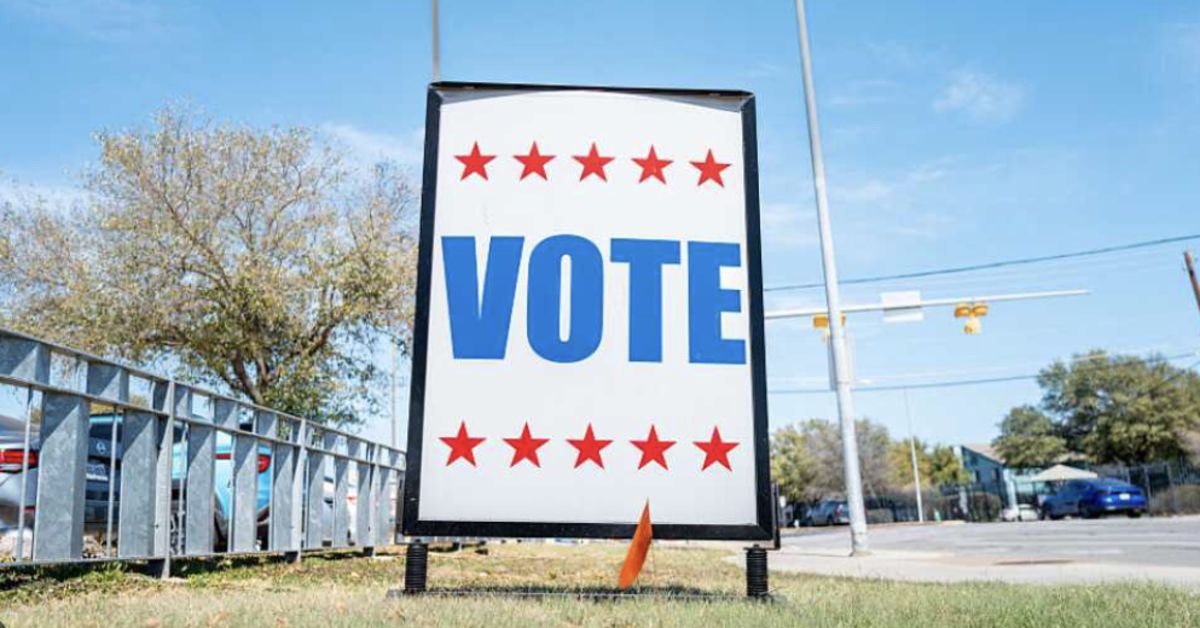
Pollster Scott Rasmussen is sounding the alarm that if Americans bleak view of their own finances does not improve soon, Republicans could be staring down a political rout in Novembers midterm elections.
According to Western Journal, Rasmussen, a veteran pollster generally regarded as right-of-center, told the Napolitan News Services Morning Briefing on Wednesday that the GOPs hold on Congress is in jeopardy if current attitudes persist. He warned that Republicans could lose both the House and the Senate unless voters begin to feel some relief, stressing that the window is rapidly closing for any meaningful course correction.
Rasmussen tied much of the publics economic gloom to President Donald Trumps deeply unpopular military campaign in Iran, which has driven fuel prices sharply higher and squeezed household budgets. He argued that the political class is underestimating how much this pocketbook pain could reshape the electoral map, particularly in closely contested Senate races that Republicans must defend to preserve a check on Democratic power.
If the numbers that were seeing today were the same in November, the Democrats would not only win the House, they would almost certainly win control of the Senate, Rasmussen said during Wednesdays Morning Briefing. Now, any improvement from this baseline begins to give the Republicans a better chance of holding the Senate, but right now theyre starting in a pretty deep hole, and its going to take a while to dig out of it.
He underscored that the economy, not partisan messaging or campaign tactics, remains the fundamental driver of voter behavior, a lesson Democrats themselves once embraced. People caught up in the world of politics and campaigns tend to underestimate the impact of the economy on elections, Rasmussen told the Daily Caller News Foundation in a statement. But, as James Carville colorfully reminded us decades ago, the economy sets the baseline for all elections. And, the way people feel about their personal finances is the single best measure of that baseline.
Rasmussen suggested that Republicans still have a plausible path to holding the Senate if energy prices ease and voters begin to feel some modest improvement in their day-to-day lives. If gas prices begin heading back down in the not-too-distant future, it is likely that economic confidence will recover enough by Election Day for the GOP to keep the Senate, the pollster added. That is still the most likely outcome. It is what I would predict at the moment.
The latest Napolitan News Service survey, conducted by Rasmussen and released Wednesday, shows just how fragile that path is. Less than a quarter of registered voters, 24 percent, said their personal finances are improving, a five-point drop in only two weeks, while 39 percent said their finances have worsened, an eight-point jump over the same period.
Rasmussen cautioned that persistently high gas prices could become an anchor on Republican candidates nationwide, undermining opportunities in states where the party had hoped to go on offense. If gas prices remain high and that extreme pessimism continues, it will exert a serious drag on Republicans all across the country. GOP hopes of picking up a seat in Georgia or Michigan would disappear, Rasmussen told the DCNF. Republican seats in Maine, North Carolina, Alaska, and Ohio could be at risk. And, if the environment is that negative, there is always room for an unexpected sleeper race.
Democrats need a net gain of four Senate seats to reclaim the upper chamber, a tall order given the current map but not impossible if economic discontent deepens. They must do so largely on Republican turf, since every GOP-held Senate seat up this cycle, with the exception of Sen. Susan Collins seat in Maine, is in a state Trump carried in the 2024 presidential election.
The nonpartisan Cook Political Report currently rates the Senate contests in Maine and North Carolina as tossups, while classifying the Republican-held seats in Alaska and Ohio as Lean Republican. At the same time, Cook lists two Democratic-held seats Sen. Jon Ossoffs seat in Georgia and an open seat in Michigan as tossups, meaning that if Republicans manage to flip one or both, Democrats would be forced to engineer an upset elsewhere to secure a majority, with the high-profile Texas race, rated Likely Republican, representing only a long-shot opportunity for the left.
Rasmussen did not sugarcoat the gravity of the latest data for conservatives hoping to maintain a firewall in the Senate against a progressive agenda. Its really hard to overstate how bad the latest numbers are, Rasmussen said during his Morning Briefing. To understand this, you need to remember that one of the big reasons President Trump was elected was to make the economy work for all Americans, and the group that we define as mainstream Americans, by the way, are even more pessimistic than the overall sample.
He described the current readings as the worst numbers we have seen since Trump was elected, a stark indicator of how quickly public sentiment can sour when everyday costs spike. Obviously, part of this is tied to the situation in Iran and the increase in gas prices. The reality is, most Americans live paycheck to paycheck. When the price of gas goes up, they have less money for groceries, less money for entertainment. They feel the pinch right away.
For Republicans, Rasmussen argued, the political imperative is straightforward: restore a sense of financial stability for ordinary families as quickly as possible. He emphasized that Republicans need people to start feeling better about their finances quickly and the window is rapidly closing for them to do so.
Rasmussen also noted that public confidence is far more fragile on the downside than on the upside, a dynamic that should concern any party in power during a crisis. When bad news comes in, peoples confidence falls almost immediately. When good news returns it takes a while. For example, if the fighting ended tomorrow, and if the price of gas went back to where it was just before the fighting began, it would take about six months, normally, before the American people began to get their confidence back to where it had been, he explained. But if you think about that, six months from now is mid-September.
That lag, he suggested, leaves Republicans with little margin for error if they hope to avoid a wave election driven by economic anxiety and anger over foreign policy missteps. They need to get a situation stabilized to begin moving the trend in that direction quickly, or else its going to be a really ugly election night, he added.
The Napolitan News Service survey, conducted online by Rasmussen from March 16 to 17 with field work by RMG Research, Inc., sampled 1,000 registered voters and carries a margin of error of plus or minus 3.1 percentage points. For conservatives, the findings serve as a stark reminder that even with a favorable Senate map and a Democratic Party increasingly captive to its progressive wing, ignoring the kitchen-table consequences of war and inflation could hand the left the very power Republicans have long warned would be used to expand government, erode individual liberty, and push the country further from its constitutional moorings.
Login