
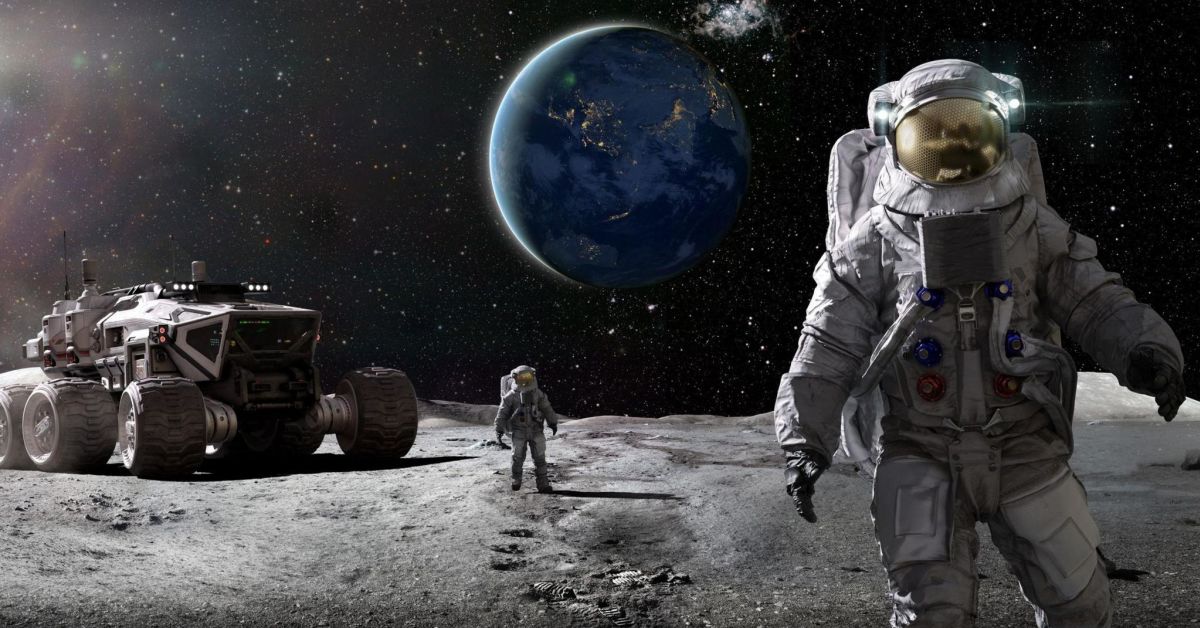
NASA is preparing to launch a new mission to the moon, and the flight is poised to make history on multiple fronts for Americas space program and for the culture at large.
The Artemis II mission will mark the United States first crewed journey to the vicinity of the moon in more than half a century, a symbolic return to deep-space exploration after decades confined to low Earth orbit. According to CNBC, the flight will also carry the first Black astronaut and the first female astronaut to travel to the moon, though this mission is designed as a lunar flyby rather than a landing on the surface.
Originally slated for early February but now delayed, Artemis II will send four astronauts around the moon and back in a critical test of NASAs Orion spacecraft and Space Launch System. Among them are Victor Glover and Christina Koch, who will become the first Black and first female astronauts, respectively, to make the journey, underscoring NASAs push to showcase diversity while pursuing technically ambitious goals.
The mission follows the uncrewed Artemis I test flight of 2022, which successfully orbited the moon and returned to Earth, validating key systems for human travel. NASA views Artemis II as the next step in a long-term strategy that ultimately aims to send astronauts to Mars, a goal that will require sustained funding, political will and private-sector partnership.
For Glover, a decorated U.S. Navy captain and veteran of the International Space Station, the programs significance extends well beyond engineering milestones and mission checklists. "The benefits of the Artemis program are technological, but they're also cultural," he said in a 2024 NASA video, emphasizing that the missions broader impact will be measured in the aspirations it sparks.
Glover framed the flight as an investment in national inspiration as much as in hardware, arguing that a confident, forward-looking America needs visible achievements in space. "What really means something to me is the inspiration that will come from it, inspiring future generations to reach for the moon, literally to reach for the moon," he added, highlighting the power of visible role models in a field long dominated by a narrow slice of society.
Christina Kochs path to this historic crew seat began inside NASA itself, where she started as an engineer before moving into scientific research and, eventually, astronaut training. She later flew to the International Space Station, building a rsum that reflects both technical expertise and the kind of operational experience NASA still prizes even as it broadens its selection criteria.
Koch has cast Artemis II as a mission that belongs not only to the four astronauts but to the public that funds and follows it. "The one thing I'm most excited about is that we are going to carry your excitement, your aspiration, your dreams with us on this mission," she said at a 2023 press conference announcing the crew, underscoring the idea that taxpayer-backed exploration should serve as a unifying national project.
Danielle Wood, a professor in the astronautics department at the Massachusetts Institute of Technology, argued that Artemis II is the product of decades of institutional learning at NASA, including hard lessons from past failures. "NASA's been thinking through this whole process, two decades' worth, of what we're going to do is prepare the government to focus on these harder, next-generation missions and be able to do things that are not already demonstrated," Wood told CNBC, pointing to the agencys evolving role in tackling missions too risky or capital-intensive for the private sector alone.
Wood also praised NASAs commitment to fielding more diverse astronaut corps that "represent society in a more broad way," a shift from the early days when military test pilots dominated the ranks. She noted that loosening rigid military requirements has opened doors for scientists, engineers and professionals from varied backgrounds, which she believes has led to exciting developments in both capability and public engagement.
Yet Wood acknowledged that symbolic firsts do not erase persistent barriers in elite fields like astronautics and aerospace. "It is still the case that there are many firsts, many glass ceilings, that need to be broken by Black women and Black men and women in general that's still real," she added, a reminder that representation milestones, while celebrated heavily in modern media, are only one dimension of long-term structural change.
Beyond the headline of a crewed lunar flyby, Artemis II will serve as a platform for scientific research on multiple fronts, including astronaut health, vehicle performance and the moons environment. Wood noted that NASA is also working with international partners such as Saudi Arabia and Germany under "goodwill" agreements that pool resources for lunar research, reflecting a diplomatic and strategic dimension to space cooperation that conservatives often view as a way to strengthen alliances without expanding military commitments.
"That's just one step for this bigger, new form of operation," she said, suggesting that Artemis is as much about building a sustainable framework for future missions as it is about any single flight. That framework, if managed prudently, could allow the United States to maintain leadership in space while leveraging allied contributions and private-sector innovation, rather than relying solely on ever-expanding federal spending.
Space historian Amy Shira Teitel, who has studied the field for more than two decades, described Artemis II as the opening chapter of NASAs next era of exploration beyond low Earth orbit. "It's marking a new era of leaving low Earth orbit, which we haven't done since 1972," she told CNBC, noting that even a non-landing mission can yield crucial data for whatever comes next.
Teitel stressed that the missions value lies in the knowledge it will generate for future operations, whether those involve a permanent lunar presence or eventual Mars expeditions. "It's still a significant step because at the end of the day, we're still going to gain some information that can be applied to whatever the next step is," she said, framing Artemis II as a necessary, if incremental, advance.
Still, she voiced skepticism that this launch alone will usher in a durable American foothold on the moon, given fiscal constraints, repeated delays and shifting political winds in Washington. Teitel said the rocket at the center of the mission is "widely regarded as a huge boondoggle," a criticism that resonates with conservatives wary of large, cost-overrun-prone government programs that risk crowding out more efficient private alternatives.
Her doubts come at a time when the space sector is becoming increasingly crowded, with private companies and foreign actors racing to stake their own claims in lunar exploration. Elon Musk's SpaceX recently announced a strategic pivot from Mars-focused efforts to moon missions, while Texas-based Firefly Aerospace and Houston-based Intuitive Machines have already dispatched spacecraft to the lunar surface, showcasing the dynamism of the commercial space market.
NASA, for its part, plans to retire the aging International Space Station and transition to smaller, commercially supported space stations that prioritize operations around the moon and Mars. That shift carries significant costs, but it also aligns with a more market-oriented approach in which government sets broad objectives and safety standards while private firms compete to deliver services, an arrangement many on the right see as a healthier model than open-ended federal monopolies.
On Capitol Hill, the U.S. Senate has advanced legislation to bolster NASAs initiatives and create thousands of aerospace jobs, particularly in Alabama, home to the Marshall Space Flight Center and a key hub for the nations rocket infrastructure. For lawmakers representing such regions, Artemis is not only about exploration but also about high-skilled employment, industrial capacity and maintaining American leadership in a strategic domain where China and other rivals are rapidly advancing.
Despite the historic nature of Artemis II and the clear momentum in both public and private space efforts, Teitel said she remains guarded in her expectations for the long-term trajectory of human spaceflight. "There's so many challenges with this program right now stemming from policy, not from the astronauts or the engineers, just stemming from the fact that space is so complicated and so rooted in politics and so expensive that it's hard to be that thrilled about this as the next step when everything else feels so tenuous," Teitel said, capturing the tension between technological optimism and political reality that will ultimately determine whether this new lunar push becomes a lasting American achievement or another ambitious program constrained by Washingtons shifting priorities.
Login