
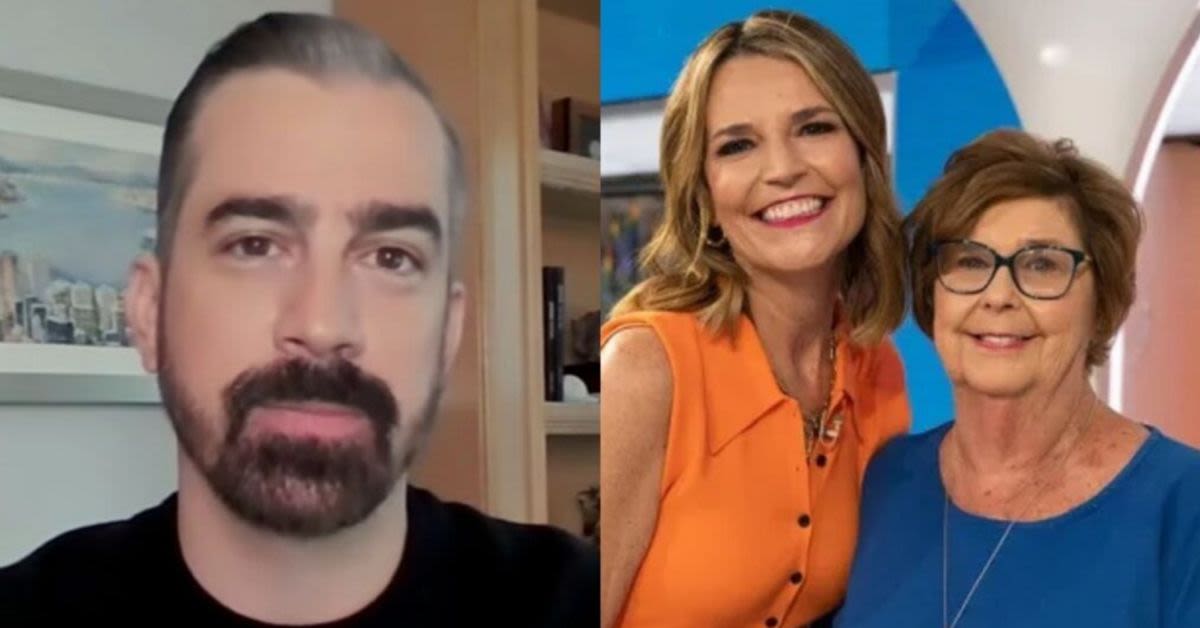
The disappearance of Nancy Guthrie has gripped the nation not only because of its mystery, but because it strikes at the heart of every familys worst fear.
Callahan Walsh, co-host of "Americas Most Wanted" and a veteran advocate in missing persons investigations, told Fox News Digital there is "a lot that sticks out" about the case, beginning with the simple fact that extensive searches have yet to locate the 68-year-old Arizona woman. According to Fox News, Walsh stressed that the ongoing failure to find Guthrie makes it "very much a unique case," particularly given that most elderly missing-person incidents involve seniors who wander off or become disoriented while driving, only to be found relatively quickly.
He noted that Guthries case has unfolded in a far less predictable fashion, with investigators and the public riding a roller coaster of hope and frustration. "The way this investigation has ebbed and flowed, its gone from hot, to cold, to hot [and] back to cold again," Walsh said, adding, "Our hope is that Nancy is found alive [and] that she is brought home and reunited with her family."
Walshs perspective is shaped by profound personal tragedy: his brother, Adam Walsh, was kidnapped and brutally murdered in 1981 at just 6 years old, a crime that shocked the country and galvanized a generation of parents. Today, he co-hosts "Americas Most Wanted" with his father, John Walsh, and recalls that his parents felt that "not knowing was the hardest part" during the desperate days when Adam was missing.
"The two weeks that we looked for Adam, my parents couldnt sleep. They would do anything to get Adam back, and we know what the Guthrie family is going through," Walsh said, drawing a direct line between his familys anguish and the uncertainty now confronting Savannah Guthrie and her loved ones. That shared experience of loss and unanswered questions has fueled Walshs lifelong commitment to helping other families avoid the same fate.
In addition to his television work, Walsh serves as executive director of the National Center for Missing and Exploited Children (NCMEC), a nonprofit that has become a cornerstone of child-protection efforts in the United States. He said he is deeply grateful that, in the midst of her own ordeal, Savannah Guthrie has chosen to step forward and support other families in crisis.
The NBC "Today" co-host has pledged $500,000 to NCMEC, a substantial private donation that Walsh said "means everything" to the organization and its mission. "Children are our most vulnerable population, but theyre our most important population. Theyre our future," Walsh said, emphasizing that "Thanks to the generous donation we can stand by more families."
Savannah Guthrie announced the pledge in an Instagram video posted on Tuesday, Feb. 24, using her platform to highlight the broader crisis of missing persons and the emotional toll on families. "We also know that we are not alone in our loss," she said in the video, adding, "We know there are millions of families that have suffered with this kind of uncertainty."
Walsh explained that, as a nonprofit, NCMEC depends on such private generosity to expand its reach and effectiveness. He said this particular gift will allow the organization to "better serve the families and the children that [their] mission is out there to do."
He further noted that the funds will be used not only for direct services, but also to shine a light on cases that rarely make national headlines. "Not only will this money go directly to the programs that help bring these kids home, but will also go to raise awareness on other cases that arent getting the attention they deserve," Walsh added, underscoring the importance of media exposure in solving crimes.
Beyond the institutional support, Savannah Guthrie has also taken a more personal step by offering a family reward of up to $1 million for information leading to her mothers recovery, after consulting with law enforcement. Walsh said that such a substantial reward may be "the motivating factor" that finally prompts someone with knowledge of the case to come forward.
"This amount of money is life-changing. This could really get somebody to second guess why theyve not been truthful about what they know and could be the reason that they finally come forward with that piece of information that the family is desperate for, that law enforcement is desperate for," Walsh said.
He added that it could be "Information that could absolutely lead to not only Nancys recovery, but the apprehension of the suspects as well." From his vantage point, financial incentives often break through fear, apathy or misplaced loyalty, especially when paired with strong investigative work.
Walsh acknowledged that sifting through the resulting flood of tips can be challenging for investigators, who must separate credible leads from noise. Yet he emphasized that public engagement has repeatedly proven decisive in high-profile manhunts and missing-person cases.
"Theyve helped us recover nearly 1,200 fugitives, the worst of the worst and its because of the public tips that have been provided," Walsh said, describing the process as painstaking but indispensable. "I always say, its like looking for a needle in a stack of needles."
He argued that, from a law-enforcement perspective, an overabundance of information is far preferable to silence. "As tiny as you might think it is, it might be that little bit of the puzzle that law enforcement has been looking for this whole time," Walsh told Fox News Digital, urging citizens not to underestimate what they may have seen or heard.
The NCMEC, which works closely with victims, families, police and other partners, focuses not only on locating missing children but also on combating "child sexual exploitation" and "child victimization." Walsh told Fox News Digital that the group has helped recover more than 450,000 children since its inception and maintains a robust network of support groups, case managers and investigative tools.
According to its website, NCMEC achieved a 91% recovery rate in 2024 for all cases reported to the organization, a testament to what can be accomplished when civil society, law enforcement and private citizens work together. Those numbers reflect a broader truth often ignored in progressive narratives: empowered families, engaged communities and well-supported police are central to protecting children, not sprawling bureaucracies or soft-on-crime policies.
Nancy Guthrie was last seen on Jan. 31 before vanishing from her home in the Catalina Foothills area of Tucson, Arizona, a quiet community now overshadowed by uncertainty. Police have yet to identify any person of interest, even after releasing Nest camera footage from her residence in hopes of generating new leads.
"We know her family will never give up hope," Walsh said, voicing a determination that mirrors his own familys long fight for justice. "We will never give up hope and law enforcement wont either."
For now, the search for Nancy Guthrie continues, powered by a combination of faith, family resolve and the kind of private initiative that conservatives have long championed as the backbone of civil society. Anyone with information in the case is asked to dial 1-800-CALL-FBI.
Login