
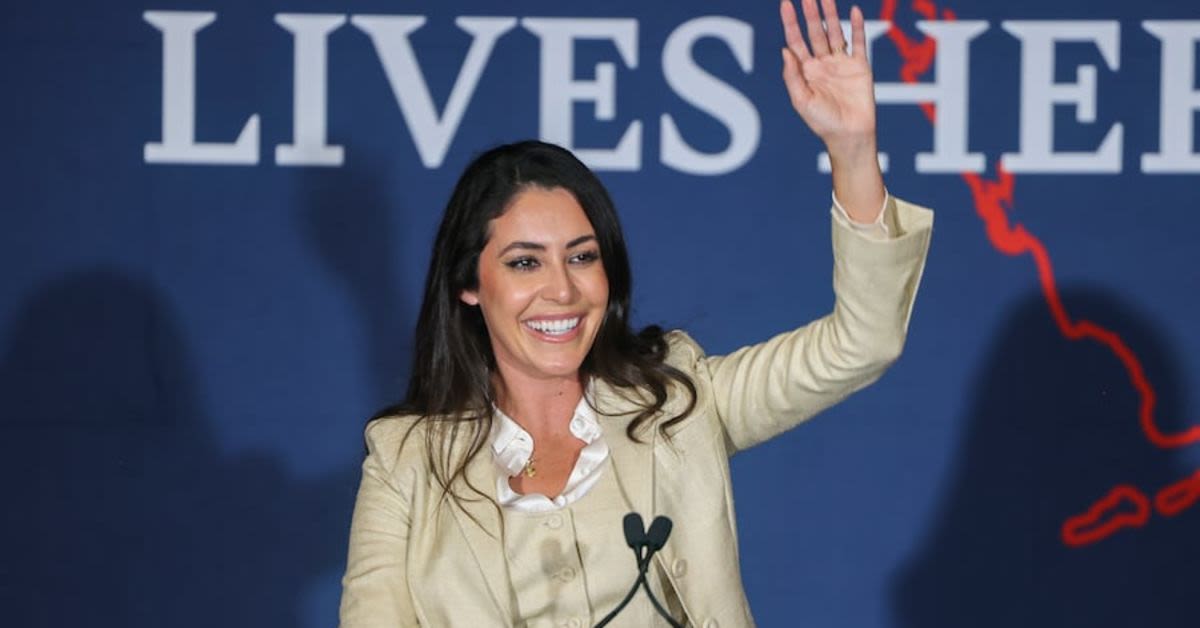
Republican Rep. Anna Paulina Luna of Florida is urging Senate GOP leaders to deploy an aggressive and rarely used procedural maneuver to push nationwide voter ID requirements across the finish line, arguing that the political moment demands nothing less.
According to Western Journal, Luna used a Sunday appearance on Fox News Sunday Morning Futures With Maria Bartiromo to press Senate Majority Leader John Thune to move swiftly on the Safeguard American Voter Eligibility (SAVE) Act, a sweeping election integrity bill that cleared the House last week with support from all Republicans and just a single Democrat.
She insisted that Thune needs to bring the SAVE America Act to the upper chambers floor immediately, framing the measure as a direct response to public demands for stronger protections against illegal voting and noncitizen participation in federal elections.
Luna, one of the Houses most vocal advocates for the legislation, argued that Republicans must be willing to embrace a talking filibuster also known as a standing filibuster to overcome Democratic obstruction. She said the GOP majority in the Senate should not shy away from forcing Democrats to physically hold the floor with continuous speeches if they want to block the bill, a tactic that could allow passage with a simple majority rather than the usual 60-vote threshold.
Look, I think right now America has made their voices very clear. They want voter ID, Luna told Bartiromo, underscoring what conservatives have long maintained: that election integrity measures are not fringe demands but mainstream expectations. The SAVE Act, which the Republican-controlled House approved Wednesday, would require government-issued photo identification to vote nationwide and mandate proof of U.S. citizenship to register, closing loopholes that critics say invite abuse and erode confidence in the system.
Thune needs to bring it [the SAVE Act] to the floor and it needs to happen immediately, she emphasized, signaling impatience with what many on the right see as the Senates chronic reluctance to confront Democrats head-on over election rules. Luna also took care to highlight growing Senate Republican support, particularly from moderates whose backing often determines whether major reforms have any realistic chance of success.
And I really will take a second to commend Senator [Susan] Collins. She was the 50th representative to sign onto this and that is a massive piece of legislation, Luna said, praising the Maine Republican, who is frequently a swing vote and not always aligned with the partys conservative base. Her endorsement, Luna suggested, reflects the broad appeal of voter ID and citizenship verification, even among more centrist lawmakers who often resist partisan showdowns.
But moving forward, look, Sen. Thune has every ability to bring the standing filibuster to the floor, Luna added, using another term for the talking filibuster and making clear that, in her view, the procedural tools already exist to confront Democratic resistance. The question, she implied, is not whether Republicans can act, but whether they have the will to do so in the face of predictable media backlash and progressive outrage.
Luna acknowledged that Thune has publicly expressed doubts about the Senates bandwidth to engage in such a drawn-out confrontation. I know he [Thune] famously came out, maybe a few days ago, and said that they might not have the time, she said, referencing comments the majority leader made to an NBC News reporter, in which he suggested the chambers schedule is already strained.
I would actually argue that this is probably the number one thing especially moving into the midterms, Luna continued, arguing that election integrity is not just another item on the legislative agenda but the foundation for every other policy debate. Many senators have said if we do this, the Democrats are going to do this when they regain power. But the fact is, Maria, is that the Senate Democrats have made it very clear that they want mass amnesty, they want mass naturalization of illegals, and, frankly, I think theyre going to do it anyway.
Her comments reflect a broader conservative concern: that Democrats are pursuing policies from lax border enforcement to expedited naturalization that could reshape the electorate in their favor, while simultaneously resisting basic safeguards like voter ID. From this perspective, refusing to act now out of fear of future Democratic retaliation is self-defeating, because progressives are already committed to aggressive procedural and policy moves when it suits their agenda.
Democratic leaders, for their part, are signaling they will not compromise. Senate Minority Leader Chuck Schumer told CNN on Sunday that his caucus will oppose the SAVE Act tooth and nail, branding the legislation like Jim Crow 2.0, a familiar progressive talking point that equates routine identification requirements with historical racial discrimination.
If Thune and Senate Republicans decide to force a talking filibuster, Schumers members would be required to physically remain on the Senate floor and deliver extended speeches to keep the filibuster alive, potentially for days or weeks. That would mark a sharp break from the modern silent filibuster, in which merely signaling an intent to filibuster effectively kills a bill unless it can muster 60 votes, without any sustained public debate or political cost to the obstructing side.
Several conservative senators have already indicated they are ready for that fight and welcome the chance to put Democrats on record opposing voter ID and citizenship verification. For these Republicans, a talking filibuster would not only be a procedural gambit but also a political spectacle, forcing Democrats to defend a position that polls show is deeply unpopular with the broader electorate.
Im a fan of the talking filibuster especially as Democrats have proven more and more obstructionist, Republican Sen. Josh Hawley of Missouri said, according to POLITICO, signaling that at least some in the GOP conference are eager to restore a more demanding, old-fashioned version of Senate debate. Hawley and others argue that if Democrats want to block widely supported reforms, they should have to do it in full public view, not behind the shield of procedural technicalities.
Republican Sen. Mike Lee of Utah has been one of the most outspoken champions of using this tactic to advance the SAVE Act, repeatedly endorsing a talking filibuster strategy throughout February. Lee, a constitutional conservative, has long argued that the Senates current filibuster practice has drifted far from its original purpose and now often serves as a tool for quiet obstruction rather than robust deliberation.
So, the only way to really secure our country for future generations is to ensure that Americans have faith in the voting process and that, if their senators work against their interests, that they can vote them out at the ballot box, and that is exactly what this will do, Luna said during her Fox News interview, tying the SAVE Act directly to the legitimacy of representative government. So, I am frankly behind every senator that is for the voter ID.
Luna also suggested that support for the bill might not break strictly along party lines in the Senate. She pointed to Democratic Sen. John Fetterman of Pennsylvania, who has occasionally bucked his partys leadership, as a potential ally on the core question of voter ID, even if he has publicly opposed the SAVE Act itself.
The congresswoman said she believes Fetterman will likely vote for the SAVE Act, despite his stated opposition. Fetterman told POLITICOs Dasha Burns on Friday that he does not back the bill, but he also made clear he does not support Democrats uncompromising stance against voter ID, putting him at odds with the partys activist base and leadership rhetoric.
But look, I mean this talking filibuster has never been used, Bartiromo pressed Luna, voicing a concern often raised in Washington: that such a move would be unprecedented in the modern era and could disrupt the Senates already fragile routines. Critics of the strategy warn it could paralyze the chamber and invite retaliation down the road.
Luna responded by reminding viewers that the talking filibuster was actually how the filibuster did work historically and then it became this kind of perversion of what its currently known as. In her view, restoring the requirement that senators physically defend their obstruction would not be radical but rather a return to the institutions original norms and responsibilities.
And I would say, look Maria, you have only a few jobs in Congress one to argue your ideas and the others to vote. And so, if theyre saying that you know its all these procedure hurdles and they have to allocate time for it, and they might not have the ability to do that debate, I would say, Look youre in the Senate, its a wonderful job, its a privilege and you should get to it, she continued, offering a pointed rebuke to colleagues who complain about the workload that a talking filibuster would entail. And so I would say that they need to actually embrace with the filibuster was, get back to what it traditionally stood for.
And I think that every single member of the House and Senate that debates this issue will see that the American people bipartisanly want this, even Democrats, Luna said, arguing that a full, public debate would expose just how out of step progressive activists and party leaders are with ordinary voters. Her confidence rests not only on anecdotal impressions but also on hard data that undercuts the lefts narrative that voter ID is inherently discriminatory or partisan.
A Pew Research Center survey from August 2025 found that 83 percent of Americans, including 71 percent of Democrats, support requiring all voters to show government-issued photo identification to vote. Those numbers suggest that, despite the heated rhetoric from figures like Schumer, the electorate across racial and party lines overwhelmingly sees voter ID as a common-sense safeguard, not a tool of suppression.
For conservatives, the stakes of the SAVE Act debate go far beyond one bill or one election cycle. They see it as a test of whether Washington is willing to align federal law with the clear preferences of the American people, or whether ideological dogma and partisan calculation will continue to override basic measures to protect the ballot box.
As Luna and her allies press Thune and Senate Republicans to embrace the talking filibuster and force Democrats to defend their opposition in the open, the coming weeks may reveal whether the GOP is prepared to use its majority to secure election integrity or content to let another opportunity slip away under the weight of Senate inertia.
Login