
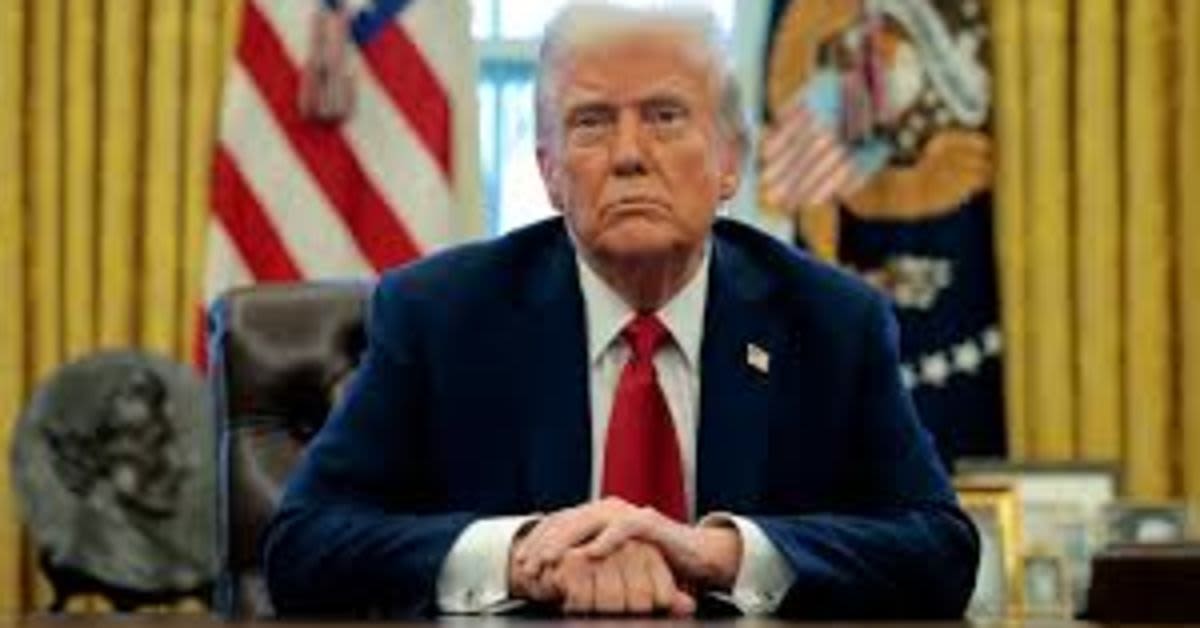
President Donald Trump on Thursday criticized federal investigators for publicly revealing their use of an FBI device designed to detect Bluetooth signals from the pacemaker of missing Arizona woman Nancy Guthrie, even as authorities said they were combing through thousands of tips and technical leads in a search now stretching into its 19th day.
The President delivered his remarks aboard Air Force One, weighing in on a high-profile case that has gripped the nation and raised questions about law-enforcement strategy and transparency.
According to Newsmax, Trump objected specifically to the decision to disclose the use of specialized technology before it had been fully deployed in the field.
"I didn't like when they talked about going after the pacemaker before they even started going after it," Trump told reporters, signaling his concern that publicizing investigative tactics could compromise the search. His comments reflect a broader conservative skepticism toward what many see as a tendency by federal agencies to prioritize media narratives and public-relations optics over operational security and results.
The FBI has said that Guthrie, the 84-year-old mother of NBC "Today" co-anchor Savannah Guthrie, was last seen at her home in Tucsons Catalina Foothills neighborhood on the evening of Jan. 31.
She is classified as a vulnerable adult, with authorities noting that she has difficulty walking, relies on a pacemaker, and requires daily medication for a heart condition.
Local outlet KOLD-TV reported that law enforcement has been using a device described as a "signal sniffer" to search for Bluetooth signals associated with Guthries pacemaker. That equipment has reportedly been mounted on low-flying helicopters, an extraordinary measure that underscores both the urgency of the search and the sophistication of the tools being brought to bear.
The investigation, however, has not been free from controversy, drawing public criticism over certain tactical and procedural decisions, including where key evidence was tested. FOX 10 Phoenix reported that DNA from a glove discovered two miles from Guthries residence did not match any profile in the FBIs CODIS database, raising further questions about the direction and effectiveness of the probe.
According to that report, Pima County Sheriff Chris Nanos acknowledged that the glove was initially sent to Florida for analysis before additional testing was conducted in Arizona. For many observers, such choices have fueled doubts about coordination and competence, particularly among those already wary of sprawling, multi-jurisdictional investigations that can diffuse accountability.
The reward for information leading to Guthries recovery has climbed to more than $200,000, a figure that reflects both the familys desperation and the publics willingness to assist. Investigators say they are now sorting through more than 19,000 tips, a massive volume that can be both a blessing and a burden for agencies tasked with separating credible leads from noise.
The FBI has released a description of a possible suspect, identifying him as a male approximately 5 feet 9 inches to 5 feet 10 inches tall with an average build. Yet despite that description and the flood of information from the public, authorities concede that there have been no named suspects and no definitive leads since Guthrie vanished on Jan. 31.
On the night she disappeared, Guthries son-in-law, Tommaso Cioni, drove her home after she had dinner with him and her daughter, Annie Guthrie. Investigators have since cleared Cioni and all members of the Guthrie family as potential suspects, a step that narrows the focus of the probe but leaves a troubling vacuum regarding who may be responsible.
For conservatives, the case highlights recurring concerns about how federal and local agencies manage high-stakes investigations, particularly when vulnerable victims and advanced surveillance tools are involved. Trumps rebuke of the Bluetooth disclosure taps into a broader argument that law enforcement should prioritize operational discretion and concrete results over public posturing and media-driven transparency.
As the search for Nancy Guthrie continues, the combination of cutting-edge technology, interstate forensic testing, and an enormous tip load has yet to yield a decisive breakthrough.
With an elderly woman still missing, a six-figure reward on the table, and a suspect description but no arrests, the central questions remain painfully unresolved: who took her, where she is, and whether the agencies involved are using their considerable resources as effectivelyand as prudentlyas they claim.
Login