
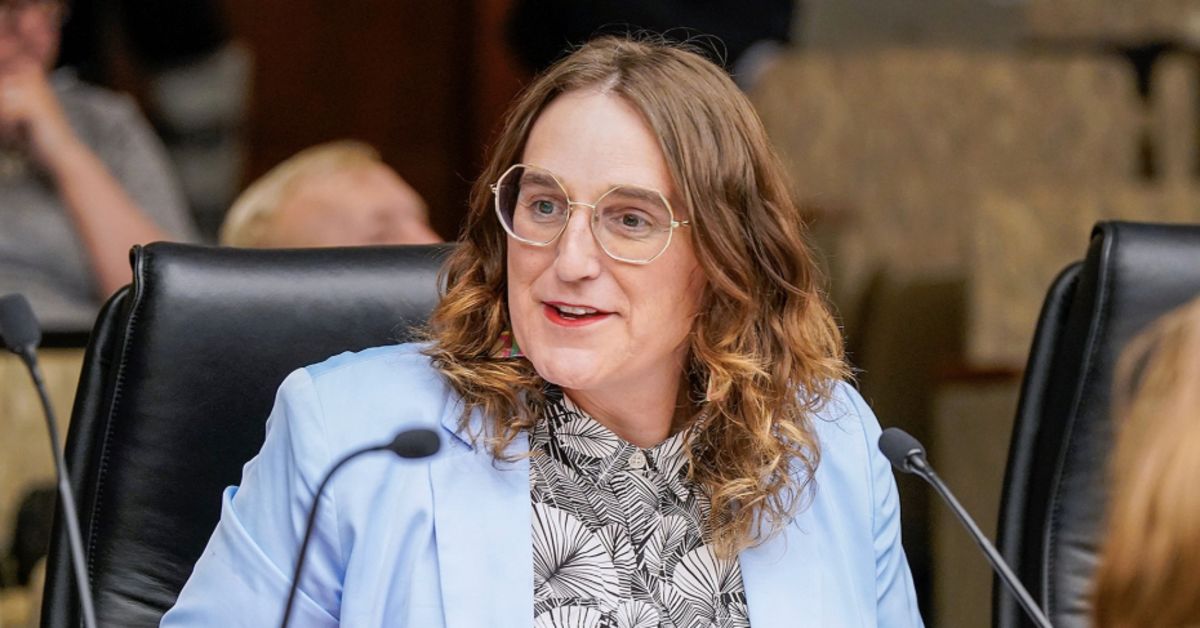
Minnesotas first openly transgender state legislator is drawing sharp criticism for opposing an age-verification bill that would restrict minors from accessing online pornography, particularly material he describes as queer content that could serve as sex education.
.
According to Western Journal, Democratic state Rep. Leigh Finke went viral after objecting to legislation that would require adult websites to verify users ages before granting access. The measure would require websites where 25 percent of more of the webpages feature pornography to verify that a person seeking to access the website is 18 or older, a standard that mirrors efforts in other states to shield children from explicit material online.
Finke, however, framed the bill as a threat to what he considers educational resources for minors who identify as LGBT. He complained that attorneys general in many states are very clear about theyre almost jubilant about being able to use these laws to ban young people from accessing content that could be educational, if they are queer, Finke said on Thursday.
In remarks to a school principal, Finke also lamented that students are not receiving sex education for queer kids. The implication was that, in his view, explicit online content might fill that gap, a notion that alarms parents who believe schools and families not porn sites should guide childrens understanding of sexuality.
Finke further argued that the very existence of transgender-identifying youth is treated as obscene by critics. We know that, for many people, prurient interest could be the very existence of transgender kids, Finke added. More and more people are saying there are no transgender kids.
That choice of words has raised eyebrows, particularly the suggestion that objections to exposing minors to explicit material are rooted in a prurient interest in transgender children. For many conservatives, the more pressing question is why activists are so intent on ensuring that minors, rather than adults, have access to graphic sexual content in the first place.
The bill at issue does not ban sex education, nor does it prevent adults from viewing pornography. It simply requires that sites hosting large amounts of explicit material confirm that users are 18 or older, a basic safeguard that most parents would regard as common sense in an era of smartphones and ubiquitous internet access.
Critics of Finkes stance argue that he is blurring the line between age-appropriate education and outright pornography. This isnt sex ed in the old sense of the birds and the bees, as taught by public schools, one commentator noted, adding, Thats weird enough; were talking straight-up pornography here.
Online, conservative commentators pointed out that this push to normalize explicit content for minors is not isolated. The pundit known as @DataRepublican observed that sex positive parenting forums have become breeding grounds for what he described as liberals grooming their own children into degeneracy.
Others suggested that Finkes activism raises potential conflicts of interest, given his role as a prominent transgender lawmaker advocating policies that lower barriers between minors and sexualized content. Some critics went further, engaging in deadnaming referring to Finke by a previous name a practice that reliably provokes outrage from the left but underscores how contentious this debate has become.
The broader concern among conservatives is the apparent obsession within segments of the transgender and broader LGBT activist movement with reshaping childrens views on sex and gender at ever-younger ages. As one critic put it, when an ideology is based on perversion, its adherents may feel compelled to drag as many down with themselves as they can, a sentiment that reflects deep unease about the direction of cultural and educational policy.
From a limited-government, family-first perspective, the principle is straightforward: if pornography is going to exist online, there must be robust age verification to keep it away from children. As for the claim that explicit queer pornography is educational, that argument ultimately reveals more about the priorities and worldview of those making it than about any genuine concern for the well-being and innocence of Americas kids.
Login