
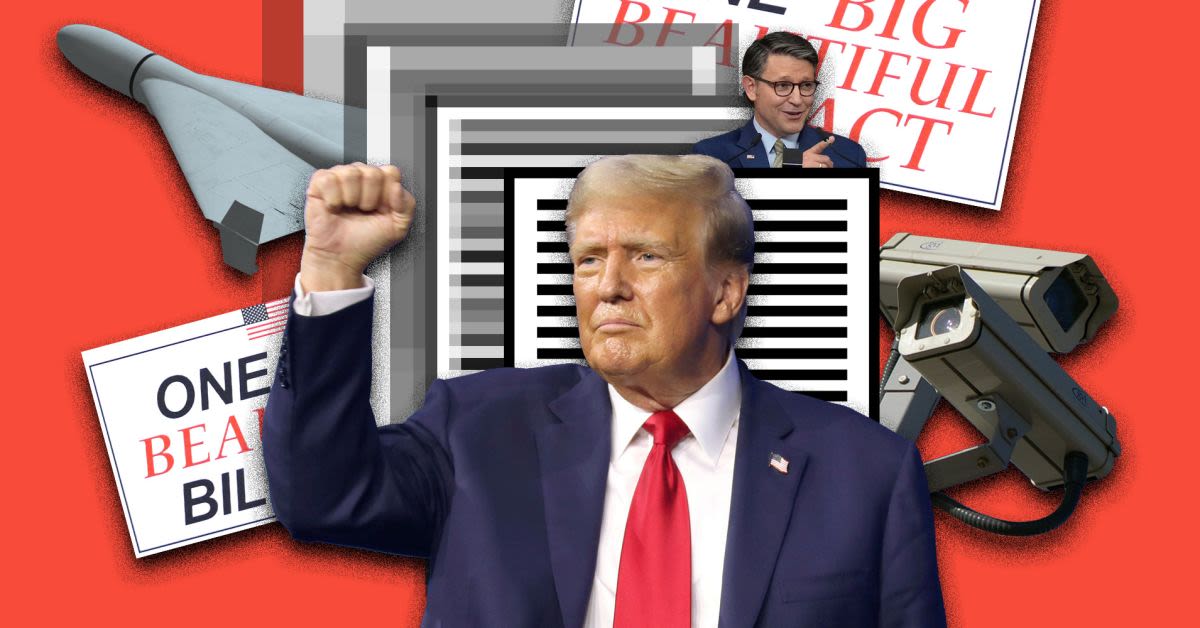
President Donald Trump signaled that his administration is already eyeing another far-reaching legislative push even after securing what he calls the largest bill in congressional history.
The President, who signed the so-called Big, Beautiful Bill at the White House on July 4, framed the new law as the culmination of his long-standing effort to cement the 2017 tax cuts and advance a slate of conservative domestic priorities. According to Conservative Daily News, Trump used an appearance on Kudlow to respond to questions about whether his team is preparing a second Big Beautiful Bill, potentially using the budget reconciliation process again to deliver deeper tax relief, additional deregulation, and other pro-growth measures.
So when I first came in we met with John Thune, who is a terrific guy, and, as you know, Mike Johnson, the speaker, and we had about 17 different bills, and I said lets put them all together, and everybody was against it, Trump told host Larry Kudlow. They werent, really, but it was a long shot. Many people said you cant get it done. Dont do it. Itll be bad, and we put everything together, and this was a four-year package. In recounting the legislative strategy, Trump underscored how Republican leaders consolidated a broad range of conservative proposals into a single vehicle to maximize the chances of passage and lock in a multi-year policy framework.
Trump said Congress ultimately approved the sweeping package because it offered tangible benefits across the Republican coalition and beyond. We put it together, and we got it passed, and it was sort of a miracle because Ive seen it work the other way. There was something in there for everybody. Thats how we got it passed, Trump said.
Im not sure we would have gotten very many of those bills. But we had many bills, and we put them all together. So, in theory weve gotten everything passed that we need. Now we just have to manage it, but weve gotten everything passed that we need for four years.
Even as he praised the scope of the new law, Trump made clear that his administration is not treating the July 4 package as the endpoint of its legislative ambitions. Do we have other things in mind? Yeah, we do. We have things in mind. We have been perfecting a little bit of what we did, because this is the biggest bill ever passed in the history of Congress, and its a great thing, but we also have other bills we want to get, Trump said. We want to get the Save America Act passed. Save America is on voting. We want people to have voter ID. We want people to have proof of citizenship, and we want to have no mail-in ballots other than if youre in the military or youre sick or if youre away or some reasonable but good excuse.
The Big Beautiful Bill delivers a permanent extension of the 2017 tax cuts, enshrining lower tax burdens that conservatives argue are essential for economic growth, job creation, and family prosperity. It also fulfills Trumps campaign promise to eliminate federal taxes on tips and overtime pay, while permanently raising the child tax credit to $2,200, a move Republicans say strengthens working- and middle-class families without expanding bureaucratic welfare programs.
Beyond tax policy, the law channels hundreds of billions of dollars into border security and national defense, reflecting a hawkish stance on sovereignty and military readiness that contrasts sharply with the Biden administrations lax border posture. At the same time, it trims Medicaid spending by roughly $1 trillion over the next decade, a reduction fiscal conservatives view as a necessary step toward reining in unsustainable entitlement growth and restoring budget discipline.
The Presidents push for the Save America Act dovetails with another Republican-backed measure, the Safeguard American Voter Eligibility Act, which would tighten federal election rules by requiring proof of U.S. citizenship and photo identification for participation in federal contests.
Supporters say such reforms are common-sense protections to ensure that only eligible American citizens appear on voter rolls and cast ballots, reinforcing election integrity at a time when the left continues to resist basic safeguards like voter ID and strict limits on mail?in voting.
Login