
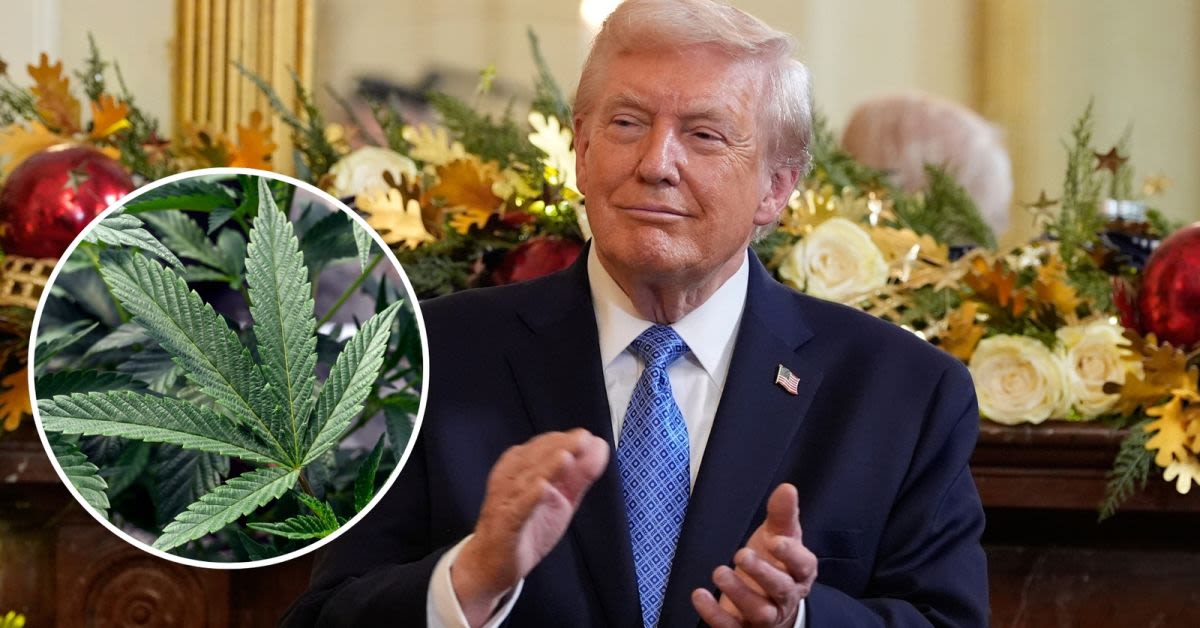
Former Education Secretary William Bennett is breaking with Donald Trump over the presidents move to ease federal restrictions on marijuana, warning that rescheduling cannabis would undercut students, public safety, and the nations long-standing fight against drug abuse.
Bennett, a stalwart conservative who has otherwise been a vocal ally of Trump, made clear that this is one area where he believes the White House is veering off course. According to Fox News, the former Reagan cabinet official reacted sharply to Trumps December 2025 executive order directing the Justice Department to fast-track moving marijuana from Schedule I to Schedule III under the Controlled Substances Act. That shift would move cannabis out of the same legal category as heroin and LSD and into a tier more akin to regulated prescription drugs, stopping short of nationwide legalization but dramatically softening the federal posture toward the drug.
"I love Donald Trump," Bennett said in a phone interview with Fox News Digital. "I love almost everything he does, but I don't love this." His comments underscore a growing divide on the right between traditional law-and-order conservatives and a newer, more libertarian-leaning faction that is increasingly comfortable with marijuana normalization.
Trump, for his part, has framed the move as a pragmatic step to advance science and help patients, not a cultural endorsement of recreational drug use. "This reclassification order will make it far easier to conduct marijuana-related medical research, allowing us to study benefits, potential dangers, and future treatments," the president said in the Oval Office as he signed the order. "It's going to have a tremendously positive impact."
Bennetts criticism carries particular weight because of his long record as one of the GOPs most prominent voices on education and drug policy. He served as President Ronald Reagans Secretary of Education from 1985 to 1988, after earlier leading the National Endowment for the Humanities, and later became the first director of the Office of National Drug Control Policy under President George H.W. Bush. In that role, he was widely known as the nations "drug czar" and was a leading architect and advocate of the "war on drugs," pushing a national strategy that stressed prevention, deterrence and strict enforcement of laws against illegal drug use.
Speaking again to Fox News Digital, Bennett emphasized that he remains broadly supportive of Trumps agenda, but he drew a bright red line at the idea of rescheduling marijuana. He argued that the drugs impact on students, its role as a "gateway drug" and its connection to addiction and crime make it a poor candidate for federal softening, especially at a time when schools and families are already under strain. He warned that conservatives risk abandoning a core principle of personal responsibility and public order if they join the left in normalizing cannabis.
The former Reagan official said marijuana use among young adults has surged in a culture that now openly promotes and celebrates cannabis, with little regard for the long?term consequences. In his view, this cultural shift has left youth health and academic performance as collateral damage in a rush to commercialize and tax yet another addictive product. "Marijuana clouds focus and attention, which you obviously should have if you're going to school," he said. "So it clouds that, it interferes with that, it inhibits that. It is also the gateway drug. It leads to the use of other drugs. Almost anybody who uses a so-called more dangerous drug than marijuana has entered through the portal called marijuana."
Bennett acknowledged that marijuana may have limited medical applications, but he insisted that these do not outweigh the broader social costs, particularly for the young. He added that "you can concede the fact that marijuana can have some positive effects, and at the same time understand that its, on the whole, a negative," arguing that cannabis can ease pain for some while being "massively destructive of attention and focus among young people." For conservatives who have long warned about the dangers of undermining discipline and academic rigor, his argument fits squarely within a broader critique of permissive cultural trends.
He further contended that the widespread use of marijuana among teenagers and young adults has contributed to worsening dropout rates and chronic absenteeism in schools. That concern comes as the nations education system is still reeling from the pandemic era, when learning loss and disengagement soared.
In the post-COVID landscape, U.S. schools continue to grapple with absenteeism, with about 28% of students missing 10% or more of school days in the 20222023 academic year, down only slightly from 31% in 20212022, according to Department of Education data.
"If you combine the dropout rate, the fact that attendance is down at schools and the use of marijuana among young people its just another bad thing to happen to children," Bennett told Fox News Digital. From his vantage point, a federal move that symbolically blesses marijuana, even under the guise of research, risks sending exactly the wrong message to families already struggling to keep kids on track.
The White House, however, is standing by the presidents decision and framing it as a targeted, medically driven reform. When asked about the pushback, White House spokesman Kush Desai told Fox News Digital that the move is part of the president's "pledge to expand medical research into applications of marijuana and cannabidiols by rescheduling marijuana." He stressed that the administration sees this as a way to help patients, not to green-light recreational use.
"The Presidents historic action paved the way for the development of promising new treatments for American patients, especially veterans and the presence of several leaders from law enforcement and veterans groups at the Oval Office signing is indicative of how President Trump continues to push the envelope to support our nations heroes," Desai said. That framing appeals to conservatives strong support for veterans, but it does little to ease Bennetts fear that the broader culture will interpret the move as a federal stamp of approval on marijuana.
Bennett argued that the cultural landscape around marijuana has been transformed in recent years by aggressive lobbying and a rapidly expanding cannabis industry. According to him, those forces have helped push marijuana into the "mainstream," shifting public opinion from narrow support for tightly controlled medical use into a broader acceptance that treats the drug as "generally okay." For social conservatives who have long warned about the power of well-funded interest groups to reshape norms, his critique echoes earlier battles over tobacco, pornography and gambling.
Fox News Digital also spoke with Elayne Bennett, the former secretarys wife, who has spent decades working directly with students on character education and drug prevention. She is the founder and president of the Best Friends Foundation, a nonprofit that promotes "self-respect through self-control" among schoolchildren, including in Washington, D.C. classrooms. From her vantage point inside schools, she said the culture has shifted so dramatically that many students are simply unaware of the risks associated with marijuana and other drugs.
She cited an interview the Best Friends Foundation conducted with a 14-year-old boy who admitted he had never been told that habitual marijuana use before age 18 can permanently reduce adult IQ by about eight points, as some research has indicated. "That just hit me like a ton of bricks," she said. "I mean, are you kidding me? That's insane. Nobody is saying, 'Hey, stop it, don't.'"
Elayne Bennett, who worked alongside former First Lady Nancy Reagan in the 1980s to promote abstinence from drugs, urged the Trump administration to revive that unapologetically tough message. She called on the White House to "Reinvigorate the just say no" campaign that became a cultural touchstone during the Reagan and Bush years. "Nancy Reagan, just say no. Reinvigorate that drugs hurt you. Drugs kill," she said, arguing that clear moral lines, not technocratic tweaks to scheduling, are what young people need to hear.
William Bennett also pointed to Trumps own personal habits as a model the President should apply more broadly in policy. The former education secretary noted that Trump is a teetotaler when it comes to drugs and alcohol, a stance that aligns with traditional conservative values of sobriety, self-control, and personal responsibility. "America's always been a self-correcting society. We do a lot of dumb things and bad things, but then we correct, and we can correct on this one," he said, suggesting that even if the country has drifted toward normalization of marijuana, it is not too late for leaders including Trump to pull it back toward a culture that protects children and upholds order over indulgence.
Login