
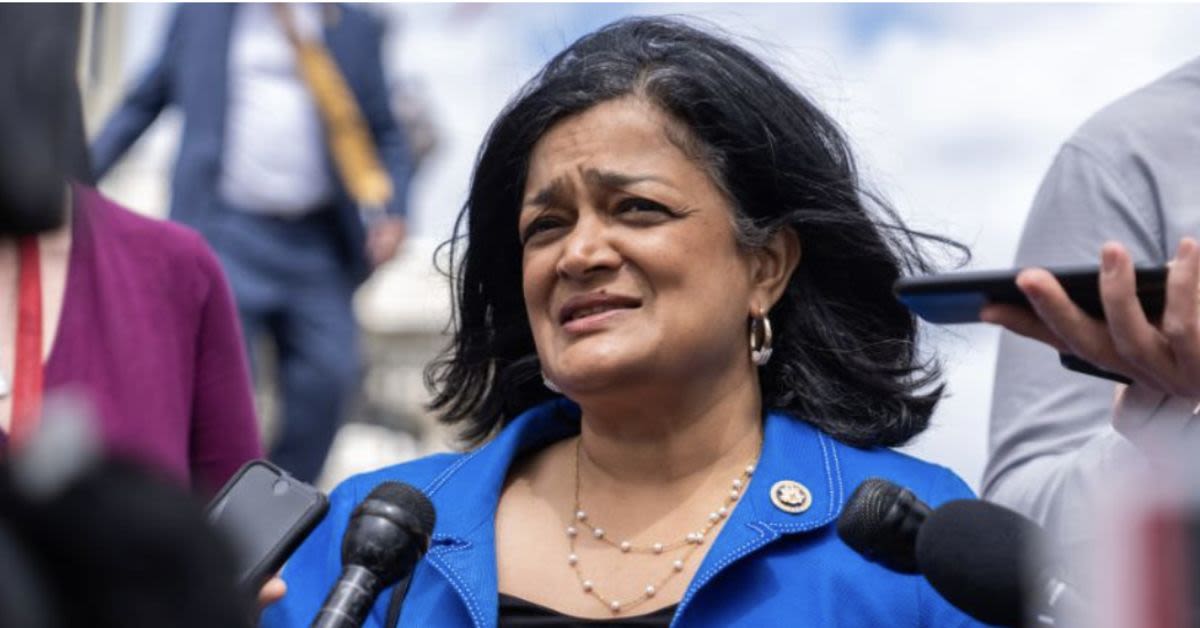
Far-left Democratic Rep. Pramila Jayapal of Washington has unveiled a sweeping new Transgender Bill of Rights, insisting that the United States is engulfed in an escalating political campaign against transgender-identifying individuals.
The legislation, reintroduced this week with Democratic Sen. Edward J. Markey of Massachusetts as a co-sponsor, is being sold as a necessary response to what Jayapal portrays as a wave of hostility toward transgender and nonbinary Americans. According to RedState, Jayapal is once again casting the country she serves as fundamentally bigoted, accusing ordinary Americans of using trans people as scapegoats and urging Congress to send a clear message that trans lives matter.
On Tuesday, Jayapal and Markey rolled out a revamped version of their proposal, branding it the Transgender Bill of Rights and framing it as a forward-looking civil rights blueprint. The measure is not new; it is a retooled iteration of a 2023 effort that failed to gain traction but now returns amid intensified culture-war rhetoric from the Left.
Jayapal, a prominent member of the progressive Squad, framed the bill as a shift from defense to offense in the cultural and legal battles over gender ideology. Too often when we discuss trans rights, we're on the defensive, discussing how to protect trans people from horrific Republican attacks and how trans people can live authentically in our communities, she declared, casting conservatives as aggressors in a one-sided conflict.
She went on to claim that this latest push is about setting a bold, affirmative agenda for transgender and nonbinary Americans. Today, though, we are not on the defensive; we're looking forward with the trans bill of rights. We are laying out a comprehensive vision to provide protections for transgender and nonbinary people; a vision that insures that every single person has a chance to thrive. A vision that says 'You are us. You belong and you are worthy of the same rights as everyone.'
Yet the central question that Jayapal and her allies rarely address is straightforward: What specific constitutional or statutory rights do transgender-identifying individuals lack that other Americans possess? The United States already guarantees equal protection under the law, and discrimination on the basis of sex which the Left now insists includes gender identity is heavily regulated in employment, housing, and education.
The bill, first floated last year, promises to codify protections across a wide range of areas, including medical interventions, preferred pronouns, housing, schooling, credit, and health care access. In practice, this means expanding federal power to enforce ideological conformity on gender issues, compelling institutions and individuals to affirm subjective identities rather than biological reality.
Critics argue that Democrats are once again manufacturing a crisis in order to justify more government intrusion into private life and local decision-making. The pattern is familiar: identify a supposedly oppressed class, declare a national emergency of discrimination, and then demand sweeping federal remedies that erode parental rights, religious liberty, and free speech.
Jayapal made clear that the legislation is designed to rewrite existing civil rights law to explicitly enshrine gender identity as a protected category. This bill supports amending the Civil Rights Act to ensure that trans and nonbinary people have the same rights and protections as all other Americans. It creates a level playing field where trans people no longer have to fight tooth and nail to get the same treatment as their cisgender friends, she said, implying that current law is fundamentally inadequate.
She further touted the bills broad scope, which would embed transgender-focused mandates into multiple sectors of American life. Creating inherent protections for trans people when it comes to schooling, housing, accessing credit and health care, expanding community services and mental health services for trans people is what it takes to ensure that trans people have full equality. Where we can celebrate trans rights rather than fight for every single right at every turn.
For families already struggling with inflation, rising crime, and the fallout from President Joe Bidens border policies, the priorities on display in Washington are telling. While millions of Americans worry about paying their bills and keeping their communities safe, Jayapal is devoting her energy to expanding what amounts to a gender-ideology bureaucracy, while lecturing voters who refuse to embrace the Lefts identity politics.
This is not merely about rights in the traditional American sense; it is about compelling cultural submission to a radical worldview. When activists insist that biological males must be allowed into womens restrooms, locker rooms, and sports simply by declaring a new gender identity, they are not asking for equal treatment under neutral rules they are demanding that everyone else abandon common sense and long-standing norms.
In many contexts, those who fall into ever-expanding protected classes already enjoy advantages that ordinary cisgender Americans do not. From preferential treatment in corporate diversity programs to aggressive enforcement by civil rights bureaucracies, the system increasingly tilts toward those who claim victim status, while those who dissent from progressive orthodoxy risk professional and social punishment.
Jayapal herself underscored the political framing in a social media post promoting the bill. Too often when discussing trans rights, were forced to be on the defensive, as Republicans wage attacks. Today, we take the opportunity to look forward by introducing my Trans Bill of Rights, a comprehensive vision to provide protections for all trans and nonbinary people, she wrote, again portraying Republicans as the primary threat to basic decency.
The unanswered question remains: What concrete constitutional rights are being denied to transgender-identifying Americans that justify this sweeping federal intervention? When pressed, activists typically shift from legal claims to demands for affirmation, access to irreversible medical procedures for minors, and compelled speech in the form of pronoun usage all of which raise serious concerns about parental authority, medical ethics, and First Amendment freedoms.
Democrats have long relied on stitching together coalitions of disparate groups by emphasizing fear, grievance, and division along lines of race, class, gender, and sexuality. The transgender issue fits neatly into this strategy, allowing progressives to accuse opponents of bigotry while advancing policies that centralize power in Washington and marginalize traditional values.
Sen. Markey echoed the familiar activist slogan in his endorsement of the bill, declaring, Trans rights are human rights. The phrase, while emotionally charged, is rarely accompanied by a clear explanation of what specific legal protections are missing, beyond demands that society not merely tolerate but actively celebrate and subsidize every aspect of gender ideology.
The reality is that all Americans are already guaranteed equal rights under the Constitution and equal protection under the law, even as those in designated protected classes often receive heightened attention and special consideration from government and corporate institutions. When citizens responded to the Black Lives Matter movement by asserting that all lives matter, the Left reacted with outrage; a similar fury now greets anyone who dares to suggest that rights are universal, not contingent on identity labels.
Login