
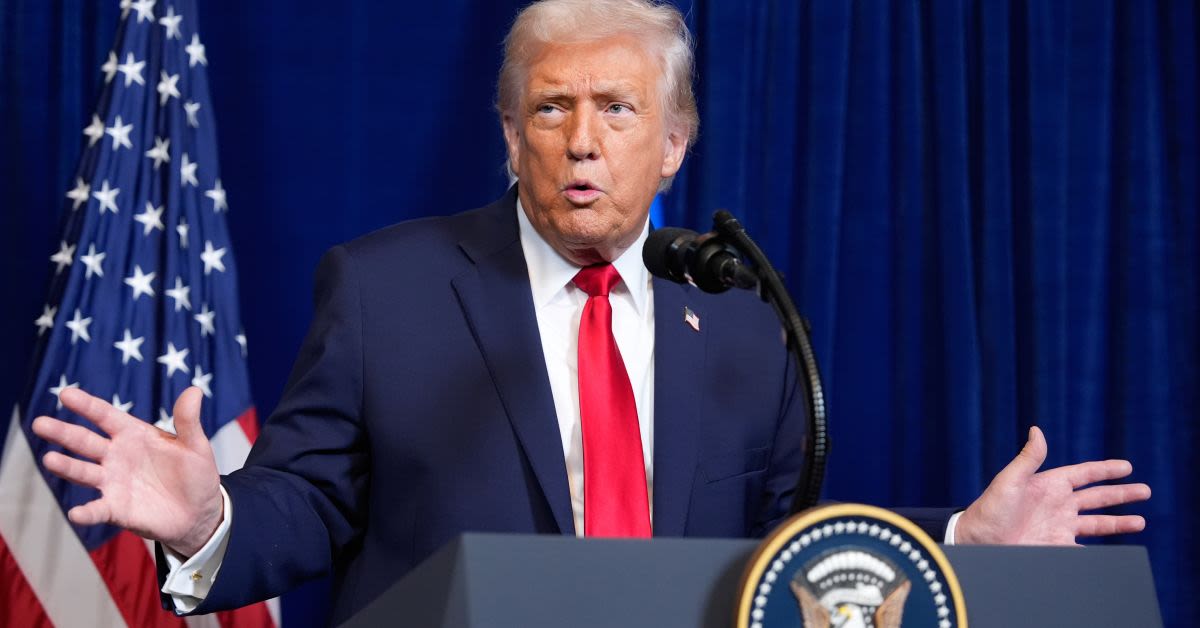
President Donald Trump is moving to impose nationwide voter identification rules by executive order in time for the 2026 midterm elections, signaling he will not wait on Congress to act on election integrity.
According to RedState, the legislative vehicle for sweeping election reforms, the Save America Act, recently picked up critical support from Sen. Susan Collins (R-ME), nudging the measure to 50 backers in the Senate and giving it a faint path forward should Republicans control the chamber and a Vice President JD Vance be in position to break a tie. Even so, the prospect of overcoming a Democrat filibuster remains uncertain, and Trump appears unwilling to gamble the security of future elections on the courage or consistency of Capitol Hill.
The President has made clear he intends to act unilaterally if necessary, a reflection of years of conservative frustration with a Congress that talks tough on election integrity but rarely delivers. For many on the right, that skepticism is well-earned after repeated GOP failures to confront Democrat-led efforts to loosen voting safeguards.
"The Democrats refuse to vote for Voter I.D., or Citizenship. The reason is very simple They want to continue to cheat in Elections," Trump wrote on Truth Social, underscoring his long-held view that the lefts opposition to basic verification measures is not about access but about power. "This was not what our Founders desired."
He added that his team is assembling a legal framework to justify the move and that he will lay out that case directly to the American people in the near future. "There will be Voter I.D. for the Midterm Elections, whether approved by Congress or not!" he vowed, signaling a direct confrontation with Democrats and the administrative state over who controls the rules of American democracy.
In a blistering follow-up post, Trump blasted Democrats for fighting an issue that enjoys overwhelming support across party and racial lines, branding them "horrible, disingenuous cheaters." He urged Republicans to stop treating voter ID as a niche concern and instead make it a central pillar of their message heading into 2026.
"Republicans must put this at the top of every speech It is a CANT MISS FOR RE-ELECTION IN THE MIDTERMS, AND BEYOND!" Trump insisted, framing voter ID not only as a matter of principle but as a political winner. "This is an issue that must be fought, and must be fought, NOW! If we cant get it through Congress, there are Legal reasons why this SCAM is not permitted," he continued. "I will be presenting them shortly, in the form of an Executive Order."
Fully aware that such an order would face immediate legal challenges from Democrat attorneys general, left-wing advocacy groups, and likely the Biden-appointed bureaucracy, Trump expressed hope that the Supreme Court would recognize the order as a necessary step to preserve the integrity of the republic. He also laid out the stakes as he sees them if Democrats manage to secure sweeping electoral victories under the current lax standards.
"These Corrupt and Deranged Democrats, if they ever gain power, will not only be adding two States to our roster of 50, with all of the baggage thereto, but will also PACK THE COURT with a total of 21 Supreme Court Justices, THEIR DREAM, which they will submit easily and rapidly when they immediately move to terminate the Filibuster, probably in their first week, or sooner," Trump warned, sketching a scenario in which the left cements one-party rule through structural manipulation. "Our Country will never be the same if they allow these demented and evil people to knowingly, and happily, destroy it."
For many conservatives, those warnings do not sound far-fetched given the modern Democratic Partys open flirtation with court-packing, statehood for the District of Columbia and Puerto Rico, and the abolition of the filibuster. The combination of those moves would all but guarantee permanent progressive dominance and the erosion of constitutional checks and balances.
Voter ID itself remains one of the least controversial policy ideas in the country, despite the lefts relentless attempts to brand it as voter suppression. Americans across the political spectrum, including Democrat voters, reject the patronizing claim that minorities and women are incapable of obtaining basic identification.
A Pew Research Center poll from last summer found that 83 percent of Americans support requiring government-issued photo identification to vote, including 95 percent of Republicans and 71 percent of Democrats, with only 16 percent opposed. CNN analyst Harry Enten, hardly a conservative firebrand, conceded that support for voter ID runs "across races," aligning with pop-culture voices like Nicki Minaj who have publicly backed the concept.
The bottom line is this: Voter ID is NOT controversial in this country. A photo ID to vote is NOT controversial in this country. It is not controversial by party, and it is not controversial by race," Enten said. "The vast majority of Americans agree.
In a rational political environment, a measure like the Save America Actanchored in such broad public consensuswould sail through both chambers and land on the Presidents desk with bipartisan fanfare. Instead, it is mired in partisan obstruction from Democrats who benefit from loose election rules and from Republicans who too often lack the resolve to confront them, leaving Trump to drag the issue toward the finish line through executive action and a direct appeal to the voters who overwhelmingly want secure, verifiable elections.
Login