
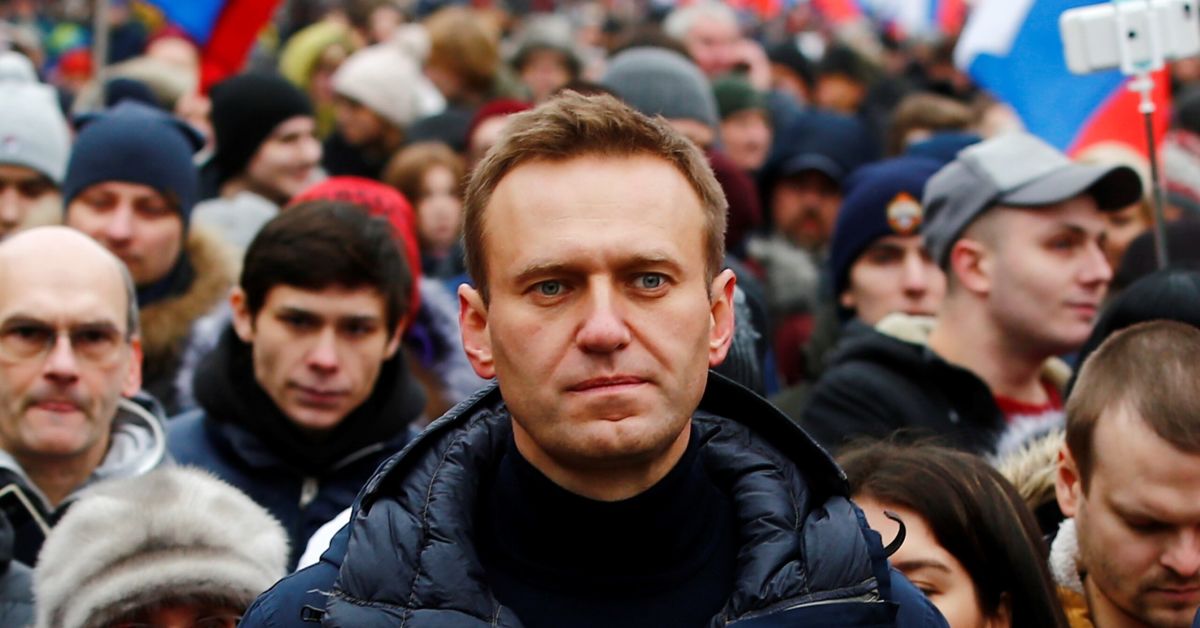
Russian opposition leader Alexei Navalny was assassinated with an exotic South American frog toxin in an operation Western governments now openly attribute to the Russian state, shattering the Kremlins long?maintained fiction of natural causes.
.
According to the Daily Mail, Britains Foreign Office has confirmed that Navalny, who died aged 47 in a remote Arctic penal colony in February 2024, was killed with epibatidine, a powerful neurotoxin derived from poison dart frogs and classified as a chemical weapon. Navalny had been serving a 19?year sentence on what were widely denounced as politically motivated extremism and embezzlement charges, imposed after years of exposing Kremlin corruption and leading mass protests against Vladimir Putins regime.
His death was first announced by Russian authorities on February 16, 2024, with officials insisting he had succumbed to natural causes while incarcerated. At the time, his allies immediately accused the Kremlin of orchestrating his murder, arguing that the charismatic anti?corruption crusader represented a unique political threat to Putins increasingly authoritarian rule.
Epibatidine, the substance now identified as the cause of death, is described as a toxin up to 200 times more potent than morphine, long known to science but far too dangerous to be used as a medicine. It is traditionally employed by some indigenous tribes in South America on darts or blowguns for hunting, attacking the nervous system, inducing numbness, paralysis, and ultimately respiratory failure.
Western officials say it remains unclear exactly how the frog?derived poison was administered to Navalny inside the high?security Arctic facility where he was held. Indigenous communities are reported to use the toxin on blow darts or blowguns, but in a modern prison context, experts believe it could have been delivered in food, drink, or via contaminated objects, methods that would be easily controlled by the state.
The United Kingdom and its European allies Sweden, France, Germany and The Netherlands jointly condemned what they called a barbaric act, stressing that the use of a neurotoxin classed as a chemical weapon could only have been ordered and executed by the Russian government. In a coordinated statement, they argued that no other actor possessed the combination of access, capability, and political motive required to carry out such a sophisticated and clandestine poisoning inside a Russian penal colony.
In their formal declaration, the governments stated: The UK, Sweden, France, Germany and The Netherlands are confident that Alexei Navalny was poisoned with a lethal toxin. They continued: This is the conclusion of our Governments based on analyses of samples from Alexei Navalny. These analyses have conclusively confirmed the presence of epibatidine.
The statement went on to underline the exotic origin of the substance: Epibatidine is a toxin found in poison dart frogs in South America. It is not found naturally in Russia. That fact, Western officials argue, further undermines Moscows narrative and points to a deliberate, premeditated operation involving the acquisition and weaponisation of a rare foreign toxin.
The joint communiqu directly challenged the Kremlins explanation of Navalnys death. Russia claimed that Navalny died of natural causes. But given the toxicity of epibatidine and reported symptoms, poisoning was highly likely the cause of his death. Navalny died while held in prison, meaning Russia had the means, motive and opportunity to administer this poison to him. The statement added that only the Russian state had the combined means, motive and disregard for international law to carry out the attacks.
British officials also used the findings to highlight what they describe as Russias ongoing deception over its chemical weapons programme. The Foreign Office stressed that, contrary to Moscows claims to have destroyed all its chemical weapons stockpiles in 2017, the Navalny case and previous incidents suggest otherwise, pointing again to the 2018 Salisbury novichok attack on British soil as a chilling precedent.
Navalny, long regarded as the most prominent and effective domestic opponent of Putin, had built his reputation by exposing high?level graft and mobilising large?scale anti?Kremlin demonstrations, particularly among younger and urban Russians. His 19?year sentence on extremism charges was widely viewed in the West as a transparent attempt to neutralise a political rival rather than a legitimate criminal conviction.
Following the latest revelations, his widow Yulia Navalnaya said she had always been certain her husband was poisoned and praised the European governments for finally providing hard evidence. She declared: Scientists from five European countries have established: my husband, Alexei Navalny, was poisoned with epibatidine a neurotoxin, one of the deadliest poisons on earth.
Navalnaya emphasised the natural source and horrific effects of the substance. In nature, this poison can be found on the skin of the Ecuadorian dart frog. It causes paralysis, respiratory arrest, and a painful death. Her remarks underscored the cruelty of the method allegedly chosen by the Russian state to eliminate a political opponent.
She reiterated her long?held belief that the Kremlin was behind the killing. I was certain from the first day that my husband had been poisoned, but now there is proof: Putin killed Alexei with chemical weapon. Expressing gratitude to Western governments, she added: I am grateful to the European states for the meticulous work they carried out over two years and for uncovering the truth. Vladimir Putin is a murderer. He must be held accountable for all his crimes.
British Foreign Secretary Yvette Cooper met Yulia Navalnaya at the Munich Security Conference, the same high?level gathering where Navalnaya had first publicly announced her husbands death in 2024. Cooper used the occasion to underline Britains determination to expose what she called the Kremlins barbaric plot and to rally international support for holding Russia to account.
Cooper said: Since Yulia Navalnaya announced the loss of her husband here in Munich two years ago, the UK has pursued the truth of Alexei Navalny's death with fierce determination. She continued: Only the Russian Government had the means, motive and opportunity to deploy this lethal toxin against Alexei Navalny during his imprisonment in Russia.
Standing alongside Navalnaya, Cooper framed the case as part of a broader pattern of state terror and repression under Putin. Today, beside his widow, the UK is shining a light on the Kremlin's barbaric plot to silence his voice. She added: Russia saw Navalny as a threat. By using this form of poison the Russian state demonstrated the despicable tools it has at its disposal and the overwhelming fear it has of political opposition.
Navalnaya had already publicly rejected the Kremlins natural causes narrative last year, calling it a lie and insisting that independent scientific analysis supported her claims. She said two separate laboratories had confirmed he was poisoned, though at the time she withheld details of the specific toxin, the samples, and the testing process, instead challenging the labs to publish their findings.
In a video message posted to social media, she vowed to continue speaking out despite pressure and threats. I will not stay silent. I assert that Vladimir Putin is responsible for the murder of my husband, Alexei Navalny. Her defiance has turned her into a symbol of resistance in her own right, even as the Russian opposition inside the country has been systematically crushed.
The science behind epibatidine underscores why its use in a political assassination would be both effective and difficult to trace without sophisticated testing. A tiny poison dart frog such as the Ecuadorian species produces one of the most powerful natural painkillers ever discovered, but the compounds lethality has prevented it from being developed into a safe pharmaceutical drug.
Epibatidine is a highly toxic - up to 200 times more potent than morphine. It is found in the striped skin of the poison frog Epipedobates tricolor, a small amphibian native to Ecuador whose bright colouring serves as a warning to predators of its deadly chemical defences.
The toxin is only produced by frogs in the wild, where it is believed to be synthesised from their diet of beetles, ants, mites and flies and then stored in their skin. When the frogs are reared in captivity and fed a different diet, they produce no epibatidine, a fact that has complicated attempts to study or harness the compound safely.
The substance was first isolated in the 1970s by American chemist John W. Daly, who extracted it from frog skin samples collected in South America. Laboratory testing quickly revealed its extraordinary potency, but scientists have been unable to exploit its analgesic potential because the margin between a therapeutic dose and a fatal one is vanishingly small.
In the standard hot plate test used in animal research, rats placed on a heated surface normally leap away in pain. A dose of around 1 milligram of morphine per kilogram of body weight allows the rat to withstand the burning heat, but the same effect can be achieved with just 5 micrograms per kilogram of epibatidine, making it roughly 200 times more potent than morphine.
Toxicologists note that a single frogs worth of epibatidine is sufficient to kill a large animal such as a water buffalo. Toxic exposure in humans triggers a rapid and often fatal sequence: intense sweating and muscle tremors, followed by severe seizures, complete paralysis, and respiratory failure, with loss of consciousness and death soon after if no antidote is administered.
There is, however, a known antidote mecamylamine, a drug usually used to treat severe high blood pressure. In theory, timely administration of mecamylamine could counteract epibatidines effects, but in a closed prison environment under state control, any such life?saving intervention would depend entirely on the will of the authorities.
Navalnaya has alleged that those responsible for her husbands death took extensive measures to conceal their crime. She said: The killers worked carefully to erase traces, but we managed to preserve some evidence. We were able to obtain samples of Alexei's biological material and securely smuggle them abroad. Labs in at least two countries examined these samples independently of each other. And these labs ... reached the same conclusion: Alexei was killed. More specifically, he was poisoned.
The Kremlin has consistently denied any involvement, instead blaming Navalnys death on a sudden spike in blood pressure and unspecified chronic illnesses. Russian officials have dismissed Western accusations as politically motivated and have refused to open any credible independent investigation into the circumstances of his demise.
Previously, Navalnaya accused unnamed Western governments of trying to muffle the truth about the poisoning for their own political reasons, suggesting some leaders feared the diplomatic consequences of directly confronting Moscow. They wouldn't want the inconvenient truth to come out at the wrong moment, she said, implying that geopolitical calculations were being placed above justice.
Her demands have grown more pointed as evidence has accumulated. I demand that the labs that conducted the analyses publish their results. Stop pandering to Putin on account of so-called higher considerations. You will not appease him. As long as you remain silent, he will not stop. I demand full public disclosure of the results showing exactly what poison was used against my husband.
Then?US President Joe Biden, speaking shortly after Navalnys death in 2024, made clear where Washington stood, saying there could be no doubt that Putin bore responsibility. His comments reflected a broader Western consensus that the Russian leader has repeatedly used assassination, including chemical agents, as a tool of state policy against opponents at home and abroad.
Navalnaya, who has lived outside Russia for years for her own safety, later published photographs of the prison cell where her husband spent his final hours. The images showed vomit on the floor and some of Navalnys personal belongings, including an English?Russian dictionary and his mittens, and she stated bluntly: This is where his murder took place.
In the same video, she reconstructed his last day based on what she described as testimony from employees at the penal colony. On the day he died, she said, Navalny was taken outside for a walk but quickly felt unwell; when he was returned to his cell, he lay down on the floor, pulled his knees up, and started moaning in pain... then he started vomiting.
She continued: Alexei was having convulsions... the prison guards watched [his] agony through the bars of the cell window. According to her account, an ambulance was not called until 40 minutes after he first became visibly ill, and he died shortly afterwards, with prison authorities later telling his mother Lyudmila that her son had suffered sudden death syndrome.
Putin, who for years refused even to utter Navalnys name in public, finally referred to him a month after his death only in the most oblique terms, remarking that a persons passing was always a sad event. The studied coldness of that comment has reinforced Western perceptions of a regime that views political opponents as expendable and whose leader feels no need to hide his contempt.
Leaked official Russian documents, published in 2024 by an opposition website, indicated that Navalny had displayed symptoms consistent with poisoning before his death. The documents also appeared to show that officials attempted to obscure the true cause of death, further supporting the case that this was not a natural medical event but a state?orchestrated killing.
An anti?corruption campaigner who led the largest protests of Putins 26?year rule, Navalny was widely seen as the only figure with the stature and charisma to unify Russias fragmented opposition. In his final court appearances, he denounced the war in Ukraine and urged Russians to resist, messages that likely deepened the Kremlins determination to silence him permanently.
Navalny had already survived one assassination attempt in 2020, when FSB security service operatives poisoned him in Siberia with a Soviet?era nerve agent from the novichok family. After intense international pressure, Putin allowed him to be airlifted to a Berlin clinic, where he recovered, only to return voluntarily to Moscow in January 2021, knowing he would be arrested the moment he landed a decision that turned that day into his last as a free man.
Following his death, the Kremlin initially pushed for a secret burial, apparently fearing that a public funeral could spark mass protests and become a rallying point for dissent. His elderly mother Lyudmila was forced to trudge through sub?zero Arctic conditions between morgues in search of his body, and at one point, she was reportedly told: Time is not on your side, corpses decompose.
After a public outcry and international pressure, Russian authorities finally released Navalnys body, and he was laid to rest at Moscows Borisovskoye cemetery. His funeral service quickly turned into an opposition gathering, believed to be the largest such demonstration since Russia launched its full?scale invasion of Ukraine in 2022, underscoring how even in death he remained a symbol of resistance.
Yet since his killing, his exiled allies at the Anti?Corruption Foundation (FBK) have struggled to maintain influence inside Russia, facing relentless repression, censorship, and the loss of key financial backers. Last month, FBK director Ivan Zhdanov stepped down, acknowledging the movements profound loss by saying: It's not the same at all without Alexei.
The Russian authorities continue to strenuously deny any role in Navalnys death, repeating their claims of natural causes despite mounting forensic and documentary evidence to the contrary. Their denials now stand in stark contrast to the detailed findings presented by Western governments and independent laboratories, which collectively point to a carefully planned chemical assassination.
In their latest joint statement, Western governments reiterated: The UK, Sweden, France, Germany and The Netherlands are confident that Alexei Navalny was poisoned with a lethal toxin. They repeated: This is the conclusion of our Governments based on analyses of samples from Alexei Navalny. These analyses have conclusively confirmed the presence of epibatidine.
They again stressed the foreign origin of the substance. Epibatidine is a toxin found in poison dart frogs in South America. It is not found naturally in Russia. They contrasted this with Moscows narrative: Russia claimed that Navalny died of natural causes. But given the toxicity of epibatidine and reported symptoms, poisoning was highly likely the cause of his death. Navalny died while held in prison, meaning Russia had the means, motive and opportunity to administer this poison to him.
The statement broadened the indictment of Moscows conduct. Russia's repeated disregard for international law and the Chemical Weapons Convention is clear. It recalled: In August 2020 the UK, Sweden, France, Germany, The Netherlands and partners condemned Russia's use of novichok to poison Alexei Navalny.
They linked the case to the earlier attack on British soil. This followed Russia's use of novichok in Salisbury in 2018, which led to the tragic death of a British woman, Dawn Sturgess. They concluded that in both cases, only the Russian state had the combined means, motive and disregard for international law to carry out the attacks.
The governments warned that the Navalny case highlights broader treaty violations. These latest findings once again underline the need to hold Russia accountable for its repeated violations of the Chemical Weapons Convention and, in this instance, the Biological and Toxin Weapons Convention. They added: Our Permanent Representatives to the Organisation for the Prohibition of Chemical Weapons have written today to the Director General to inform him of this Russian breach of the Chemical Weapons Convention.
Western officials voiced further concern that Moscow has not, in fact, eliminated its chemical arsenal. We are further concerned that Russia did not destroy all of its chemical weapons. They pledged continued pressure, stating: We and our partners will make use of all policy levers at our disposal to continue to hold Russia to account.
For many in the West, particularly those who favour a robust stance against authoritarian regimes, the Navalny case has become a stark reminder of what happens when a state is allowed to flout international norms with impunity.
The use of an obscure South American frog toxin against a domestic political opponent, following earlier novichok attacks, reinforces the view that Putins Russia is not merely an adversary on the battlefield in Ukraine but a serial violator of basic civilised standards, one that must be confronted with clarity, strength, and moral resolve rather than appeased in the name of higher considerations.
Login