
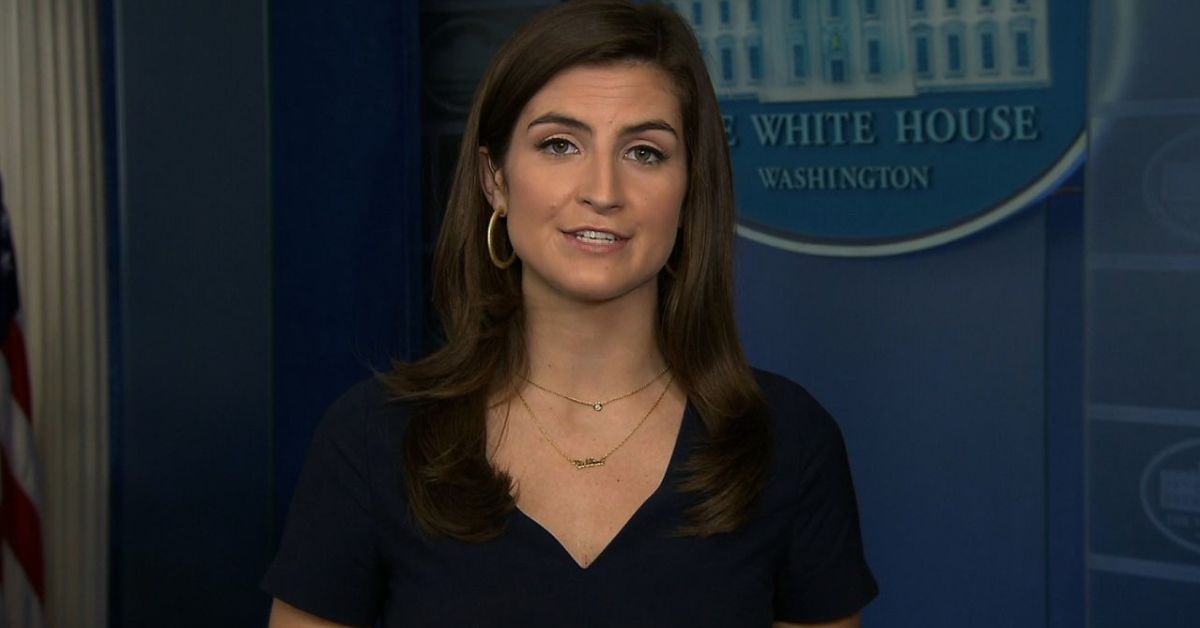
Democrats have spent years branding Donald Trump a fascist, yet when it comes to defending basic press freedoms abroad, it was his administration that stepped in to protect a CNN reporters right to do her job.
The episode resurfaced this week when CNN anchor Kaitlan Collins recounted, on the Absolutely Not podcast with host Heather McMahan, how Trumps team backed her up during a tense encounter with Saudi authorities while she was covering the White House.
According to RedState, Collins described the incident as a revealing moment about how the Trump administration handled press freedom in a country where such liberties are virtually nonexistent. For all the lefts rhetoric about Trump supposedly waging war on the media, the story undercuts that narrative in a way that is difficult for his critics to explain away.
Collins recalled traveling in Saudi Arabia as part of the White House press pool following then-President Trump, noting the regimes hostility toward independent journalism. They famously do not like the media there, to put it lightly, she said, explaining that her attempt to ask a question triggered an immediate backlash from the Saudi royal guard because they don't have press freedom there. The guards responded by informing her that she would be barred from attending the next event, effectively punishing her for doing what American reporters are supposed to do: ask questions of those in power.
The confrontation left some members of the press corps unsure how to respond, and they turned to the Trump White House for guidance. Collins said the group approached then-White House Press Secretary Karoline Leavitt, who was responsible for managing the administrations relationship with the media, including outlets Trump frequently criticized. Despite Trumps open disdain for CNN and his belief that Collins had treated him unfairly, Leavitt did not hesitate to intervene on behalf of a reporter from a network the administration routinely labeled fake news.
Collins recounted that Leavitt immediately pushed back against the Saudi attempt to sideline her. The Saudi Royal Guard freaked out because I dared to ask a question and said, you can't come into the next event Karoline, to her credit said, no Kaitlan's coming in with the rest of the U.S. press, Collins said. Leavitt insisted that Collins be allowed to enter with the rest of the American media contingent, making clear that the United States would not accept foreign officials deciding which U.S. reporters could cover the president.
Collins emphasized that Leavitts stance prevented the situation from escalating into a larger diplomatic dispute. And we went in. And so it didn't become this huge issue, she said, underscoring how quickly the matter was resolved once the White House drew a firm line. She repeated her praise for Leavitts actions: And so to her credit, she, without a doubt, was like, no, you're coming in. Which I do think is important in that moment, especially when you're the U.S. contingent abroad, and we don't do things like they do in Saudi Arabia.
That single episode stands in stark contrast to the lefts constant claims that Trump is an authoritarian bent on crushing dissent and muzzling the press. While Democrats and liberal commentators routinely accuse him of being a danger to democracy, his team was, in this case, defending a CNN reporters access in a country where the government truly does control the media. The same progressives who casually throw around the word fascist rarely acknowledge that real repression looks a lot more like Saudi censors trying to ban a reporter from an event than a president criticizing biased coverage.
For conservatives, the story highlights a crucial distinction between rhetorical combat and actual suppression of rights. Trump and his aides have every right to call out what they see as unfair, inaccurate, or partisan reporting, and doing so is not an attack on a free press but a demand for accountability from institutions that wield enormous cultural and political power. No one is stopping CNN, The New York Times, or any other outlet from publishing their stories, no matter how slanted or wrong they may be.
What the Trump team did in Saudi Arabia demonstrates that defending the principle of a free press does not require pretending the media are neutral or above criticism. It requires insisting that, especially on foreign soil, American reporters are not subject to the whims of authoritarian regimes that don't have press freedom there. Good for Karoline Leavitt for standing firm when it counted, and for making clear that even a network the administration distrusted would be protected when its basic rights were threatened.
Login