
The New York Times, once the self-styled paper of record, is increasingly behaving less like a serious news institution and more like a lifestyle and entertainment brand wrapped in a thin veneer of journalism.
According to Western Journal, the publication that spent the Trump years leading the #Resistance now devotes enormous energy to features such as a 45-minute recipe for buttery Gochujang tofu and broccoli and whimsical fare like Love Found Its Pace in a New York Walking Group.
Alongside this soft-focus content, the company has aggressively expanded its gaming portfolio, buying Wordle and pushing new diversions such as the highly popular Connections, to the point where, as Adweek noted in a newsletter, the running joke in media circles is that the Times is actually a games company with a side hustle in news.
Yet for all the lifestyle gloss and puzzle addiction, the ideological core of the New York Times Co. remains firmly intact, particularly when it comes to identity politics and progressive narratives in sports coverage. That reality was on full display at the Australian Open, where a freelance writer for The Athletic the Times-owned sports outlet went viral for all the wrong reasons after repeatedly pressing American tennis players on whether they were effectively ashamed of their own country.
The reporter, Owen Lewis, is hardly a mystery figure ideologically, with a rsum that includes bylines in the U.K.s Guardian a paper even further to the left than the Times and Defector, a proudly progressive sports site. His line of questioning in Melbourne made clear that he did not travel halfway around the world to talk about forehands, backhands or strategy, but to shoehorn domestic American politics into post-match press conferences.
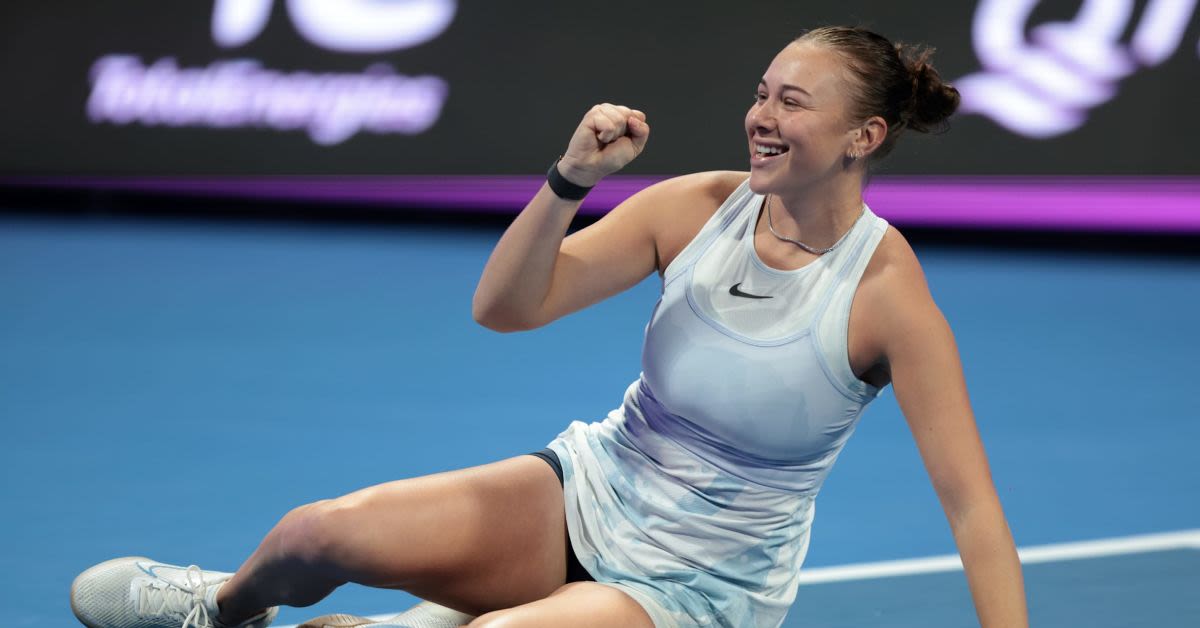
The most widely shared exchange came Thursday after American Amanda Anisimovas second-round victory over Katerina Siniakova. Lewis opened not with a question about her performance or tactics, but with a political litmus test: Ive been asking a lot of the American players just how it feels to play under the American flag right now, he said to the No. 4 seed. And Im curious how you feel?
Anisimova, who has never been known as a political firebrand, responded with the kind of straightforward patriotism that used to be unremarkable in American sports. I was born in America so Im always proud to represent my country, she said. A lot of us are doing really well. Its great to see a lot of great athletes on the womens and mens side.
That was clearly not the answer Lewis was fishing for, so he tried again, this time explicitly tying his question to current U.S. politics. He pressed her to address her national pride sort of in the context of the last year of everything thats been happening in the U.S., does that complicate that feeling at all?
The timing was not incidental: It has been roughly a year since Jan. 20, 2025, when President Donald Trump was sworn in for his second term, a development that sent the American left and its media allies into predictable hysterics. Lewis question was transparently designed to coax Anisimova into denouncing Trump or at least suggesting that representing the United States under his leadership was somehow morally fraught, but she refused to play along.
I dont think thats relevant, Anisimova replied, shutting down the attempted ambush with a calm, concise dismissal that instantly endeared her to many on the right. For conservatives tired of athletes being pushed into progressive activism, her refusal to turn a tennis presser into a cable-news panel felt like a breath of fresh air and, as some observers joked, the birth of a new kind of reluctant culture-war heroine.
Lewis, however, did not limit this line of questioning to one player. He tried a similar tack with former U.S. Open finalist Taylor Fritz, another American who has committed the apparent sin of succeeding on the world stage while carrying the Stars and Stripes. Fritz, more media-savvy and wary of the trap, declined to give Lewis the sound bite he was clearly seeking.
I mean, not sure what were like specifically talking about, but there is a lot going on in the U.S., and I dont know, Fritz said, carefully sidestepping the bait. I feel like whatever I say here is going to get put in a headline, and its going to get taken out of context. So, Id really rather not do something thats going to cause a big distraction for me in the middle of the tournament.
While Fritz chose to defuse the moment without directly criticizing the premise, others were far less restrained in their assessment of the Times-owned outlets behavior. OutKick founder and radio host Clay Travis blasted the exchange on social media, calling it Embarrassing and shameful of @nytimes owned site.
The criticism resonated because this was not an isolated incident but part of a pattern in which sports journalism, especially in left-leaning outlets, has become a vehicle for ideological messaging rather than straightforward coverage. Instead of focusing on athletic excellence, strategy and competition, reporters like Lewis seem determined to turn every press conference into a referendum on whether American athletes are sufficiently critical of their own country.
This episode also underscores the broader transformation of the New York Times in 2026, from a serious news institution into something closer to a hybrid of lifestyle magazine and progressive pamphlet. On one hand, it churns out content that could easily appear in a glossy publication about Better Homestays and Urban Gardens; on the other, when it ventures into hard news or sports, it reflexively reverts to the same brainless 2020 wokeism that alienated so many readers during the Trump years.
What makes this all the more frustrating for many sports fans is that The Athletic, when it sticks to its core mission, can still produce high-quality, in-depth coverage in a media environment where ESPN has become nearly unwatchable and Sports Illustrated barely readable and, in some notorious cases, not even written by human beings. Yet the decision to send someone like Owen Lewis to the Australian Open, only to have him use the platform to push a tired political narrative, reinforces the sense that the Times cannot resist politicizing everything it touches.
In the end, the spectacle in Melbourne served as a reminder that, no matter how many recipes, games or lifestyle features it adds, the Gray Lady remains what it has become over the past decade: a reliably left-wing institution determined to filter even international sporting events through the lens of American domestic politics.
The New York Times is always going to New York Times, and as long as its reporters are more interested in shaming American athletes than celebrating their achievements, readers looking for genuine sports journalism and unapologetic patriotism will continue to seek it elsewhere.
Login